Skip to content
Friday 7 August 2026London --:--Frankfurt --:--Zurich --:--
NewslettersSearchEN · DE
MorningWire

European business, markets and politics

FTSE 100
10,867.89
-0.19%
DAX
26,140.13
0.00%
CAC 40
8,699.71
0.00%
STOXX 50
6,502.56
0.00%
  • Europe
  • Markets
  • Business
  • Economy
  • Technology
  • Politics
  • Opinion
More
GermanyFranceBankingAIEnergyFintechPropertyCapital Markets
  • Germany
  • France
  • Europe
  • Markets
  • Business
  • Economy
  • Technology
  • Politics
  • Opinion
  • DE
Thursday 26 June 2014 6:03 am  |  Updated:  Thursday 06 June 2019 11:26 pm

Barclays sued for dark pool securities fraud: What is a dark pool?

By: Sarah Spickernell

Add as a preferred source on Google

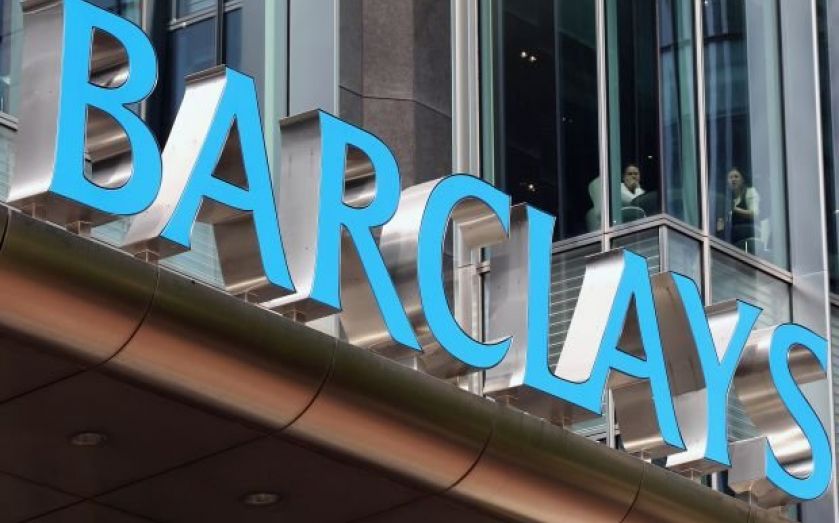
Barclays in the US is being sued for fraudulent behaviour, following a complaint filed by New York attorney general Eric Schneiderman.

He claimed that the bank had misrepresented the participants of its dark pool, leaving institutional investors exposed to high frequency trading “predators”.

A dark pool is a covert trading location where all trades are anonymous until completion.

The basis of the claim was Barclays' apparent failure to include any mention of a particular firm in its marketing document, even though the bank was aware that it had been involved in high frequency trading in its dark pool.

The complaint describes "a flagrant pattern of fraud, deception and dishonesty with Barclays clients and the investing public.”

"The facts alleged in our complaint show that Barclays demonstrated a disturbing disregard for its investors in a systematic pattern of fraud and deceit," said Schneiderman.

Dark pools have become increasingly popular among investors recently, with around 40 competing against traditional exchanges in the US alone. Barclays offers one of the biggest in the world.

Dark pools and high frequency trading explained

The rise of dark pools has been facilitated by the introduction of cheaper technologies that allow traders to direct a larger chunk of their order flow to their own private pools, before making their unwanted orders available on public markets. This allows them to generate more profit for themselves.

Open to institutional investors only, dark pools are attractive because they minimise the impact of the market on the price of shares. They allow investors to limit the amount of information available to others, helping them to get the most out of their trades: if other traders had the information at hand, they would be able to benefit from it by altering the prices of their own shares.

So, in a dark pool, the initial price you are offering your shares at is invisible to all other members, and the value of any trade is only made available after the event. The dark pools enable this discretion by not revealing quotes and, in most instances, by restricting participation of unwanted players such as high frequency traders.

Unlike normal stock exchanges which are known as “light markets” because they are highly transparent and therefore easily regulated, dark pools are private markets set up by banks to offer anonymity. This means they are not subjected to the same level of scrutiny and regulation.

The risk is that if a high frequency trader is given access, they can take advantage of the anonymity and lack of regulation. Using sophisticated software that allows them to buy and sell shares faster than ordinary investors, high frequency traders are able to generate very large profits based on very small fluctuations in share prices.

Share this article

  • Facebook
  • X
  • LinkedIn
  • WhatsApp
  • Email

Similarly tagged content:

Sections

  • News

Categories

  • Business

Related Topics

  • Barclays
  • Company

Trending Articles

  • Rupert Lowe axes pensions triple lock and pledges tax cuts in economic plan

  • Revolut founder’s wealth set to balloon amid talks of share award at $500bn valuation

  • As it happened: Stocks rise as oil fluctuates after Red Sea attack; US-Iran deal ‘being circulated’

  • Liverpool owners tipped to sell – but not to Amazon boss Bezos – by former CEO

  • WPP slashes jobs as revenue continues to fall

More from Morning Wire

  • Natwest hikes targets again after jump in profit

    Banking
    NatWest sign on a dark pillar with vertical slats, set against a blurred background of a modern office building
  • Big bank bosses on alert as tax noise gets louder under Burnham

    Banking
    Two men, one in a white shirt and red tie, the other in a navy jacket, conversing outdoors.
  • Don’t hike bank taxes, Barclays warns Burnham

    Banking
    Barclays investment bank income soared in the first quarter.
  • Barclays profit surges as equity traders cash in on volatility

    Banking
    Barclays bank exterior with logo as it announces mortgage rate cuts amidst upcoming interest rate decision.
  • Lloyds beats profit target as bank sets sights on more cost-cutting

    Banking
    Lloyds Bank logo and sign on the exterior glass facade of a modern building in Manchester
  • Nothing Funny about Regina’s hopes in Princess Margaret

    Sport
    Jockey Ryan Moore in a red helmet and blue silks, wearing sunglasses, looking focused at a racecourse
  • Barclays in legal battle with MFS administrators over part of £160m holding

    Banking
    Barclays bank exterior with logo as it announces mortgage rate cuts amidst upcoming interest rate decision.
  • Barclays and Lloyds back calls to digitalise UK markets and unlock £33bn boost

    Markets
    GettyImages 2211256637 showing a significant event or figure relevant to recent news updates in the business sector
MorningWire

Independent European business, markets and political news for decision-makers.

Morning Briefing

Europe

  • Germany
  • France
  • Europe
  • UK & Ireland

Business

  • Markets
  • Banking
  • Technology
  • Energy
  • Property
  • Fintech

Editorial

  • Opinion
  • Editorial Policy
  • Corrections
  • Contact

Company

  • About Morning Wire
  • Privacy Policy
  • Terms of Use
  • Cookie Policy
© 2026 Morning Wire Ltd · Published by Morning Wire Media, Bahnhofstrasse 65, 8001 Zürich, Switzerland
Privacy · Terms · Cookies · Facebook