Barrelling towards conflict: How the oil market reacted to Iran-US tensions

For good or ill, oil remains the lifeblood of the global economy. It is essential to industrial production, to how we transport goods (as well as ourselves) around the world, and how we heat our homes and generally go about our everyday lives.
Rising oil prices can therefore act as a handbrake on global growth, as the increased costs cut into the profits of manufacturing and other industrial activity, or reduce the amount of disposable income that consumers have when they aren’t fuelling their cars.
So the recent volatility in oil prices caused by rising tensions in the Middle East is a major concern for markets around the world. The price for Brent crude rose as high as $71.75 per barrel at one point last week, before ending on Friday below $65.
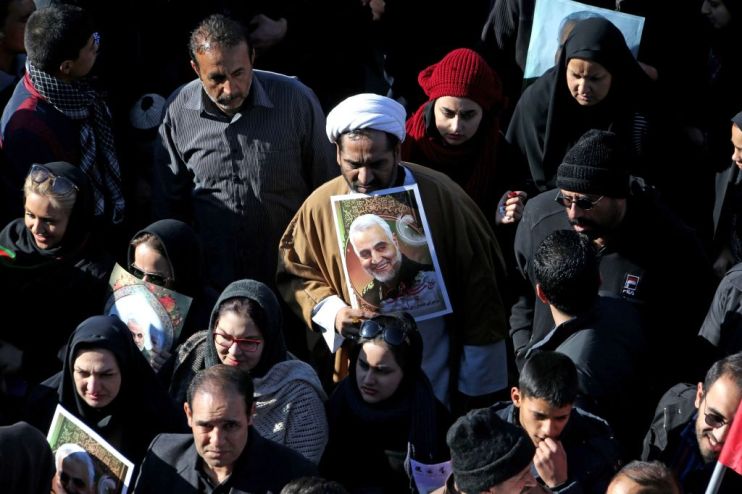
The price spike was triggered by the death of Iran’s top general Qassem Soleimani. The US-approved killing of Soleimani on 3 January sent fear rippling through world markets that this was the first step in an escalating military conflict that could spill out across the Middle East — the source of much of the world’s oil production.
Iran retaliated by firing ballistic missiles at air bases housing US forces in Iraq. While the attack was not free of consequences (Iran later admitted to “unintentionally” shooting down a Ukrainian passenger jet, killing 176 people) the lack of US casualties thankfully seems to have allowed both sides to back down from further escalation, at least for now.
The easing of tension by the end of last week meant that oil prices were able to settle down and stock markets to rise, with some indices like New York’s S&P 500 and Nasdaq setting all-time highs.
But just because the geopolitical situation has calmed, does that mean it will remain so? Not necessarily. The recent clash was not an isolated incident, but the latest episode in the long-running conflict between Washington and Tehran.
“The key turning point for the region was last year, when the US ended the sanction waivers,” explains Torbjorn Soltvedt, principal MENA analyst at risk consultancy Verisk Maplecroft. These waivers permitted countries around the world to import oil from Iran. Ending the waivers caused a sharp decline in Iranian oil exports, from around two million barrels per day to just 500,000.
“For the last eight months or so, Iran has been losing out on billions of dollars in lost revenue because of US oil sanctions. It’s since then that we’ve seen the ratcheting up of tensions,” Soltvedt adds.
The Trump administration has been pursuing a campaign of maximum pressure on Iran in order to get it back to the negotiating table and agree to a more comprehensive nuclear agreement than the one struck in 2015, hence why it scrapped the sanction waivers.
But taking this hardline stance has had consequences. In the months after this decision, two foreign oil tankers were attacked near the strategically important Strait of Hormuz. Then in September, Saudi Aramco oil facilities were attacked by swarms of drones and low-flying cruise missiles.
The facilities had to be shut down for repairs, cutting Saudi Arabia’s oil production by about half, which represented around five per cent of global oil production. Iran was blamed for these incidents, though it denied involvement.
These attacks were designed to demonstrate Iran’s ability to disrupt the flow of oil from the region, according to Soltvedt. He warns that the outlook for the security and stability of the oil industry in the region remains negative.
However, markets do not currently seem concerned about this risk, which has been reflected in the falling price for oil.
“With Brent prices falling back below $65, traders seem convinced that Iran will not block the Strait of Hormuz or carry out attacks on shipments. That’s because Iranian exports to China are a significant source of the government’s revenue, and without it, the economic crisis will only exacerbate,” says Hussein Sayed, chief market strategist at FXTM.
It also seems unlikely that the US will escalate conflict with Iran in the immediate future.
“President Trump has backed away from military confrontation, as increased tensions in the Middle East and higher oil prices will hit both consumers and businesses, which is the last thing that he wants before the November presidential election,” adds Sayed.
It is also worth remembering that the Middle East is not the only source of oil. Thanks to the shale gas revolution and the development of the Permian Basin in Texas and New Mexico, the US is now a net exporter of oil. So if oil production in the Persian Gulf were significantly disrupted or reduced, America may be able to step in and fill any gaps.
But fundamentally, while things currently appear calm, the underlying sources of tension between the US and Iran remain unresolved. The likelihood of further geopolitical conflict and instability is thus still high.
So will oil prices remain around $65 a barrel this year? Probably not.
Main image credit: Getty