Battersea Power Station enters final ‘playful’ phase of £5bn project

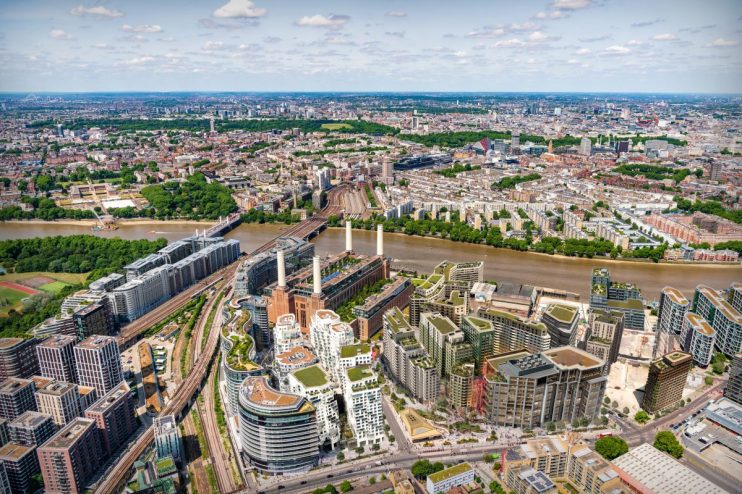
Battersea Power Station has entered the final phase of its £5bn regeneration project after its Malaysian owners submitted plans for the site’s remaining 16 acres.
The neighbourhood’s newest development will add as much as 3.2m sq ft of residential, commercial and leisure space to the area, more than 15 years on from the original plans for the project.
The final phase, updated by Studio Egret West from original plans by architect Rafael Viñoly, will more-than double the scale of the existing development.
Battersea Power Station is already home to more than 2,200 homes, about 800,000 sq ft of office space and more than 170 shops, bars and restaurants.
A consortium of Malaysian investors bought the site – and the plans for its redevelopment – for £400m in 2012.
Since they intervened to snap up the project out of administration, these shareholders have invested more than £5bn into its redevelopment.
£5bn invested since 2012
“Battersea Power Station has already been transformed from a crumbling ruin on the brink of collapse within an industrial wasteland into a vibrant mixed-use neighbourhood and an internationally recognised destination for living, working and enjoying leisure time,” its developers said.
The Battersea Power Station Development Company said the new plans have added better sightlines of the original power station building by dividing the originally planned buildings into smaller, more separate sites.
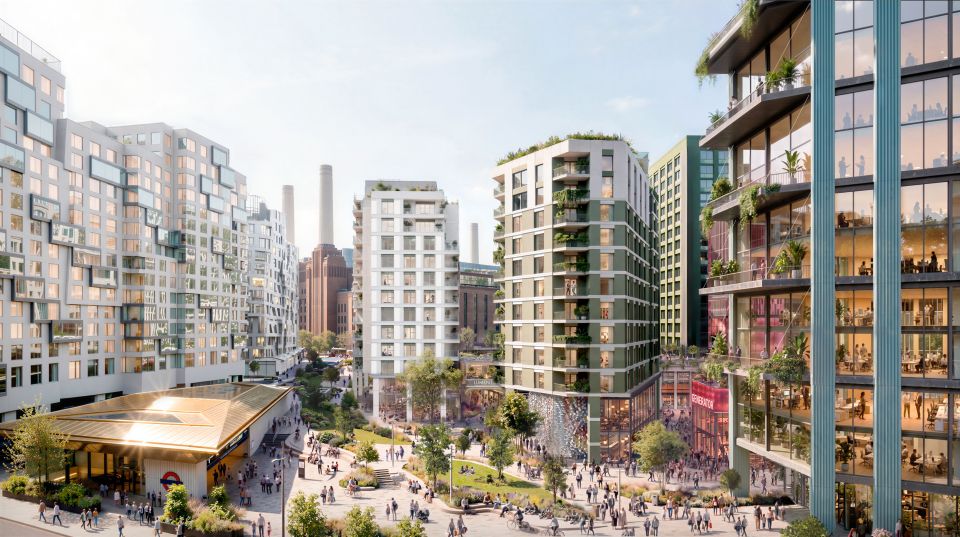
James Saunders, chief executive of the developer, said: “The last decade has seen events like Covid-19 and digital integration into everyday life blur the boundaries between work, living and leisure time, all fundamentally changing how we interact with cities.
“Responding to this, our refreshed masterplan seeks to place community and connection at the core of Battersea Power Station.”
David West, founder and director of Studio Egret West, said the plans for the rest of development will add more “playful, artistic and biodiverse public spaces” to the area.
He added: “The refreshed vision is also deliberately flexible, leaving room for serendipity, while remaining responsive and resilient to what we’ve learned from the journey so far. It’s about commerce, culture, community and curiosity working in harmony.”
The original Battersea Power Station was designed by Sir Giles Gilbert Scott, an art deco architect famed for London’s red telephone boxes and the Bankside Power Station, which now hosts the Tate Modern art gallery.
The site operated as a coal-fired power station until it was decommissioned in 1975.