Skip to content
Monday 14 September 2026London --:--Frankfurt --:--Zurich --:--
NewslettersSearchEN · DE · FR
MorningWire

European business, markets and politics

FTSE 100
10,650.44
+0.39%
DAX
25,568.56
+0.82%
CAC 40
8,179.77
0.00%
STOXX 50
6,325.13
+0.90%
  • Europe
  • Markets
  • Business
  • Economy
  • Regulation
  • Politics
  • Opinion
More
GermanyFranceEU InstitutionsCompetitionPublic AffairsBankingTechnologyEnergy
  • Germany
  • France
  • Europe
  • Markets
  • Business
  • Economy
  • Regulation
  • Politics
  • Opinion
  • DE
Thursday 28 October 2021 6:15 am  |  Updated:  Friday 29 October 2021 12:13 pm

Before we give London’s transport to the rest of the UK, we should fix it here first

By: Claire Harding

Add as a preferred source on Google
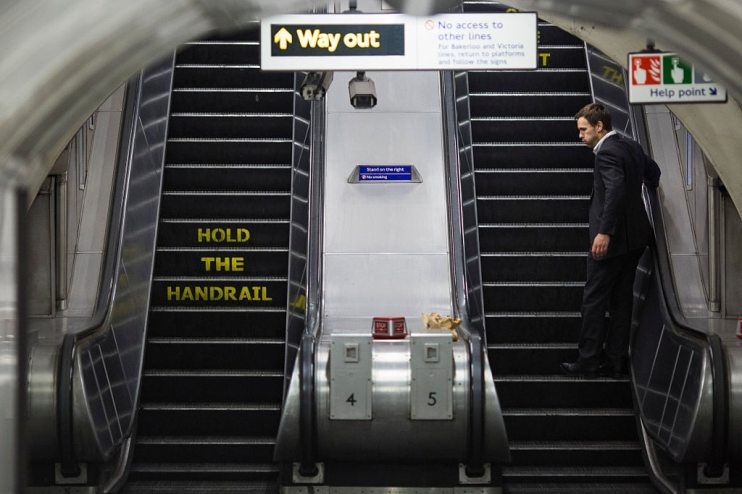
Historic Night For London Underground As Trains Run through The Night
Before bringing London-style public transport to the rest of the UK, we should probably firstly fix what's not working in the capital (Photo by Jack Taylor/Getty Images)

The only standout mention of the capital in yesterday’s budget was a promise to bring “London-style transport settlements” to regions across the country.

On the face of it, this is an entirely sensible aspiration. Many other cities would love to have London’s mix of cheap, frequent buses with flat fares, a fast reliable and wide-ranging underground system, national and international rail connections, and integrated ticketing.

But there’s a real risk that in a few years, “London style” will be something to avoid rather than aspire to. Transport for London (TfL) has been hit hard by the pandemic. With many office workers still working from home for at least part of the week, tube ridership has only recently reached half of its pre-pandemic weekday levels and seems unlikely to ever return in full.

Compared to its international peers, revenue for London’s transport network has been particularly badly hit: it is highly reliant on fares  for its income, and office commuting remains considerably lower than in other capital cities. Some have argued we should be forcing people back to the office just to alleviate this fall in revenue. This would be a mistake: home working has been a real positive for many Londoners, especially parents juggling work and childcare.

So far, the government has responded to TfL’s funding crisis by giving our world-class transport authority a series of sticking-plaster grants, accompanied by unedifying spats between ministers and the mayor about whose fault the problem is. In the medium term, the government will need to either increase investment in London transport, allow London leaders to raise their own finance by giving it more tax-raising powers, or leave TfL with no choice but to cut back its services – reducing frequency, cutting routes or maintenance.

The fate of the once world leading New York subway system in the late 20th century gives us an idea of what is at stake. Decades of underinvestment meant that New Yorkers avoided public transport if they could, instead flocking to the taxis which clogged the streets of Manhattan. It took many decades, and many hundreds of millions of dollars, to get their city’s transport system close to where it could have been all along.

The frequency of some London suburban rail services are also still well below pre-pandemic levels – at my south London commuter station, trains to and from central London are now twice an hour, down from four times an hour.

For workers whose employees can’t or won’t offer flexible working, particularly working parents, this sort of change is more than just an inconvenience. Not only do they face the UK’s longest commutes, but reduced services can make it impossible to get home in time to pick children up from school or nursery.

Services like the Night Tube have been slow to return, giving some night-time economy workers little choice but to get an infrequent bus or instead, drive a car to work. Behind the official jargon of “changes to services” and “reorganisation”, there are Londoners having to decide whether living in our city is still possible for them – and if more services are cut, there will be many more.

Read more

Sadiq Khan urged to end London’s e-bike ‘patchwork’

Man in glasses and beard riding a green rental e-bike on a city street with blurred background of buildings and people.

Share this article

  • Facebook
  • X
  • LinkedIn
  • WhatsApp
  • Email

Similarly tagged content:

Sections

  • Opinion

Categories

  • Opinion

Trending Articles

  • Wetherspoon boss: ‘Not up to Burnham’ to choose who is on the high street 

  • Badger Beer maker Hall & Woodhouse doubles profit ahead of tie-up with James May

  • Four interest rate hikes loom despite surprise economic growth

  • Primark sales slip as owner dresses up retailer for demerger

  • Lotus, Porsche and Corvette: the best sports cars to buy in 2026

More from Morning Wire

  • Sadiq Khan urged to end London’s e-bike ‘patchwork’

    London
    Man in glasses and beard riding a green rental e-bike on a city street with blurred background of buildings and people.
  • Hammersmith Bridge is a test for Burnham’s place-based growth

    Opinion
    Hammersmith Bridge closed in 2021 with fencing, banners, and traffic cones blocking access to the walkway.
  • A global tram renaissance is underway. Why isn’t London jumping on board?

    Opinion
    London tram 1925 with Last Tram Week sign in front of the Houses of Parliament and Big Ben, 1952.
  • Beyond your 9-5: things to explore in the Square Mile 

    Partner
    Three friends enjoying drinks on a rooftop bar with St Pauls Cathedral dome in the background.
  • Voi rides on in London borough despite council order

    Transport & Infrastructure
    Voi electric scooters lined up on a city street, highlighting urban mobility solutions and eco-friendly transportation opt...
  • Which is the smelliest Tube line?

    Opinion
    Passenger wearing a blue surgical mask and coat on a London Underground train.
  • Burnham’s devolution drive could ‘push 90,000 jobs out of London’

    Economics
    In 2022, rolling Tube strikes led to massive queues for crowded buses. (Photo by Chris J Ratcliffe/Getty Images)
  • Give London power to level up the rest of the country

    Opinion
    Business professionals in formal attire engaged in a lively discussion at a corporate meeting in a modern office setting.
MorningWire

Independent European business, markets and political news for decision-makers.

Morning Briefing

Europe

  • Germany
  • France
  • EU Institutions
  • Europe

Business

  • Markets
  • Business
  • Economy
  • Regulation
  • Competition
  • Public Affairs

Editorial

  • Opinion
  • Editorial Policy
  • Corrections
  • Contact

Company

  • About Morning Wire
  • Privacy Policy
  • Terms of Use
  • Cookie Policy
© 2026 Morning Wire Ltd · Published by Morning Wire Media, Bahnhofstrasse 65, 8001 Zürich, Switzerland
Privacy · Terms · Cookies · Facebook