Behind the scenes at the Decanter World Wine Awards

There you are, browsing bottles and trying to decide what to buy next, when you notice a sticker telling you that this is a “Decanter World Wine Awards Winner”. Well, we all love a winner, but what does that really mean? And should we care?
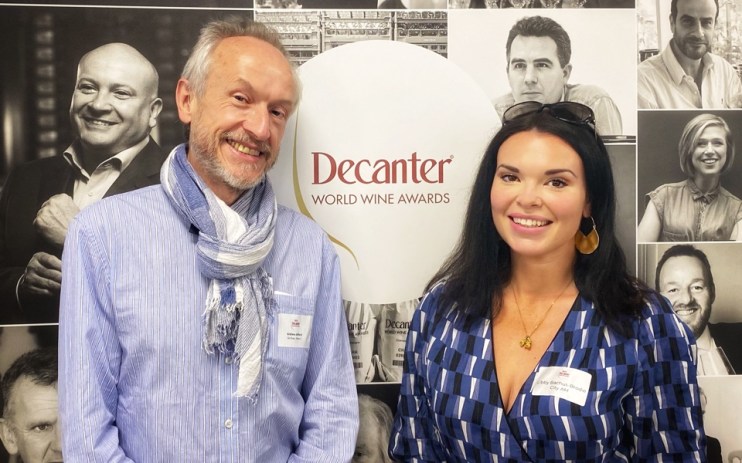
I went behind the scenes at the Decanter Awards to meet co-chair Andrew Jefford and find out just what sets these awards apart. Now in its 18th year, this is the largest, most respected wine awards in the world and three things immediately struck me as being important for any wine consumer.
Firstly, all the wines are tasted blind, so no one can be influenced by anything but the wine itself. Unlike other competitions, however, here the wines are also evaluated by price point. If you were to blind judge an £8 bottle against an £800 bottle then the more expensive one would probably have the edge and if all the winners ended up being priced over £100 a bottle, it would be pretty useless for the average consumer.
Decanter sees themselves as a wine awards system for the actual drinker, not just the wine academic, so they divide the wines submitted into “value wines” (under £15) and evaluate them against their peers. This means that though a £10 bottle may not offer the complexity of a £100 bottle, they can still be judged to be ‘award-winning’ and you can be assured of that wine’s comparative excellence without breaking the bank. A stickler for fairness and value for money, an awarded wine can also be downgraded should a producer then decide to increase their prices.
Secondly, there was a real and impressive focus on making the entire process as eco-friendly and low waste as possible. Andrew, who has been involved with the awards since they first began, says that sustainability is “a concern for all of us and a big challenge for the wine world”. When judges taste a wine, the rest of the bottle is often just thrown away. Here, however, the wine is tipped into giant vats where it undergoes an anaerobic process to break it down and convert it into energy. Meanwhile every bottle is crushed then run through a machine which identifies and separates the glass by colour. Within just 30 days, they have all been recycled back into brand new wine bottles. It’s pretty incredible stuff. What about the bottles left unopened I wondered, casually checking to see how much room I had in my handbag? Unfortunately for me, any remaining bottles are auctioned at Christies for charity. Decanter has raised more than £1m for Water Aid.
Thirdly, there is an absolute commitment to equality and fairness within the judging itself. It was like witnessing a bottle ballet as layers of controlled chaos unfurled around me. Over 18,000 wines are tasted, this year by around 150 judges who must have tongues of steel. To ensure each glass arrives in the same way, all bottles are opened exactly 45 minutes before tasting and served at the same time in the same glass. (The Riedel Riesling, deemed to be the best for all wines, should anyone be looking for a new universal wine glass). Teams work tirelessly behind the scenes to seamlessly deliver the right wines to the right judges in perfect synchronicity.
Judges are chosen from a cross-section of the wine world, from trade to buyers, teachers to sommeliers. Andrew has particular respect for the Somm’s palates who, he explains, “taste on behalf of the drinker”. When you have studied wine or work in it, it can become easy to start tasting purely analytically, become hyper-critical and “lose sight of the fact that this is about what is good for a person in a shop or restaurant who wants to find their way to a nice bottle which will over-deliver”. At the end of the day, it is “not about how you taste, it is how you drink”.
Wines are tasted by three judges and a regional chair who has the final say on the score. Any wines given “Gold” or “Platinum” status go on to the three co-chairs for four more days of rigorous tasting. If a wine scores 95+ they are awarded the “Gold Medal”, if they receive 97+ they become “Platinum” and of these, 50 wines out of the 18,000 submitted are granted the highest honour of “Best In Show”. Not all will break the bank or be from known regions. Andrew says that of the 50 selected, usually around 10 are £15 or under, “we look for finesse, class, identity, but they can be obscure, this isn’t sales driven so there may be unexpected wines in the top 50”.
It is clear that Andrew is passionately proud of the Decanter Wine Awards and its real impact on winemakers, drinkers and the industry as a whole. “Our global reach is the largest in the world, we are tasting wines from Thailand, India, Kazakhstan…and the judging process is unrivalled”.
I ask him if there are any new regions that he is particularly excited about at the moment. Georgian and Eastern European wines seem to be hitting the market in a big way currently, but Andrew is quick to qualify that the very first wine traces were found 8,000 years ago in Georgia and they have won gold and platinum before, “technically” he adds “New Zealand and Oregon are newer regions, only happening in the last 50 years, but making some fantastic wines”.
For him, the most exciting area right now is England. “We’ve seen English wine go from national joke to national treasure. I haven’t seen as big a transformation in any area of the world in my whole career.” He clearly has a soft spot for Peter Hall’s Breaky Bottom, one of England’s oldest vineyards, who 30 years ago risked harvests with no fruit at all but are now stocked at Corney & Barrow.
So next time you see a Decanter Awards sticker, you can buy that bottle safe in the knowledge that the wine has been thoroughly and thoughtfully tested, in a sustainable, environmentally aware way. “Wherever you are in the world, if you see that label it really means something, and I am privileged to be part of it”.
The Decanter World Wine Awards 2021 results are out on 7 July.
Libby Zietsman-Brodie is the Founder of Bacchus & Brodie, an independent wine consultant and co-creator and presenter of Boozy & The Beast: How To Drink Better – an irreverent series on wine, without the snobbery. Instagram: @a_little_sip_of_me_time @boozybeastTV