Bellator: MMA promotion’s head of Europe David Green on its new deal with the BBC, wooing the UK and Ireland and why it has a strong female following

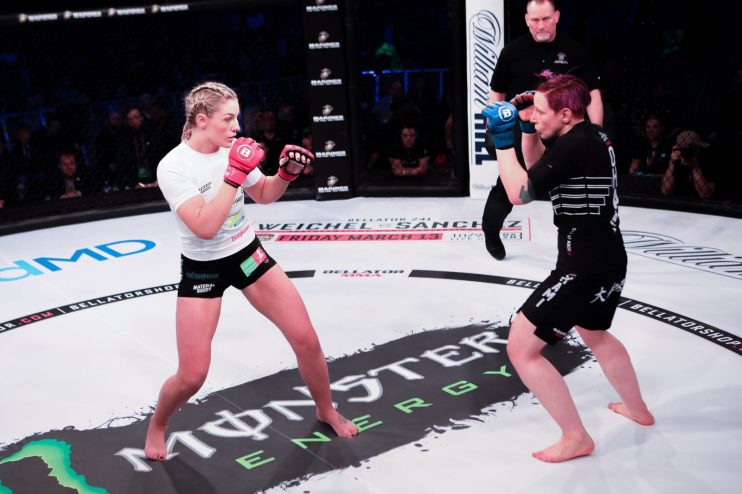
Question Time. Antiques Roadshow. Songs of Praise. To that list you can now add cage-fighting organisation Bellator.
This month the BBC became the home of the American mixed martial arts (MMA) promotion in the UK, meaning it now sits alongside some of the most traditional shows in British broadcasting.
While it might rile the “Disgusted of Tunbridge Wells” contingent, the BBC’s investment is a huge boost to the credibility of Bellator, the second biggest MMA series after the Ultimate Fighting Championship (UFC), as it looks to raise its profile beyond the United States.
“I’d be lying if I denied that,” David Green, Bellator’s Tyneside-born head of Europe, tells Morning Wire with a hint of a satisfied smile.
“I think the free-to-air offering is very important for a growing sport. When you are the Premier League you have the luxury of hiding behind a paywall, which we would rather not do. So we’re very happy with a deal like this.”
Previously, Bellator’s US shows were on Sky Sports and their sporadic European events on Channel 5.
Although only on iPlayer and the BBC Sport website rather than primetime BBC1, the new arrangement means all of the shows will be housed in one place.
“Once BBC came to the table to cover all the events, that was the tipping point for us,” says Green.
Bellator making inroads in UK and Ireland
The UK and Ireland is the third biggest market after the US and Brazil for Bellator shows, which is named after the Latin word for warrior.
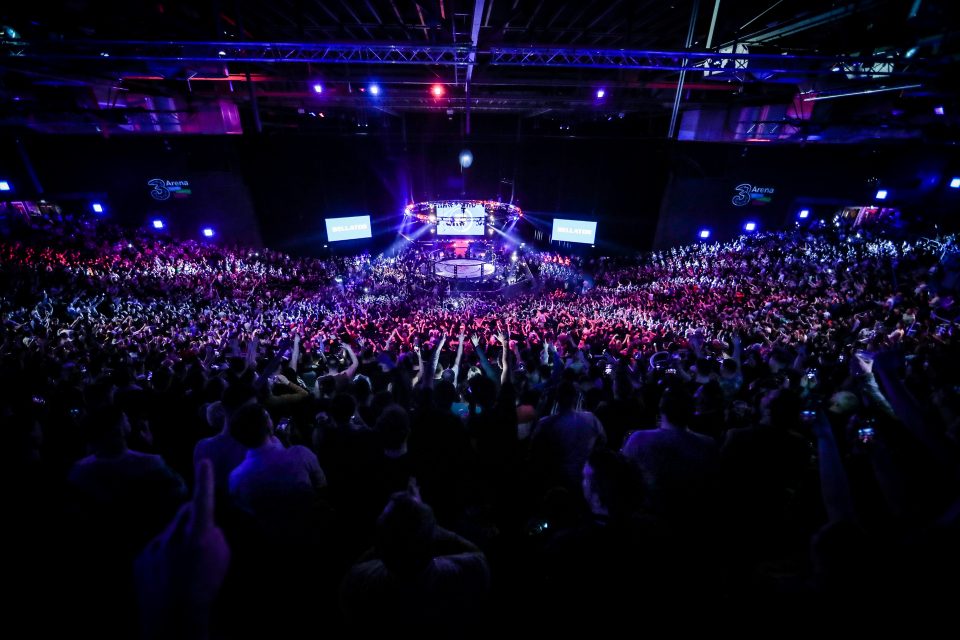
It has made a concerted play for the European market with six events a year here, including two apiece in London and Dublin that regularly draw 12,000 fans.
Bellator’s last show in front of a crowd came at Dublin’s 3Arena in February last year.
UFC spreads itself thinner across more countries and, despite its links to Conor McGregor, last visited Dublin in 2015.
“We’ve made huge inroads in Ireland, it’s been very successful for us,” says Green.
“It’s probably the best crowd in the world and sorely missed over the last few months. We’ve got some fantastic Irish fighters as well.”
Although Bellator’s financial information is closely guarded and Green isn’t about to open the books, some facts are known.
Viacom itself said Bellator would become profitable for the first time in 2018 thanks to a broadcast deal with DAZN.
Informed analysis based on the little publicly available data put revenue at $35m in 2018 – from $3m in 2010 – with an expectation of rising to $100m by 2020.
Covid has, of course, checked that progress, forcing six shows to be cancelled last year.
Bellator managed to offset lost ticket sales by staging events behind closed doors in the US, thus retaining broadcast and sponsor income.
And while a flurry of 2021 fight nights begins in April, Green admits to “looking into our crystal balls like everyone else to see when we can put some bums on seats”.
Why Bellator has a strong female following
As a relatively new sporting proposition that lacks the heritage of other combat sports such as boxing, part of Bellator’s battle is challenging preconceptions.
“I think there has been this view that the athletes were in some way inferior or it was not quite a sport,” says Green.
“But I think there’s a real realisation that these guys and girls are Olympic standard in terms of their athleticism.”
It’s no surprise that Bellator’s key demographic is men aged 16-34, but Green says the size of its female following does raise eyebrows.
“We’re probably 35-40 per cent female in arenas, which I think is quite interesting to some people. And that’s largely reflected in the TV audience.”

That gender split is in part because of the popularity of combat sports fitness classes and the competitors’ aspirational lifestyles, he says.
“And then of course the big thing is the athletes themselves. I can’t think of another sport where you could put a female headline fight on and it would make pretty much no difference – it might even improve the gate or TV audience – and they’re paid on the same level as our male fighters.”
Bellator’s February 2020 show in Dublin was headlined by Northern Irish fighter Leah McCourt.
“I think a lot of sports would like that. If you could fill stadiums with a female Premier League football competition I think they’d jump at that. It’s organically grown.
“The sport’s new and there has been a great female audience from the beginning, and the fights are as competitive and exciting to watch.”
How MMA measures up on safety
Audience growth might be on Bellator’s side but other factors are not, such as the prevalence of increasing concern for athlete welfare.
From the NFL’s concussion lawsuits to early-onset dementia fears in football and rugby union, and even distaste for boxing, it feels as though combat sports are swimming against the tide.
“It’s something we’re constantly looking at,” says Green.
“I’m a massive rugby fan; it has had to historically evolve. There were people playing rugby 100 years ago, running into each other with not a care in the world.
“MMA has grown up this century as a new sport. As a result we’ve had to double down on the safety and how we deal with it.
“Unlike boxing, we don’t have a standing count, people don’t get back up, we don’t have big gloves.
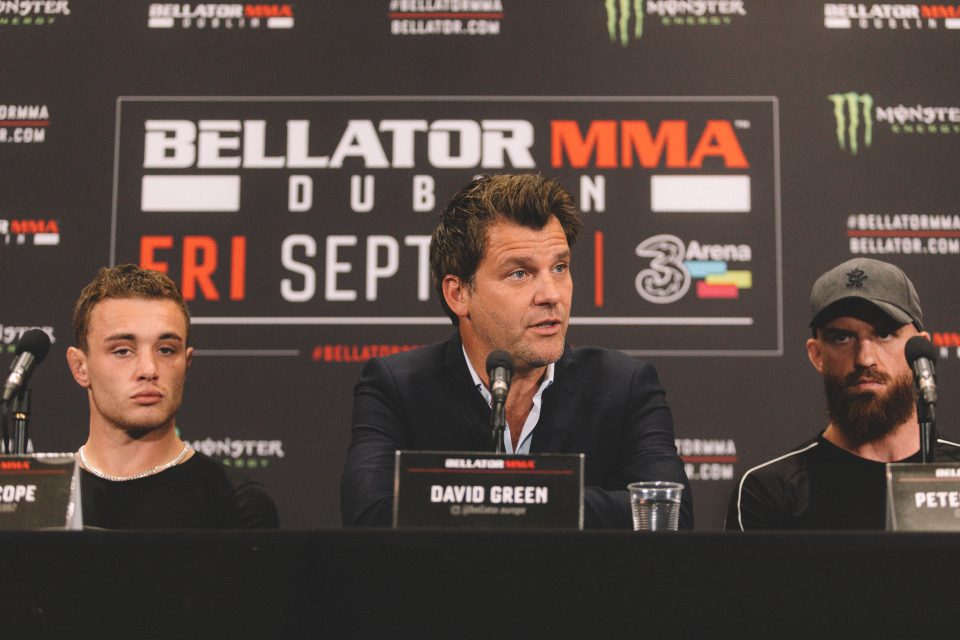
“Even though there is perhaps a little bit more blood in MMA, the actual striking and the duration of the fights is actually quite short.
“It’s something we have to keep our eye on and I’m sure all sports are looking at it. But I’m confident we’re doing the very best in terms of safety.”
Far from being put off by the violence, millennial audiences appreciate MMA’s alignment with healthy lifestyles, Green says.
“MMA practitioners are on the whole very clean living. A lot of them are yoga teachers when they’re not fighters. There’s a very zen spiritual aspect to fighting.”
The numbers – and a one-off event in Paris in October – were good enough to convince the BBC to partner for 2021, in any case.
“They’ve done their research and perhaps it brings in an audience that they didn’t already have,” says Green.
Fourth biggest sport in the US?
Bellator returns on 2 April at the Mohegan Sun Arena in Connecticut, their base for lockdown shows.
It will be the first of four fight-nights in six weeks; beyond that, Green is looking forward to resuming his mission in Europe.
“It’ll be the same plan: going back to places where we’ve had success, such as Dublin, Wembley, Paris, Milan and then looking at new European venues that we’re yet to visit.
“Bringing live shows back to the UK and Ireland is a priority for us. We are keeping our minds and our options open, and I remain optimistic that we’ll get back to both London and Dublin before the end of the year.”
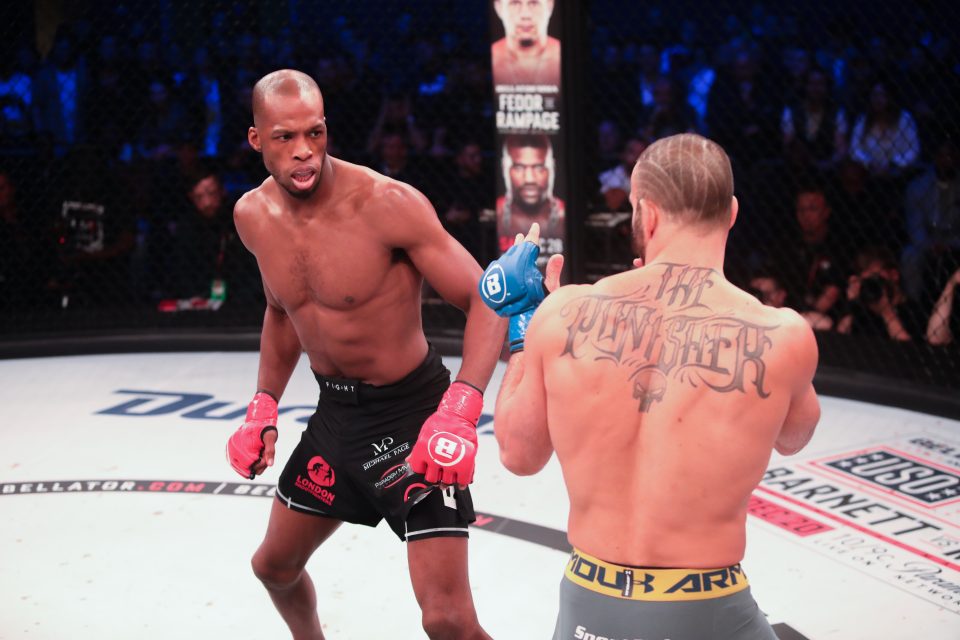
MMA has come a long way in the last decade and Green, previously of British promotion BAMMA, sees a bright future.
“It had less baggage to carry in the US; collegiate wrestlers were coming into MMA so it didn’t have the connotations it perhaps had in the UK that we had to get over.
“It’s arguably the fourth biggest sport there, depending on who you are listening to. When you think of that as a scale there’s room for a lot of growth in the UK and Europe.
“I’d love to think it could be the fourth biggest sport but we’re certainly in an upward trajectory, which you can’t say for many sports at the moment.
“We’re just pushing ahead all the time and things like this BBC deal go a long way to help that.”