
Belu CEO, Natalie Campbell, on how the ethical bottled water company navigated the pandemic

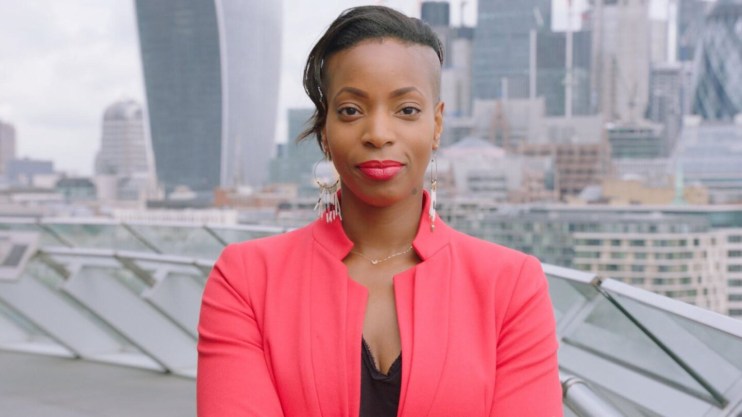
Natalie Campbell faced an instant crisis when lockdown began just days after she became CEO of Belu. She tells Lysanne Currie how the ethical bottled water company navigated the pandemic, and is now ready to thrive once more.
This article first appeared in ICAS’ CA magazine.
Natalie Campbell was just 15 when she decided she wanted to be a CEO. By 19, she had founded her own business and, aged 20, she’d secured a £100k bank loan. At 21, in her final year at university, she opened a retail franchise. By 23, she had joined her first board.
Fast forward to March 2020: with diversity and philanthropy at the top of her agenda, Campbell got her dream role as CEO of ethical bottled water producers Belu – a company that donates 100% of its profits to WaterAid and helped to transform some 334,000 lives with clean water. Her “shine theory” leadership style (described by its co-creator Anna Friedman as a “commitment to collaborating with rather than competing against other people, especially other women”) was very much to the fore.
But then disaster struck: lockdown one began three weeks later. The UK, including all of Belu’s hospitality customers, shut down. But thanks to her stamina and entrepreneurial fire, both Campbell and Belu are still going strong. Here she tells us how she navigated leadership through lockdown and recounts the lessons learnt.
I started at Belu on 2 March 2020. From the start it was clear the £6m-turnover business and sales I’d inherited were going to flatline overnight. So the first couple of months was spent in crisis management – not in a panicked, arms-waving-in-the-air way, but in that I had to lead a team, be positive and optimistic.
Initially, I had to get my head around the business, the operating model and the finances. For the first time in an economic crisis, there was a realisation that the entire hospitality sector was going to close – and our business would be totally exposed.
I had to ensure messages delivered to the team hit the right note, while also being very aware that we had no answers – but no one anywhere had any answers! So what I did was focus, very simply, on money in and money out. We set up what I called the Belu Cobra meeting. Every morning, we’d run through creditors and debtors and get a real understanding of every single penny that was being spent. And if it wasn’t essential, then it was cut. Things like marketing, advertising spend, or anything we didn’t need to do in that moment.
But what I also did was create a new executive leadership team from the heads of department. Because we ultimately give 100% of our net profit to WaterAid, the real challenge became how to support the communities right outside our door. We couldn’t give them money as it was all locked into WaterAid. So I tried to get my new team to think about how we could support food banks or women’s refuges, and the team rallied around that.
I’d only met them once before that March. So I had to build a whole new culture, virtually. Ironically, the silver lining in the pandemic for us at Belu was the crisis itself. It gave people a reason to bond. A lot of my team were home-schooling their kids, and you just had to show warts and all – all the sorts of things people don’t really talk about in business, their shadow sides. In turn, I gave them lots of insight into how my brain works, how I respond when I’m tired, and encouraged them to do the same. The important thing was looking after our people.
Leading light
Ego is one of the downsides of leadership. People believe they have to show up because of this all-seeing, all-knowing stoic character, and I do hope that’s changing. But on day one, I basically said: “I’m not that person, it’s not how I lead. There is nowhere to hide, and I’m now running a business that’s not going to be profitable, for the first time in 10 years.”
It was clear we were going from a £6m-turnover business to possibly less than two – we did indeed end the year with £2m in revenues and we weren’t profitable. When you remove all the bravado of what success looks like, it just levelled the playing field.
It worked really well. In addition to giving everyone projects, we created the idea of the “gift of time”. As we’d never have this time again, I set everyone the task of thinking about what our future looked like. Our project group started work on new ideas with people they didn’t usually work with – one of the things that helped us to build this new culture.
While lots of people know we give our money to WaterAid, they couldn’t tell you much about our environmental impact. So we started this quarter with a totally new purpose: to change the way the world sees water. We’ve got a flavoured drinks line here and filtration in Hong Kong, a new territory. The reason we’ve recently managed to launch a tonics-and-mixers line and set up in Hong Kong harks back to that watershed moment, because we started to think about the long-term future, as opposed to the immediacy of the pandemic.
We created a 10-year strategy and roadmap, and then a five-year budget. And we said: “Regardless of what happens in the external world, this is what we are going to do.” We created our own sense of certainty. For our budget, we said: “Let’s just be realistic. If nothing happens until May, what do we need to do? What does it look like financially?” What we had in our back pocket was knowing we were going to launch those tonics and mixers. So we pushed it back to April, to Earth Day. We knew we were launching in Hong Kong, and we had those partners lined up from 2020. We now have a very different Belu.
Governance for good
One of the things we did during lockdown, to get our house in order, was change our standard articles. I’m performance-managed now on how much Belu contributes to supporting clean water and sanitation activity around the world, the climate response and responsible consumption and production, not just hitting a particular goal by the financial year-end.
From that moment, in March, I had all the tools I needed for survival. I’d been having roundtable conversations, looking at data on the economic impact of coronavirus for London, for the hospitality industry – and getting these briefings came in very handy because I could share them with the team. In terms of cashflow, I’d already learnt resilience when my first business, Morgan De Toi, went into administration because the main franchisee closed.
For my own self-management, books and Classic FM were a lifeline, along with red wine and avoiding anything too distressing on the news. It gave me the resilience to wake up every day. I hit a wall earlier this year and, in May, asked my COO Charlotte Harrington to become my co-CEO.
The best bit of business advice I’ve ever been given is one I’ve been sharing a lot recently: know yourself, be yourself and look after yourself. I’m excited about seeing my team again. And, hopefully, we’ll soon see the fruits of our growth plan, both in the UK and internationally. I’m an eternal optimist.