Blame the bank: How finance caused today’s housing crisis

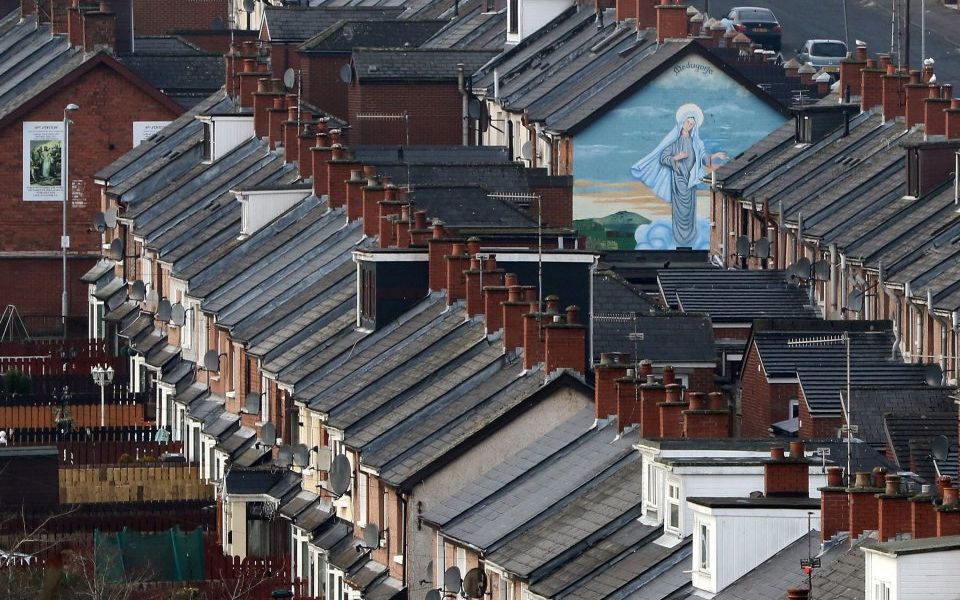
Home ownership is increasingly out of the reach of younger adults in the UK. The share of those aged 25-34 who own their home fell from 55 per cent in 1997 to 35 per cent in 2017, according the Institute of Fiscal Studies.
A decade of stagnant wage growth means that the gradual house price falls in some parts of the country, including London, over the past year have barely dented the affordability crisis.
The standard argument – repeated ad infinitum by politicians, policymakers and commentators – is that it’s a supply-side problem. The solution is to build more homes.
Read more: Young adults pushed out of market as house price rises outpace wage growth
For those on the left, there is a lack of public housing due to decades of underinvestment by the state. For the right, the problem is excessively restrictive planning preventing the market from doing its job.
There are of course major supply-side housing issues in the UK. But there is an elephant in the room (or, more correctly, “house”) on the demand side: credit.
In the textbook model, banks primarily lend to firms for investment and working capital. But in the 1980 and 1990s, a fundamental “debt shift” occurred in the UK and most other advanced economies.
Banks began lending more to households to buy homes than they did to firms.
Outstanding mortgage loans in the UK has grown from just 20 per cent of GDP in 1980 to 60 per cent today, while outstanding business loans have risenfrom just 10 to 20 per cent, with almost half of the latter for commercial real estate purchase.
Regulation used to mean that commercial banks hardly engaged in domestic mortgage lending, which was confined to mutuals with conservative lending practises.
But in the 1980s, budget pressures, competition with the US, and the desire to spread home ownership saw Margaret Thatcher and the politicians who followed her liberalise the banking system.
Banks rushed into property lending. Mortgage loans have one major advantage over business loans: if they loan goes bad, you have the property as collateral.
For a while, it seemed to work: home ownership rates increased rapidly from about 55 per cent of households in 1980 in the UK to over 70 per cent by 2000.
But since the turn of the century, rates have been falling. More and more loose credit has flowed in to an inherently finite supply of desirable locations, pumping up house prices at a much faster rate than incomes.
As prices are driven up, so more financing is required for home purchase, creating a feedback cycle that eventually leads to a bust, as in the crisis of 2007-2008.
Rather than pushing against this feedback cycle, successive British governments have supported it by repeatedly reducing taxes on property, enabling windfall capital gains for those lucky enough to have bought at the right time, as well as fuelling demand with subsidies on mortgage debt and for first-time buyers.
Post-crisis, central banks have introduced stricter regulation on mortgage lending. But this has been offset by the huge quantitative easing programmes that have driven down not just short-term mortgage loan rates, but equally medium to longer rates on governments bonds.
The latter has made property much more attractive as a “safe” asset for domestic and global investors, meaning non-bank financial institutions have also joined the party. Property – in particular in big cities like London – has become the new gold.
The concerted efforts by central banks to reinvigorate asset-backed securitisation markets – a key cause of the financial crisis – has also helped amplify the housing-finance cycle.
Policymakers and financial regulators must recognise that banks will always be able to create credit at a faster rate than new homes can be built if they are allowed to.
In the lead-up to the financial crisis, there were huge construction booms in Spain and Ireland, but prices kept going up as banks poured more credit in to the system. When it finally came, the bust was actually worse than in the UK.
To break the housing-finance cycle, demand as well as supply side policies need a rethink. Fiscal and financial policy needs to do the heavy lifting here.
First, regressive council tax should be abolished and replaced with a tax on the annual increase in the value of the land underneath a property.
Second, banks need to be gradually weaned off domestic property and return to their traditional model of business lending.
Housing’s main role should be to provide shelter for people and businesses, not a source of speculative rentier profits for banks and financial investors.
Read more: Would encouraging landlords to sell to renters solve the housing crisis?