Blueprint for Brexit: Why post-EU prosperity isn’t unthinkable

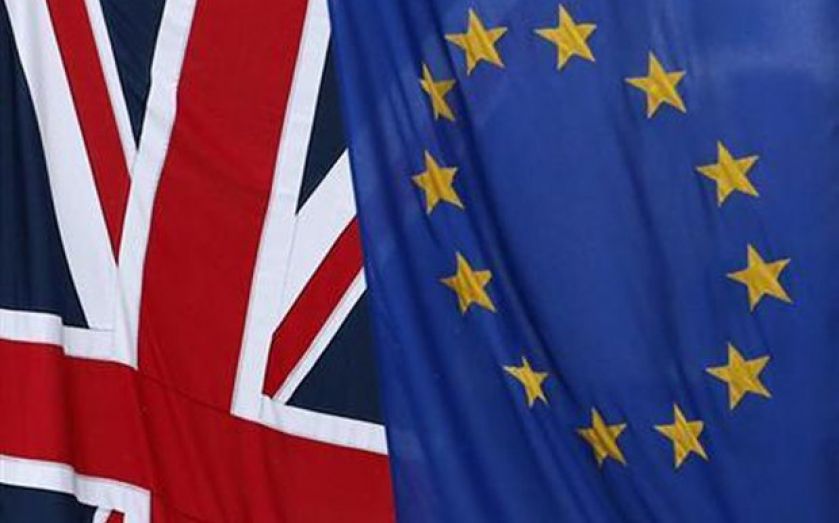
IT WOULD be easy to think that the debate about Britain’s membership of the EU has been done to death. Yet there has been relatively little serious discussion about the alternatives to EU membership – an urgent issue given the possibility of an in/out referendum in 2017.
Outlandish claims that exit would be utterly catastrophic or unbelievably good do not count as serious. And even in more reasoned debates, commentators have tended to project their own favoured set of policies onto a post-exit UK, without examining whether such a scenario would be politically or economically viable. This is a major problem, because there cannot be an effective discussion about the future unless we have a clear idea of the practical options available.
It was to address this gap in the national conversation that the Brexit Prize was launched by the Institute of Economic Affairs last year. Participants were asked to assume that there had been a referendum vote in favour of a British exit from the EU, and to then put forward a set of policy proposals for how we could take advantage, or make the best of, this situation. (It was possible to think an exit would be the wrong decision – you then had to come up with proposals for how this might be handled and mitigated).
We received over 150 initial proposals, and 17 were invited to tender a full submission, with six of these shortlisted. Among my fellow judges were former chancellor Lord Lawson, historian David Starkey, economist Roger Bootle, Labour MP Gisela Stuart, LSE governor Tim Frost, and professor Martin Ricketts.
Yesterday, we announced the winning entry – by diplomat Iain Mansfield. His submission, A Blueprint for Britain: Openness not Isolation, is a thoughtful and balanced examination of the options facing a UK government in the event of a vote for exit, and of the likely costs and benefits of different options.
Mansfield makes clear that the decision whether to leave or remain in the EU is ultimately political, rather than economic. Arguing that there is no overwhelming economic case against an exit, the calculation of the likely effects depends on how certain negotiations pan out. He estimates that the long-term impact would be somewhere between minus 2.6 per cent and plus 1.1 per cent of GDP, with a best estimate at plus 0.1 per cent.
To take maximum advantage of Brexit, however, Mansfield sets out the features of a broad new macroeconomic and political strategy, based on openness and actively pursuing trade and political links with both Europe and countries in other parts of the world, like China. For the foreseeable future, the most rapid growth is going to take place outside Europe, and developing links with these dynamic parts of the world should be a crucial priority for any British government. This doesn’t mean turning our back on Europe. His entry also calls for Britain to rejoin the European Free Trade Area, while remaining outside the European Economic Area. Our relationship would have a degree of closeness somewhere between the positions of Switzerland and Turkey today.
Mansfield also proposes a series of measures to preserve Britain’s position as the number one inward investment destination in Europe. Britain would draw up a Great Repeal Bill that would repeal many (but not all) of the EU regulations currently incorporated into UK law. This would have to involve a detailed selection process, and could bring significant economic benefits. Candidates include the Working Time Directive, EU bans on pesticides, binding renewable energy targets, and health and safety laws imposed on businesses operating purely domestically.
There are also other detailed policy recommendations. For example, he suggests reducing corporation tax to 15 per cent over five years, and using some of Britain’s estimated £10bn annual EU contribution to cut the deficit.
The point to take from this, and from the other entries, is that Brexit would not be, even figuratively, the end of the world. Instead, it would open up a range of options and possibilities, both good and bad, and would make possible radical departures from the policy consensus in any one of several directions. There would be the chance to address problems facing the UK economy, and to create a new international role for Britain, both drawing on longstanding links (with the US and Commonwealth) and developing new ones.
So far, the EU debate has lacked an essential element; that of reasoned and informed discussion of the possible options for public policy were Britain to leave. This paper and our other submissions show that there is ample scope for that kind of debate. While you may still think an exit is against Britain’s best interests, it should not be seen as an impossible or unthinkable prospect.
Steve Davies is education director at the Institute of Economic Affairs, and a member of the IEA Brexit Prize judging panel. Visit http://www.iea.org.uk/publications/research/the-iea-brexit-prize-a-blueprint-for-britain-openness-not-isolation to read the full entry.