Book off! There are too many books – here’s a solution

For more content from Morning Wire – The Magazine like this story about books, click here
“Everyone has a book inside them,” Christopher Hitchens once quipped, “which is exactly where it should, I think, in most cases, remain”. He wasn’t wrong. There are too many books. They scatter the shelves of WH Smith, gathering dust. Top 10 celebrity bestsellers fill the walls of airports where tired eyes linger on tomes they will never read.
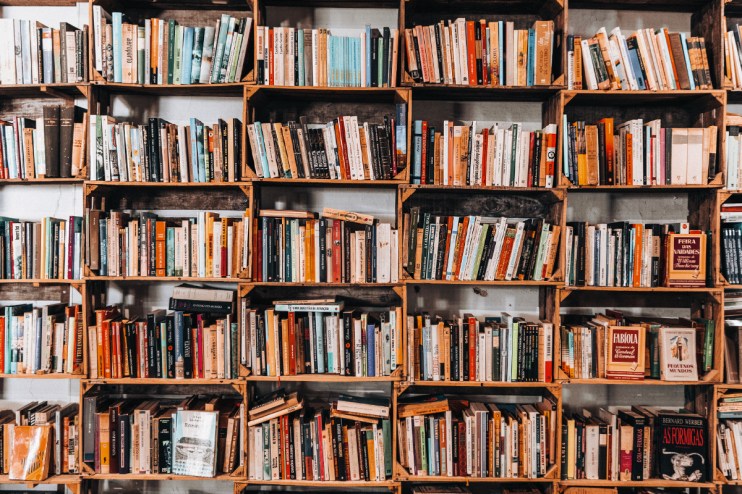
Books are used as decoration: you can pay an interior designer to organise your collection by the colour of their spines or – even more heinously – with the spines facing inward. YouTubers shamelessly film themselves buying books with which they make bedside tables. The mighty book – a vessel of ideas – has been reduced to a decorative detail.
The world now contains over 145m different titles, with 1.4m more published each year. Up to 980,000 of these are self-published, largely egotistical ‘rich people’ projects, with at best a paltry three-figure readership. The deluge of titles dooms us to suffer from ever-worsening decision paralysis, which discourages the picking up of a book in the first place.
Why does this matter? Isn’t the democratisation of publishing a good thing, sure to improve the quality of humanity’s overall literary output? Haven’t a share of books always been ‘bad’, their existence allowing good books to transcend the rest?
Well, no. The proportion of bad books is completely out of whack. The bodies that are meant to curate them are failing us. It’s often touted – by the kind of people who roll out JK Rowling’s several trips to publishers before her Harry Potter success – that publishing houses are too elitist. But most publishers consistently choose quantity over quality. They have lost sight of what makes a book valuable. Some, like the 2007 runaway success Wreck this Journal, are made explicitly to throw against a wall. That’s not a book, it’s a stress ball. And don’t get me started on What to do While you Poo.
Too often, publishers come across an article or a podcast or a meme or a tweet and, sensing an opportunity, think: zinger! Let’s turn it into a book! This is how Simples: The Life and Times of Aleksandr Orlov made its way to my door (my father brought it to me from Moscow… Airport). There is a relentless replication and extrapolation of one piece of content into as many forms as possible in a way that disrespects the art of literature. “Culture today is infecting everything with sameness,” wrote Theodor Adorno and Max Horkheimer in 1947.
Publishing a book has become no more than a stud in a person’s CV, an adjunct to a Wikipedia page, an (unregulated) signal of expertise. Even in academia, publishing your PhD has become a mere accolade. One researcher admitted to me that she didn’t anticipate anyone would actually read her upcoming publication ‘Anatomy of an opposition: Anti-sectarian movements in Lebanon’ (in spite of its clear worthiness). It was simply to prove her credentials.
Then there is the not negligible matter of the environment. In the UK alone more than 77m unsold books are destroyed each year. If they were on average 350 pages each, that would account for the destruction of 1.6m trees. In a study of 86,000 books published, around 60,000 sold no more than 20 copies, according to data collectors Nielsen Bookscan. That’s a pretty damning commentary on the surplus produced by the publishing industry. On top of all this, a 2011 survey found the average Brit owns 80 books they haven’t read and showed that 70 per cent of books in the average bookcase remain unopened. Four out of 10 of those questioned confessed that their works of literature were purely for display purposes.
Where does that leave us? In lieu of a Soviet-style Goskomizdat – the State Committee on Publishing in the USSR – perhaps we could agree upon a moratorium on memoirs before said author hits the age of 80. It is time for reference books to cease physical publishing, too, given their short shelf life and the existence of a thing called the internet. We should reintroduce pamphlets as a matter of urgency. Books from Sadiq Khan’s take on air pollution, Breathe, to Greta Thunberg’s No One is Too Small to Make a Difference would benefit from a bite-sized format.
Then again, perhaps a new Goskomizdat wouldn’t be the worst thing. I bet, at peril of a gulag, no one would risk their freedom to publish What to do While you Poo.