Boris Johnson is right to delay corporation tax cuts

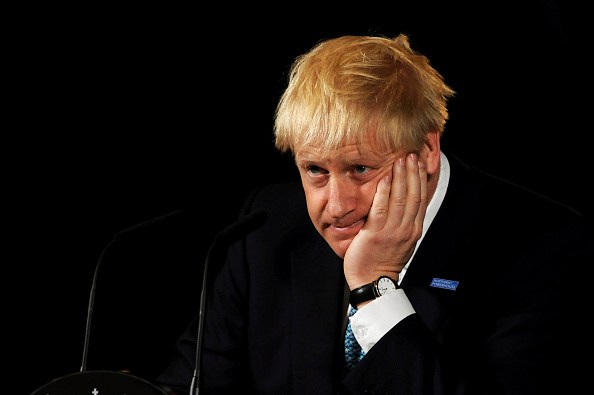
Boris Johnson showed a lot of guts to go to the CBI Conference and announce that he was delaying a planned corporation tax cut in order to fund public services. This was a speech which was long overdue.
Since 2010, governments have given away corporation tax cuts worth over £60bn. This figure doesn’t include the billions of cuts in business rates and increases in capital allowances.
Governments have banked the house on the idea that if you cut taxes for business, they invest more, and that creates the growth needed to pay for good public services. But this logic simply doesn’t add up when you consider the UK’s economic performance over the past decade.
Politicians have been saying for years that workers deserve a pay rise, yet pay is still below levels reached before the financial crisis. UK productivity has been on the floor and doesn’t look like it’s going to turn a corner.
And business investment in research and development is poor compared with peers: the OECD average for business investment in R&D is 1.45 per cent of GDP, but in the UK it is just 0.9 per cent. When you compare this with the US (1.8 per cent), Germany (1.9 per cent) and Japan (2.5 per cent), UK business is simply not pulling its weight.
Then consider the deficit. At the end of March 2019, the deficit stood at over £25bn. We have made a lot of progress since 2011 when it stood at over £140bn — but after nearly a decade of public spending cuts, we still haven’t closed the gap. New spending commitments mean that we aren’t likely to see a balanced budget in the next five years.
For this to be sustainable, the economy would have to achieve consistent levels of growth not seen since before the financial crisis. Does anyone believe that business is going to invest in achieving that target?
The area that is most trumpeted by defenders of the status quo is employment. The UK has created an impressive 3.8m jobs since 2010.
Putting to one side whether all this employment is a good thing (and isn’t just businesses putting off investing in capital and R&D) — if we link the corporation tax cuts that businesses have received to employment, it works out at around £16,000 per job created. This is a huge level of subsidy. And it doesn’t take into account that not every business has contributed to this jobs boom.
It isn’t anti-business to say that, at the moment, companies simply aren’t delivering the goods. And nor is this all about Brexit. Economic growth, productivity, wages, and investment were poor by historic and international standards long before the 2016 referendum.
The truth is that politicians and the UK business establishment have become complacent. The consensus that just chucking tax breaks at companies leads to good results is an experiment that has been thoroughly disproven. We need to take a new approach.
Of course, business is vital to the future of the country. It generates the innovation and dynamism that we need. It is also critical to creating wealth which needs to spread around the country. But not all businesses are equal. Some are delivering while others are pocketing tax cuts and putting their feet up.
We need to start targeting tax cuts more effectively. There are some forms of business which have consistently delivered for the country. Social enterprises, for example, contribute over £60bn to the UK economy and employ two million people. Over three quarters of them are paying the living wage. Many of them are hiring people with disabilities, veterans, homeless people, and ex-offenders. Cumulatively, they are reinvesting billions back into communities and into innovation.
From making world-beating beer from food waste, to solar-powered buses, social enterprises are working across every sector of our economy. Tax cuts for these businesses are going to be used to pay workers more, invest in expansion, and fuel growth in left-behind communities.
Our high streets and towns also need support, and businesses located in these communities should get extra support given the conditions that they are operating in. Tax cuts here would boost employment and help the most disadvantaged areas.
Businesses working at the frontier of the new economy in automation, quantum computing, and life sciences may also need further support to help them compete in the global race.
But blanket “cut and hope” business tax cuts have to go. It is an approach that we can no longer afford.
The Prime Minister has said that he wants to unleash Britain’s potential. If he takes a more targeted approach to business tax cuts, he has a shot at delivering that mission.
Main image credit: Getty.