Boris Johnson’s interventionist obesity strategy will fail. We need more choice, not less to slim down

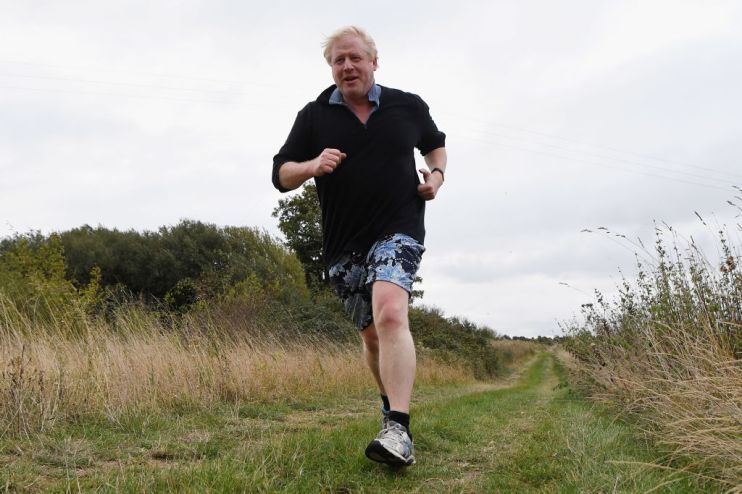
Obesity is on the rise like never before. More than one in four people in the UK are now obese, one of the driving forces behind the mortality rate from Covid. In the year leading up to the pandemic, more than a million people were admitted to hospital for obesity-related treatment in England.
Record hospitalisations should be a wake-up call. Public health authorities on both an international and national level have failed to front up to the sheer scale of the challenge. Public Health England and the World Health Organisation are both indoctrinated with interventionist tunnel vision. For them, fighting obesity is banning things, taxing them out of existence, trying to manipulate consumers with intrusive campaigns and attempting to shame them into making “better decisions”.
Those charged with addressing public health issues are reading from the same tired hymn sheet of failed policies. They are trotting out twentieth-century ideas to deal with twenty-first-century problems and their failures have tragic consequences on an enormous scale.
The headline act in this appalling show is the government’s plan to ban junk food ads. The policy looks set to go ahead after being included in the Queen’s Speech, despite extensive campaigns calling attention to the problems with an overly intrusive approach, for the advertising industry and everyone else.
My mother, a working-class, immigrant single parent, runs a small baking business out of her kitchen. Under the mad ad ban plan, my mum posting pictures of her cakes on Instagram will become illegal. And for what? The government’s own analysis of the policy found that it will remove an average of 1.7 calories from children’s diets per day – roughly half a Smartie.
When asked about the case of a bakery with an Instagram account, the prime minister’s spokesperson was unable to offer any reassurances. A government source quoted in the Sunday Times earlier this year said: “there will be caveats – this is not aimed at small companies advertising home-made cakes online. It is aimed at the food giants.” It remains unclear how a blanket ban on a certain type of advertising can be legally targeted at some companies and not others.
The solution to the obesity crisis lies in more freedom of choice, not less. Even those evil food giants are responding to public pressure, keen to be seen making an effort in this area. McDonald’s, for instance, is providing five million hours of football training across the UK. Even Britain’s pubs play an important role, contributing more than £40 million every year to grassroots sports.
When people voice their concern en masse about a particular issue, private actors go out of their way to make themselves useful and do something about it. Countless companies are voluntarily investing in healthy lifestyle schemes or cutting back their own contributions to obesity. Tesco, for example, has laid out an ambitious plan to boost the proportion of its food sales which is made up of healthy products to 65 per cent, setting an example for the rest of the industry as the market shifts.
Attempts to centralise responses to public health crises in government and concentrate responsibility in Whitehall fail consistently. Tesco’s radical new agenda was not motivated by public health bureaucrats, but instead by demands from its own shareholders and pressure from competitors including Sainsbury’s and Marks & Spencer. While Public Health England is cracking down on Marmite ads and Instagram pictures of cupcakes, the group of people arguably doing more than anyone else to make Britain healthier are private corporate investors.
Companies and consumer choice are our allies, not our enemies, in the fight against obesity. Rather than trying to hold back the tide, let’s harness the power of the market to tackle obesity.