Britain needs to start designing for drought

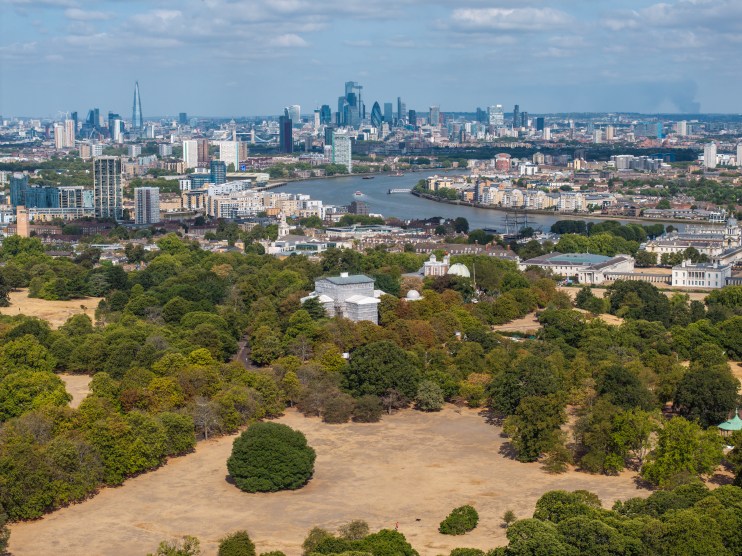
The cultural assumption that Britain will always have enough water belongs to a different climate. This summer should be the catalyst for designing around the one we now face, says Alastair Chisholm
More than two thirds of England is now in drought. Hosepipe bans are widespread and, should they prove insufficient, drought orders may follow.
However, the current response still risks treating water scarcity as a temporary weather event. The UK is no longer the mild, damp nation it used to be. Having already experienced three flash droughts in five years, our climate is changing and our approach to water has not kept pace.
Calls to fix the UK’s water supply through infrastructure alone will only get us so far. New reservoirs, water transfers and reuse schemes are essential, but projected major infrastructure is likely to meet only around 30 to 40 per cent of future water demand. The proposed new reservoirs will not all be complete until 2045 at the earliest.
Building long-term resilience therefore means designing with water, thinking more broadly about how we design our homes, communities, towns, businesses and landscapes around water.
Creating more water smart citizens and communities must be front of mind. The millions of people under hosepipe bans will understandably be frustrated, but restrictions are central in the jigsaw of solutions that will help prevent and mitigate future droughts.
Further pieces in that plan should include more efficient taps, showers and white goods capable of delivering the same utility while using less water. Greater rainwater harvesting and greywater reuse can also reduce demand for drinking quality water by around 35 per cent when used for toilets, washing machines and gardens.
Importantly, much of this is easier to incorporate when new homes and developments are first designed. The government has an important role to play here in accelerating water efficiency labelling and closing the gap between building regulations and wider water regulation, which makes reuse harder at scale.
Our towns and cities also need to become better at managing the water that does fall. Concrete and tarmac absorb heat and radiate it back into the surrounding environment, working against us during hot weather. As an alternative, rain gardens, street trees and pocket parks can cool urban areas, allow more water to infiltrate the ground and reduce pressure from intense rainfall, creating sponge cities.
This approach is increasingly recognised as part of urban water resilience, working alongside the tanks, pipes and reservoirs on which our water system relies.
Water resilience starts with the landscape
The same principle needs to extend beyond our towns and cities. Water scarcity reaches well beyond public water supply, with the natural environment often suffering first and dry landscapes placing growing pressure on farming and food production.
Part of the challenge is that, over centuries, Britain has drained landscapes and removed vegetation, ponds and wetlands that helped hold moisture in the ground, letting it soak into aquifers. Changes to soil health have reduced that capacity further, just as longer dry periods place greater strain on harvest yields.
Rebuilding some of that natural resilience will therefore be essential. Precision irrigation can make better use of available water, while greater ground cover and regenerative farming can improve the ability of soils to retain it. Alongside this, reforestation and landscape rewetting can help store water further upstream, giving crops longer on natural supplies before irrigation is needed.
Government again has an important role to play. Farming schemes can support more resilient approaches, while monitoring and modelling technology can identify where interventions will deliver the greatest return for water supply, food production and the natural environment.
Taken together, these changes point towards a broader understanding of water resilience. Secure water supports food production, new homes, industry, nature and the places people value. From healthier landscapes and sponge cities to major infrastructure and the water used in our homes, designing with water has never been more important.
The cultural assumption that Britain will always have enough water belongs to a different climate. This summer should be the catalyst for designing around the one we now face.
Alastair Chisholm is water, policy, regulation and governance Lead at Arup