Skip to content
Friday 14 August 2026London --:--Frankfurt --:--Zurich --:--
NewslettersSearchEN · DE
MorningWire

European business, markets and politics

FTSE 100
10,771.50
-0.01%
DAX
26,527.55
+0.87%
CAC 40
8,654.62
+0.05%
STOXX 50
6,560.44
+0.23%
  • Europe
  • Markets
  • Business
  • Economy
  • Technology
  • Politics
  • Opinion
More
GermanyFranceBankingAIEnergyFintechPropertyCapital Markets
  • Germany
  • France
  • Europe
  • Markets
  • Business
  • Economy
  • Technology
  • Politics
  • Opinion
  • DE
Friday 14 August 2026 5:33 am  |  Updated:  Thursday 13 August 2026 12:39 pm

Britain should back the North Sea if it wants energy security and net zero

By: David Whitehouse

Add as a preferred source on Google
Oil prices have risen as Israel and Iran tensions escalated.
Oil prices could top $150 per barrel, analysts have warned.

The UK cannot afford to talk up growth, jobs and energy security while turning its back on the domestic resources it still needs, writes David Whitehouse

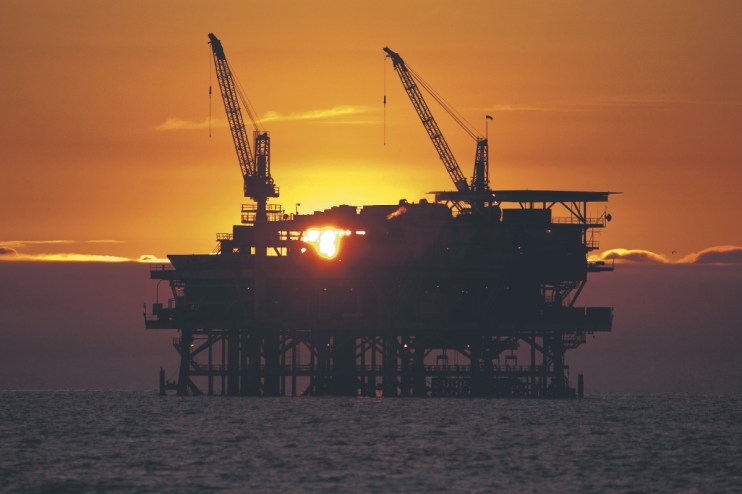
Britain faces a simple choice. While we still need oil and gas, do we produce more of it here, supporting jobs, investment, energy security and lower production emissions, or do we import more from overseas which costs more and involves higher emissions? That is the real question facing ministers as they consider Jackdaw and Rosebank.

With extreme weather becoming ever more visible, the need to tackle climate change is beyond doubt. The UK must scale up renewable and low-carbon energy, but people deserve honesty. Even on our path to net zero, Britain will need oil and gas for years to come.

Oil and gas still meet around 75 per cent of current UK energy needs which is why the decisions facing ministers on Jackdaw and Rosebank are so important.

Jackdaw could provide more than six per cent of UK gas supply by this winter, equivalent to the gas needed to heat around 1.4m homes. Rosebank is another major opportunity to strengthen domestic production while demand remains.

The public consultation on Jackdaw has closed. People can still have their say on Rosebank until 17 August.

The economic prize is significant. More than £3bn has already been invested in these projects, with total anticipated investment reaching £10.8bn. Over their producing lives, they could contribute £28.7bn to the UK economy and generate £1.4bn in tax revenues before the end of this Parliament.

For Morning Wire readers, this is not an abstract debate. It is about capital allocation, supply chains and whether the UK remains a credible place to invest.

Read more

BP eyes finalising sale of solar arm to Kuwait-backed wealth fund

British Petroleum BP forecourt with fuel pumps and company signage visible in a business setting, highlighting energy serv...

More than 170 UK supply chain companies are already involved. Jackdaw and Rosebank together will support around 3,500 jobs at peak construction, around 880 long-term jobs during production and 125 apprenticeships. Those skills are not yesterday’s economy. They are the same engineering and technical capabilities needed for tomorrow’s energy system.

Industrial strategy

Some argue the fastest route to net zero is to stop new domestic oil and gas production, but if UK production falls faster than demand, Britain will not stop using oil and gas. It will import more. In the process, we hollow out our industrial strength, skilled workforce and supply chains needed to build our energy future.

Production emissions from Jackdaw and Rosebank could be around eight times lower than imported liquefied natural gas. Importing more energy means exporting jobs, investment and emissions accountability.

Approving Jackdaw and Rosebank would not solve every challenge facing the North Sea but it would send an important signal. There is a £50bn pipeline of potential oil and gas investment that could be unlocked over the coming decade.

That means jobs, tax revenues and energy security. It also means sustaining the supply chain companies Britain will rely on for offshore wind, hydrogen, carbon capture and the wider low-carbon economy.

If the government wants a serious industrial strategy that supports growth, it should back the North Sea during the transition. The alternative is higher import dependence, weaker domestic capability and less influence over the emissions linked to the energy we consume.

The UK should be ambitious about renewables. It should also be practical about the energy system we have today. Backing North Sea oil and gas production while demand remains is not a retreat from net zero. It is a responsible way to get there.

David Whitehouse is chief executive of Offshore Energies UK (OEUK)

Read more

Burnham to approve North Sea oil and gas drilling in policy blitz

North Sea oil terminal with storage tanks and docking facilities under a clear sky, highlighting energy infrastructure.

Share this article

  • Facebook
  • X
  • LinkedIn
  • WhatsApp
  • Email

Similarly tagged content:

Sections

  • Opinion

Categories

  • Opinion

People & Organisations

  • Energy
  • Jackdaw
  • net zero
  • North Sea
  • North Sea Oil
  • oil and gas
  • Rosebank

Trending Articles

  • Revolut takes flight with launch of new airport lounges

  • Grandparents fund university degrees to avoid inheritance tax net

  • It’s not just Jason Arday, most of sociology is a scam

  • IT consultant ordered to pay £50,000 after being accused of stealing Soho House members’ personal details

  • Brompton Bicycle sues former adviser for ‘professional negligence’

More from Morning Wire

  • Burnham to approve North Sea oil and gas drilling in policy blitz

    Politics
    North Sea oil terminal with storage tanks and docking facilities under a clear sky, highlighting energy infrastructure.
  • BP eyes finalising sale of solar arm to Kuwait-backed wealth fund

    Energy
    British Petroleum BP forecourt with fuel pumps and company signage visible in a business setting, highlighting energy serv...
  • What Burnham could learn from BP’s pragmatism

    Energy
    BP logo and green lettering on a light background.
  • Miliband refused to meet motor trade body to discuss zero emissions mandate

    Transport & Infrastructure
    Ed Miliband speaking at a podium during a press conference, addressing energy policy reforms and climate change initiatives.
  • Making Miliband chancellor would be a ‘mistake’, Trump officials warn

    Politics
    Donald Trump speaking at April event, wearing a suit and tie, with an expressive gesture and a serious facial expression
  • Industry bodies call on Burnham to bring down energy bills to fire up growth

    Energy
    North Sea oil terminal with tankers, storage tanks, and cranes under a cloudy sky, highlighting energy industry infrastruc...
  • Europe has made a ‘major mistake’ on slow electrification, IEA chief warns 

    Energy
    UK industrial electricity prices are the highest in the G7 and 46 per cent above the average of the International Energy Agency.
  • Government to inject millions into electric vehicle firms despite mandate backlash

    Politics
    Car bodies on an assembly line in a UK car plant, showcasing EV manufacturing process
MorningWire

Independent European business, markets and political news for decision-makers.

Morning Briefing

Europe

  • Germany
  • France
  • Europe
  • UK & Ireland

Business

  • Markets
  • Banking
  • Technology
  • Energy
  • Property
  • Fintech

Editorial

  • Opinion
  • Editorial Policy
  • Corrections
  • Contact

Company

  • About Morning Wire
  • Privacy Policy
  • Terms of Use
  • Cookie Policy
© 2026 Morning Wire Ltd · Published by Morning Wire Media, Bahnhofstrasse 65, 8001 Zürich, Switzerland
Privacy · Terms · Cookies · Facebook