Skip to content
Wednesday 12 August 2026London --:--Frankfurt --:--Zurich --:--
NewslettersSearchEN · DE
MorningWire

European business, markets and politics

FTSE 100
10,825.17
-0.18%
DAX
26,391.84
0.00%
CAC 40
8,668.61
-0.53%
STOXX 50
6,538.16
-0.20%
  • Europe
  • Markets
  • Business
  • Economy
  • Technology
  • Politics
  • Opinion
More
GermanyFranceBankingAIEnergyFintechPropertyCapital Markets
  • Germany
  • France
  • Europe
  • Markets
  • Business
  • Economy
  • Technology
  • Politics
  • Opinion
  • DE
Thursday 26 September 2024 7:13 am  |  Updated:  Thursday 26 September 2024 8:56 am

Britain’s last coal-fired power station set to close in landmark moment

By: Morning Wire Reporter

Add as a preferred source on Google
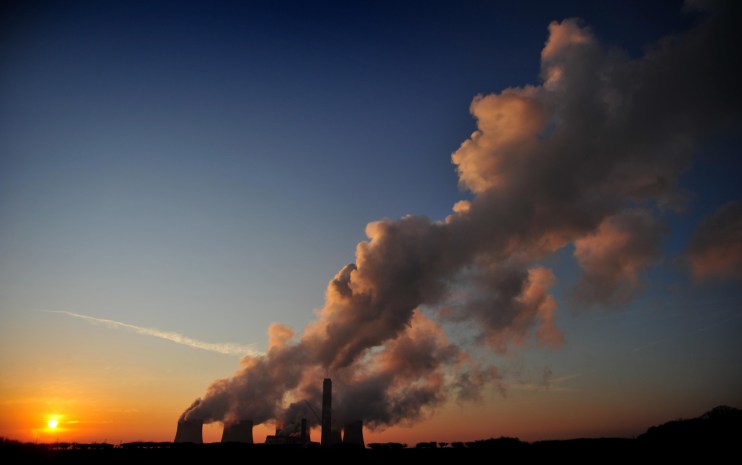
The sun setting over Ratcliffe-on-Soar Power Station near Nottingham. The UK's last remaining coal-fired power station is to shut at the end of September, drawing to a close Britain's 142-year reliance on the fossil fuel to produce electricity. Photo Credit: Matthew Vincent/PA Wire

The UK’s last remaining coal-fired power station is to shut at the end of September, drawing to a close Britain’s 142-year reliance on the fossil fuel to produce electricity.

Ratcliffe-on-Soar power station has been generating electricity since 1968 via its four coal-fired boilers, eight vast cooling towers and 199-metre tall chimney, which occupies a prominent spot in the East Midlands skyline.

It is able to power about two million homes and has been the last station of its kind in the UK since September 2023, when Northern Ireland’s Kilroot power station stopped producing electricity from coal.

On September 30, Ratcliffe will close for the final time. Many of the 170 people employed by the plant’s owner, Uniper, will stay on to help with the two-year decommissioning process.

Ratcliffe’s closure puts a full stop on the country’s use of coal for electricity, which began with the Holborn Viaduct power station in London in 1882, the first of its type in the world.
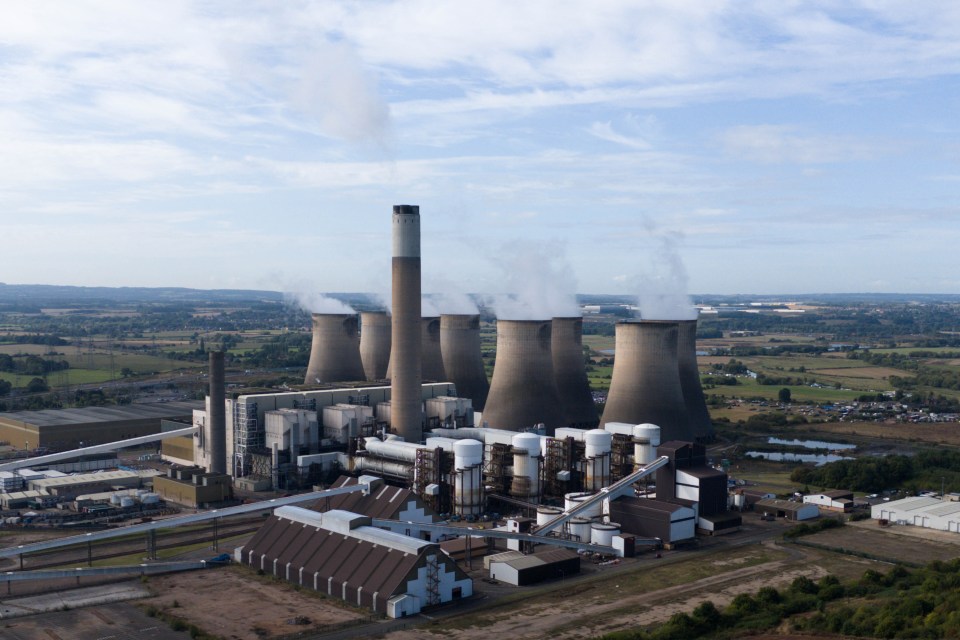
 Ratcliffe-on-Soar Power Station which is to shut at the end of September, drawing to a close Britain's 142-year reliance on the fossil fuel to produce electricity. The power station has been generating electricity since 1968 via its four coal-fired boilers, eight vast cooling towers and 199-metre tall chimney, which occupies a prominent spot in the East Midlands skyline. Photo credit should read: Jacob King/PA Wire
Ratcliffe-on-Soar Power Station which is to shut at the end of September, drawing to a close Britain’s 142-year reliance on the fossil fuel to produce electricity. The power station has been generating electricity since 1968 via its four coal-fired boilers, eight vast cooling towers and 199-metre tall chimney, which occupies a prominent spot in the East Midlands skyline. Photo credit should read: Jacob King/PA Wire

Coal went on to play a major role in the national energy supply throughout the 20th century and accounted for about 80 per cent of UK power in 1990, falling to 39 per cent in 2012.

Since then, 15 coal power plants closed or switched fuels and last year the fossil fuel made up just one per cent of the UK’s supply, according to data from National Grid’s Electricity System Operator.

Meanwhile, renewables, mainly wind and solar power, now make up more than half of the mix, according to Government statistics. Gas has also played a part in the switch, rising from 28 per cent of the power mix in 2012 to 34 per cent last year.

Dhara Vyas, deputy chief executive of Energy UK, said: “Ten years ago, coal was the leading source of this country’s power – generating a third of our electricity.

“So, to get to this point just a decade later, with coal’s contribution replaced by clean and low carbon sources, is an incredible achievement.

“As we aim for further ambitious targets in the energy transition, it’s worth remembering that few back then thought such a change at such a pace was possible.”

While the likes of Sweden and Belgium were among the first in Europe to phase out coal entirely, the UK will be the first country in the G7 bloc of major world economies to reach the milestone.

France, by comparison, has given itself until 2027 to complete the phase-out, Canada will follow suit until 2030. Germany, on current plans, will not do it until 2038.

Read more

Sizewell B granted 20-year life extension

Sizewell B nuclear power station in Norfolk with clear skies and surrounding landscape, highlighting energy infrastructure.

But next comes the far larger task of significantly reducing the use of gas and further ramping up renewables, as the newly-elected Labour Government seeks to hit net zero emissions from electricity generation by 2030.

Its first steps were to set up a new state-owned energy investment company, GB Energy, and to lift a de facto ban on new onshore wind projects in the planning system in England.

The Government also handed out contracts for a new wave of green power projects in early September, including onshore and offshore wind and solar farms, which officials said will generate enough power for 11 million homes, in its annual auction.

Energy Secretary Ed Miliband said recently that switching to clean power is not just about fighting climate change, but energy security, after rocketing gas prices in the wake of Russia’s invasion of Ukraine caused consumer bills to spiral in 2022 and 2023.

Jess Ralston, head of energy at the Energy & Climate Intelligence Unit, said the swift transition from coal to renewables “shows how possible it is to make the net zero electricity transition”.

Renewables are also cheaper than fossil fuels. The International Energy Agency reported that in 2023 an estimated 96 per cent of newly-installed solar and onshore wind plants had lower generation costs than new natural gas globally.

Ms Ralston said: “The British public have been burnt by over-reliance on gas for electricity and home heating during the ongoing gas price crisis and keen to see the shift to renewables, not only to reduce emissions but to stabilise energy prices too.”

As for coal, many countries might be phasing it out, but use of the fossil fuel globally for electricity still rose 1.1 per cent last year, according to energy analysis company Ember.

This was mainly driven by China, which accounted for 54.9 per cent of global coal-fired generation.

However, China added seven times more renewable energy capacity than coal last year, indicating that even the world’s largest coal user is – eventually – shifting towards clean energy.

Christine Shearer, research analyst at Global Energy Monitor, said there remains “a lot of work to do” to meet global targets on phasing it out, most of which aim for 2035 in developed countries.

She added: “The good news is the UK shows that once a country clearly commits to a coal phase-out it often happens even faster than planned, because the policy landscape becomes clear and paves the way for cheaper alternatives.”

Press Association – Alex Daniel

Read more

Battersea Power Station misreporting claims scrutinised by accounting watchdog

Breaking news scene with reporters, cameras, and microphones at a bustling press conference, spotlight on speaker podium

Share this article

  • Facebook
  • X
  • LinkedIn
  • WhatsApp
  • Email

Similarly tagged content:

Sections

  • News

Categories

  • Business
  • Energy

People & Organisations

  • coal
  • Dhara Vyas
  • Energy
  • fossil fuels
  • Holborn Viaduct
  • Midlands
  • National Grid
  • Northern Ireland
  • Ratcliffe-on-Soar
  • UK electricity

Trending Articles

  • Five-star Mayfair hotel hit with HMRC winding-up petition

  • Nottingham Forest owner Marinakis sues Crystal Palace for defamation

  • Back to basics: Sainsbury’s gradual retreat from the British high street

  • Hargreaves Lansdown orders staff back to office

  • As it happened: Intel, Arm shares slide; Oil climbs higher

More from Morning Wire

  • Sizewell B granted 20-year life extension

    Energy
    Sizewell B nuclear power station in Norfolk with clear skies and surrounding landscape, highlighting energy infrastructure.
  • Battersea Power Station misreporting claims scrutinised by accounting watchdog

    Accountancy
    Breaking news scene with reporters, cameras, and microphones at a bustling press conference, spotlight on speaker podium
  • Grid operator issues fresh heatwave warning over power supplies

    Energy
    Air conditioning vents in a grid pattern, illustrating cooling solutions during a heatwave
  • Grid delays force Starmer-backed AI data centre to seek alternative power

    Tech
    Sir Keir Starmer's government has prioritised investment data centres as a major pillar of its plans to boost economic growth.
  • Ofgem targets speculative AI data centres to free up Britain’s energy grid

    Tech
    2024 was a transformational year for GlobalData.
  • Energy minister says AI must ‘bring down bills’ as data centres squeeze the grid

    Tech
    National Grid has raised billions from investors for the energy transition
  • Britain faces energy squeeze from solar eclipse

    Energy
    Rows of blue solar panels in a field, generating clean energy, with green trees in the background.
  • Osmose Europe Ltd. Strengthens and Expands Electric Utility Infrastructure Solutions with the Acquisition of MP Power Ltd.

    Business Wire
MorningWire

Independent European business, markets and political news for decision-makers.

Morning Briefing

Europe

  • Germany
  • France
  • Europe
  • UK & Ireland

Business

  • Markets
  • Banking
  • Technology
  • Energy
  • Property
  • Fintech

Editorial

  • Opinion
  • Editorial Policy
  • Corrections
  • Contact

Company

  • About Morning Wire
  • Privacy Policy
  • Terms of Use
  • Cookie Policy
© 2026 Morning Wire Ltd · Published by Morning Wire Media, Bahnhofstrasse 65, 8001 Zürich, Switzerland
Privacy · Terms · Cookies · Facebook