British Steel: What is at stake?

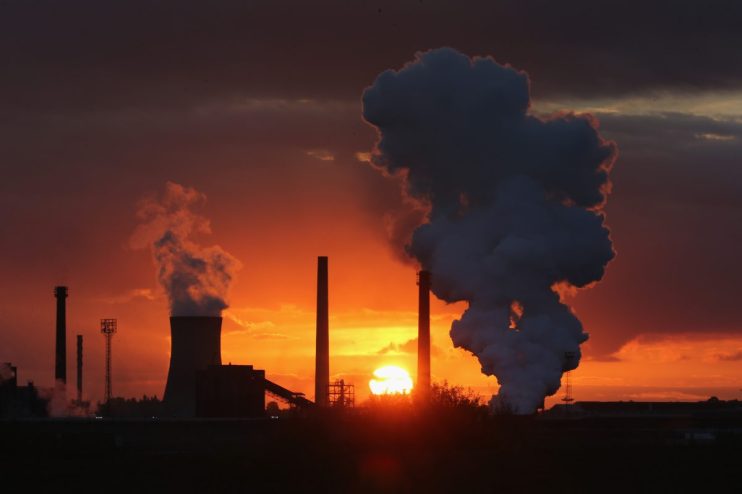
Government officials were in a race on Monday to secure the critical supply of materials needed to keep British Steel’s two blast furnaces in Scunthorpe running.
The site’s closure would spell the end of the final hub in the UK capable of producing virgin steel, making it the only member of the G7 unable to to manufacture it.
The government has effectively taken control of British Steel from its Chinese owners Jingye, after an extraordinary parliamentary session was called by Prime Minister Keir Starmer over the weekend.
The problems have inflamed tensions between the UK and China, with the Chinese foreign ministry warning the UK to not “politicise” trade cooperation or “link it to security issues.” Claims have been thrown around that Jingye had deliberately sabotaged steel-making efforts at the plants, although these have been played down by Downing Street.
A leadership shake-up of British Steel was also announced on Monday and welcomed by unions as two industry veterans, Allan Bell and Lisa Coulson, took over as chief executive and chief commercial officer, respectively.
What is at stake?
It is likely the government will nationalise British Steel, although there are other options on the table.
Ministers have already put through emergency legislation granting special powers to enforce Jingye to buy the raw materials needed to keep the blast furnaces hot. If they were to cool down, it would be extraordinarily expensive to get them up and running again.
The plant is so important for a number of reasons. First and foremost, it is the last remaining place the UK can mass-produce virgin steel, which is used in the construction of large-scale infrastructure projects.
More than 2,700 jobs were put at risk when Jingye announced its intention to close facility last month, a move which piled further pressure on an industry already reeling from the closure of Tata’s Port Talbot blast furnaces last year.
It comes as Tata and British Steel also grapple with 25 per cent tariffs on steel imports imposed by Donald Trump, having warned customers are being driven away.
The government has pledged £2.5bn to secure British steel’s future as it also places infrastructure at the heart of plans for economic growth.
Heathrow’s third runway, one of its central growth announcements, will supposedly be built using only UK-produced steel.
But the impact of further disruption to the UK’s steel industry will spread even more widely.
Why is this row so important?
Steel plays a vital role in the UK economy, contributing around £2.3bn in 2023, or one per cent of the total manufacturing output.
At the heart of the row with Jingye is concern about the UK’s over-reliance on foreign suppliers for its steel.
One example can be seen in the UK’s submarine building programmes, which are run by giants like BAE Systems and Rolls-Royce.
According to analysis of government figures by the Telegraph, only around 4.6 per cent of steel spending in its £31bn Dreadnought nuclear submarine programme has gone to British producers since 2017.
Network Rail, the body which manages the UK’s railway infrastructure, has sourced more than 90 per cent of its steel rails from the Scunthorpe facility. It would likely be forced to switch to European suppliers if the blast furnaces were closed down.
British Steel was first bought by Jingye in 2020 under the former Conservative government. There were questions at the time over whether it would be able to turn the loss-making operation around, having been through a string of owners including Tata Steel, Greybull Capital and Corus.
Ultimately though, it has been exetrnal factors that have contributed to its downfall, including tariff pressure, high energy prices, the shift to green energy and wider struggles in the steel industry.
It would not be the only recent nationalisation of a steelmaker. The government brought Sheffield Forgemasters, which was one of Britain’s oldest companies, into public ownership in 2021 to secure the future supply of submarines and ships for the Royal Navy.