Business failures are at a 30-year high – but are we past the peak?

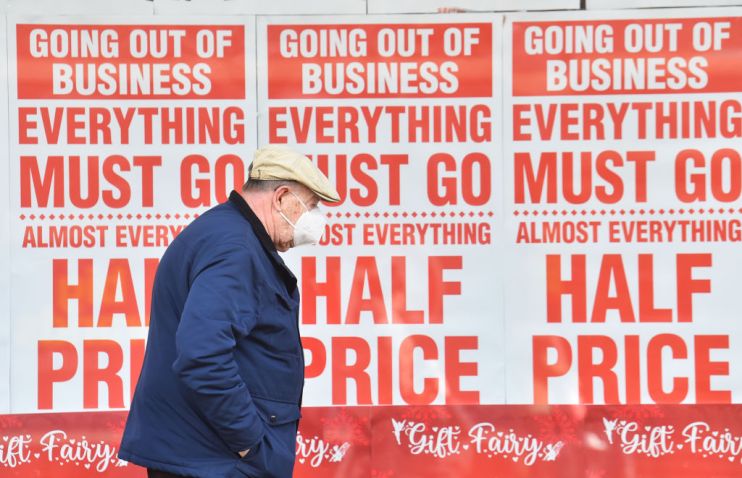
Insolvencies are at their highest rate since 1993, but what does the future look like for small and microbusinesses, asks David Fleming
Last week, the Insolvency Service published data showing corporate insolvencies have hit their highest numbers for 30 years.
For those who can remember it, three decades ago – 1993 – John Major was Prime Minister, interest rates were at five per cent (down from the highs of 15 per cent at Black Wednesday the year before) and inflation was at an unassuming 1.6 per cent. In many ways, the economic circumstances then feel very similar to today. And while political historians are currently assessing whether Prime Minister Rishi Sunak could emulate John Major’s election win, 30 years on, it may be helpful to assess what the numbers say about the health of companies today and what other challenges may be coming down the line.
In 2023, there were just over 25,000 company insolvencies, up from 22,000 in 2022. The numbers show the challenges for business, yet they also reflect a degree of catch up since the pandemic. The loans made available to businesses through Covid allowed many to carry on trading, reflecting a significantly lower rate of business failures. In 2020, we saw half the number that was reported last week.
Post Covid, with no further access to government support and companies facing new economic challenges and higher borrowing costs, many companies have run out of working capital. The vast majority of these are liquidations, which typically affect small and microbusinesses. I suspect many of the so-called zombie companies that emerged post-financial crash will form part of these new statistics.
Perhaps though, it is more interesting to look at company administrations, a form of insolvency where the insolvency practitioner aims to save the business as a going concern. These have climbed year-on-year, yet they are still down from the numbers we used to see pre-pandemic. So: have we peaked or is the worst still to come?
I would be very cautious. While inflation is significantly down from 12 months ago, for many consumer-facing businesses, there are huge challenges. For example, if you look at sectors such as food and drink manufacturing, where we’ve seen a large uptick in insolvencies, they continue to manage high energy and staffing costs, yet cannot easily pass these onto supermarkets, which typically operate on slim or loss-leading margins to attract customers. Likewise, if you’re a retail or hospitality business that had a poor Christmas trading period, can you expect to attract customers in the New Year when spending is generally reined back?
Additionally, base rates are back to historical levels meaning the cost of borrowing is higher and companies looking to refinance sometime in the next 18 months are now beginning to understand the cost implications, alongside the appetite and flexibility of lenders.
The new rate environment also has a bearing on valuations and dealmaking. M&A transaction levels are down as many boards delay investment decisions and await market certainty. The problem we are seeing is that business owners, perhaps looking to sell, can no longer find willing buyers ready to match their expectations. Reality hasn’t quite set in yet for many management teams. I would expect over the coming months – with refinance deals upon the horizon – deals will have to be made with many companies and investors likely to feel the pinch.
The reality is that some businesses do fail. But failure is not an inevitability – and conversations that take place now may ultimately save some from an uncertain fate.
David Fleming is UK head of restructuring at Kroll