Business rates aren’t fit for purpose but Rishi Sunak’s digital tax is a sticking plaster, not a solution

Long before the coronavirus pandemic, our high streets were struggling.
Faced with the rise of online sales, many well-known retailers were either closing stores, entering a form of insolvency known as a company voluntary arrangement (CVA), or falling into administration.
The oft-quoted analysis of this demise was that the costs of running a physical store estate outweighed those of their online competitors like Amazon — therefore it was unfair competition.
Calls from retailers last year, most notably from Tesco chief executive Dave Lewis, for a two per cent online sales tax to supposedly level the playing field largely fell on deaf ears. However, it seems that the pandemic has awakened the government to the very real threat facing our high streets and therefore our town centres and communities, and Rishi Sunak is now considering radical options.
Now, after years of inertia, the Treasury is in danger of a knee-jerk reaction without fully understanding the nuances of the retail sector.
One of the most significant costs for physical retailers is in the form of business rates — a new system has been long debated, with most observers concluding that in today’s online world it is no longer fit for purpose. It was introduced in 1990, five years before Amazon was launched, and is based on the rateable value of physical premises.
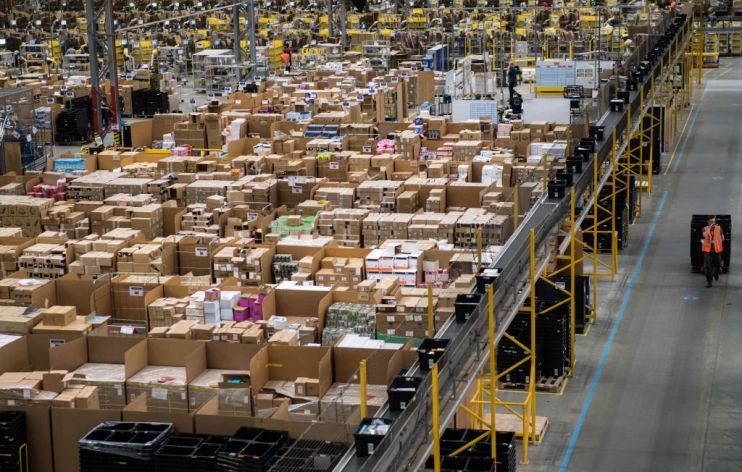
It is true that Amazon warehouses tend to be located in areas of the country with low rateable values, meaning they pay less tax than high street stores, and can therefore offer lower prices to consumers. In October last year, a Commons select committee published a report urging the government to examine alternatives to the broken business rate system, concluding that the “unfair system places a greater cost on high street shops and sectors like manufacturing than online businesses”.
Instead of fixing the business rates system, however, the government appears to be giving in to the calls for a digital tax. Far from levelling the playing field, this will simply penalise a successful business model — and one which, crucially, consumers seem to like.
What is missing from the debate is an understanding that online retailers and high street shops both directly serve the customer, albeit in slightly different ways. Today, in many cases there is no such thing as an exclusively online or offline sale — the online sale may be made because of a visit to a physical store to see an item in person, while a sale in a bricks and mortar retailer may be the result of substantial online research, meaning that sales attribution is an increasingly complex metric to report.
What is without doubt, however, is that consumers value both.
An online sales tax does nothing to recognise what it is about online shopping that is so tempting for consumers, or how the high street could be made more attractive to them. It merely provides on paper a new revenue stream for the Treasury, while putting additional pressure on online businesses in the process and raising prices for consumers.
A far better solution would be to scrap the current business rate system entirely and introduce one which applies to all retailers, online or not. Subsequent attention can then be focused on making high streets places where people actually want to visit and shop.
Building a better tax model requires a more nuanced understanding of our behaviour as consumers. The pandemic has caused significant disruption for physical retailers. What it has also presented, however, is a once in a lifetime opportunity to fundamentally reform an outdated tax and allow all retailers of all kinds to compete on a level playing field.
Main image credit: Getty