Skip to content
Wednesday 9 September 2026London --:--Frankfurt --:--Zurich --:--
NewslettersSearchEN · DE · FR
MorningWire

European business, markets and politics

FTSE 100
10,811.66
-0.10%
DAX
26,007.63
0.00%
CAC 40
8,317.98
0.00%
STOXX 50
6,413.17
0.00%
  • Europe
  • Markets
  • Business
  • Economy
  • Regulation
  • Politics
  • Opinion
More
GermanyFranceEU InstitutionsCompetitionPublic AffairsBankingTechnologyEnergy
  • Germany
  • France
  • Europe
  • Markets
  • Business
  • Economy
  • Regulation
  • Politics
  • Opinion
  • DE
Thursday 23 July 2020 4:15 am  |  Updated:  Wednesday 22 July 2020 10:19 pm

California dreaming: A plan to phase out petrol and diesel cars that might actually work
By: Benedict McAleenan and Ed Birkett

Add as a preferred source on Google
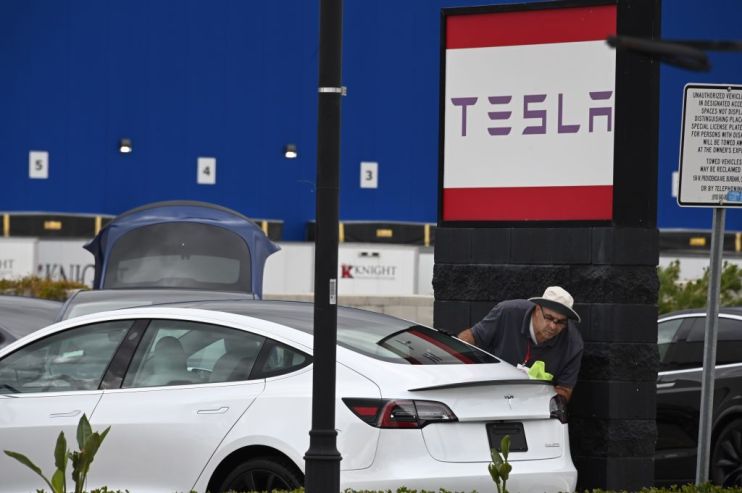
US-VIRUS-HEALTH-EPIDEMIC
The idea based on successes in California — the home of Tesla

Transport is now the UK’s biggest source of climate-warming greenhouse gases. 

While other sectors slash their carbon footprint, our cars alone continue to produce 15 per cent of annual emissions — and the figure is still rising.

To tackle this, earlier this year the government announced plans to bring forward a ban on new petrol and diesel cars to 2035. The response was an outcry from carmakers, who accused ministers of having a “date without a plan”.

Right now, they have a point. Britain’s car industry makes 1.3m cars annually, while Brits buy 2.3m per year, 247,000 of which are British-made. Transforming the fundamentals of such a huge industry in just 15 years is no small task. 

The industry needs a chance to adapt, to retrain workforces and to retool supply chains. But above all, it needs certainty as well as a deadline.

Broadly speaking, there are two proven ways to boost zero-emission vehicles. The first, pioneered by Norway, could be called the “kitchen sink” approach: a smorgasbord of tax reliefs and special privileges for owners of zero-emission vehicles. It’s expensive, but it works. Electric vehicles make up 61 per cent of new car sales in Norway, and it aims for 100 per cent by 2025.

The problem, of course, is that the post-pandemic world won’t have a lot of money to spend. Furthermore, the myriad interventions of the kitchen sink approach can distort the market and have unintended consequences.

Our new Policy Exchange report, published this week, argues that there is another way, based on successes in California — the home of Tesla. This approach, known as a Zero-Emission Vehicle (ZEV) Mandate, can be brilliantly effective — and much cheaper.

Read more

Government to inject millions into electric vehicle firms despite mandate backlash

Car bodies on an assembly line in a UK car plant, showcasing EV manufacturing process

A ZEV Mandate works like this. Each manufacturer must sell a certain number of zero-emission vehicles (ZEVs), such as electric or hydrogen fuel cell cars, expressed as a percentage of its overall sales. Those which cannot produce enough ZEVs can buy credits from those which do. This makes ZEVs relatively cheaper to make and buy, which also makes Britain more attractive to ZEV producers like Tesla.

The percentage starts low, but increases each year. Eventually it reaches 100 per cent, so that petrol or diesel cars are no longer sold. Manufacturers can see what’s coming — they need to start making ZEVs, increase their prices or make way for ZEV manufacturers which can meet demand. 

The trajectory is clear, flexible, and relatively technology-neutral.

Crucially, it allows Britain’s car industry to start now without massive subsidies. Instead, the £3,000 reward we currently pay to buyers of electric vehicles — who are typically wealthier anyway — can be repurposed for things like retraining workers or building charging infrastructure. 

The UK has made great strides towards neutralising our carbon footprint. Cutting the emissions of the UK power sector by 60 per cent since 2013 shows what can be achieved with the right policies. Revolutions are possible, but transport is going in the wrong direction. With the UK hosting a major climate conference in 2021, we need to start turning that around now.

As transport secretary Grant Shapps says in the foreword to our report: “We should show the world that a forward-looking economy can and should make bold moves against climate change, even amid the economic damage left by Covid-19.”

Such bold moves are within reach. Following California’s example would allow us to start work now and show the world the way.

Main image credit: Getty

Read more

EV targets set to be watered down

Car bodies on an assembly line in a UK car plant, showcasing EV manufacturing process

Share this article

  • Facebook
  • X
  • LinkedIn
  • WhatsApp
  • Email

Similarly tagged content:

Sections

  • News
  • Opinion

Categories

  • Business
  • Opinion
  • Transport & Infrastructure

Trending Articles

  • Hedge fund billionaire Chris Rokos joins UK wealth exodus 

  • Tesco and Boots lead 100,000 jobs pledge to tackle Neets crisis

  • Airport chaos latest: Heathrow, London City ‘starting to recover’ after air traffic control failure

  • As it happened: FTSE 100 inche up as oil holds gains; Healey says UK paying ‘Truss penalty’

  • As it happened: FTSE 100 waivers; oil nears $100 on new Hormuz sanctions

More from Morning Wire

  • Government to inject millions into electric vehicle firms despite mandate backlash

    Politics
    Car bodies on an assembly line in a UK car plant, showcasing EV manufacturing process
  • EV targets set to be watered down

    Transport & Infrastructure
    Car bodies on an assembly line in a UK car plant, showcasing EV manufacturing process
  • Audi’s brought back the A2, and it’s gone electric

    Life&Style
    Two Audi A2 concept cars with distinctive designs parked by a waterfront cityscape at sunset.
  • Oil price falls but Trump and Iran clash on negotiations claim

    Markets
    Donald Trump smiling in a blue suit and tie with an American flag pin, US flag in background
  • Uber launches ‘autonomous’ cabs in London

    Transport & Infrastructure
    Wayve autonomous car navigating Regent Street, showcasing cutting-edge self-driving technology in an urban environment
  • Are cars really the problem? London cyclists, it’s time to look within our ranks

    Opinion
    London cyclists ride Lime bikes and personal bicycles on a city street, promoting urban mobility and eco-friendly transport.
  • TfL greenlights Wayve’s autonomous vehicles in the City

    Tech
    Wayve autonomous vehicle navigating a busy London street with iconic cityscape in the background
  • Tory and Labour councillors spar over £300m Hammersmith Bridge plans

    Politics
    Hammersmith Bridge spanning the River Thames, surrounded by lush greenery and clear blue skies, capturing its iconic archi...
MorningWire

Independent European business, markets and political news for decision-makers.

Morning Briefing

Europe

  • Germany
  • France
  • EU Institutions
  • Europe

Business

  • Markets
  • Business
  • Economy
  • Regulation
  • Competition
  • Public Affairs

Editorial

  • Opinion
  • Editorial Policy
  • Corrections
  • Contact

Company

  • About Morning Wire
  • Privacy Policy
  • Terms of Use
  • Cookie Policy
© 2026 Morning Wire Ltd · Published by Morning Wire Media, Bahnhofstrasse 65, 8001 Zürich, Switzerland
Privacy · Terms · Cookies · Facebook