Can investment in biodiversity really deliver strong financial returns?

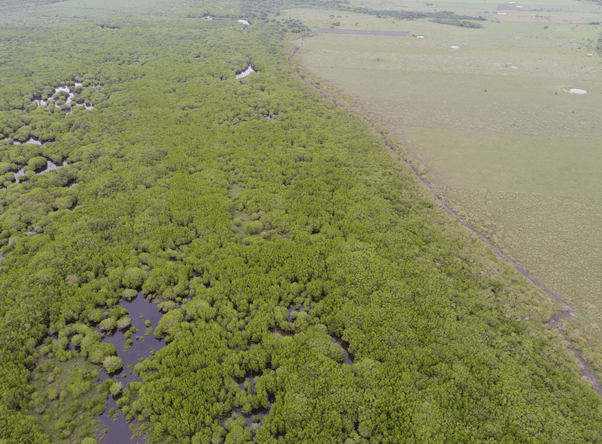
There are myriad myths surrounding the climate crisis which desperately need to be debunked this year. Two in particular that are long overdue: the belief that environmentally-focused investments don’t deliver a strong bottom line and the idea that responsibility to deal with climate change and protecting biodiversity rests on the shoulders of Governments.
Both are outdated and ultimately dangerous. Dangerous because as the Dasgupta Review on the Economics of Biodiversity revealed earlier this year, we need to completely reassess how we measure growth and economic value to ensure we halt the rapid decline in biodiversity across the world. The review is a sobering read and is already attracting comparisons, from an influence standpoint, to The Stern Review, a ground-breaking report on the economics of climate change from 2006.
Much has changed since 2006. We can now prove the financial sense of investing in nature and it’s clear that governmental climate action alone won’t be enough to solve the problem. It’s time for financial institutions, corporations and all investors to realise the importance of their role in the climate crisis.
The good news is that in 2020 alone, we saw compelling evidence that green investments deliver strong financial returns and continue to create value. On top of that, the number of companies with a net-zero target more than doubled from 2019 to 2020. And in early 2021, Larry Fink, CEO of Blackrock, called on all companies to “disclose a plan for how their business model will be competitive with a net-zero economy”.
In line with this, countries representing more than 65% of global CO2 emissions have now made ambitious commitments to carbon neutrality, including the UK. But the strongest evidence may well be that the majority of ESG (Environmental Social and Governance) funds have outperformed the wider market for the past 10 years.
Clearly, investing in nature is a smart choice for the bottom line and benefits the planet at the same time. But how do we allocate capital so that we maximise our financial returns?
The key lies in identifying projects with high-quality natural capital: an emerging asset class that values the natural world and the benefits it provides to us.
Artificial Intelligence, satellite imagery, and sensors can now be used to cost effectively identify projects with high quality natural capital helping to reduce transaction costs for investors.
Once a project receives investment, financial returns can be generated through biodiversity offsets, carbon offsets, water offsets, and natural infrastructure, to name a few. The project thus generates financial returns, biodiversity gains and creates jobs as well as enhancing the livelihoods of local communities, creating long term resilience and in turn reducing risk.
But what does a high quality project look like? Of course, there is a wide variety and many excellent case studies for this type of investment are coming to light every day. As an example, Cultivo has a farmland regeneration project in Mexico that has an expected MOIC greater than 2.5x, which translates into an implicit IRR greater than 20 per cent. Initially the cash flows will be driven by carbon credits, with future cash flows coming from water, biodiversity preservation and other services.
These so-called nature-based solutions can provide at least 30 per cent of the CO2 mitigation goals by 2030, yet they receive only 3 per cent of the funding allocated to carbon capture. With attractive returns like that, the 3 per cent figure won’t stay there for long though.
Thanks to data and the use of financing mechanisms that unlock natural capital, investing in nature is a reality. The number of investors that acknowledge how this makes financial sense, not just environmental sense, is growing quickly. This is good news for the planet and for those who seek this opportunity as part of their investment strategy.