Skip to content
Friday 7 August 2026London --:--Frankfurt --:--Zurich --:--
NewslettersSearchEN · DE
MorningWire

European business, markets and politics

FTSE 100
10,947.72
+0.73%
DAX
26,365.44
+0.86%
CAC 40
8,735.63
+0.41%
STOXX 50
6,546.06
+0.67%
  • Europe
  • Markets
  • Business
  • Economy
  • Technology
  • Politics
  • Opinion
More
GermanyFranceBankingAIEnergyFintechPropertyCapital Markets
  • Germany
  • France
  • Europe
  • Markets
  • Business
  • Economy
  • Technology
  • Politics
  • Opinion
  • DE
Thursday 19 March 2026 5:43 am  |  Updated:  Thursday 19 March 2026 11:27 am

Can Reeves’ fiscal devolution plans defeat the Nimbys?

By: John Oxley

Add as a preferred source on Google
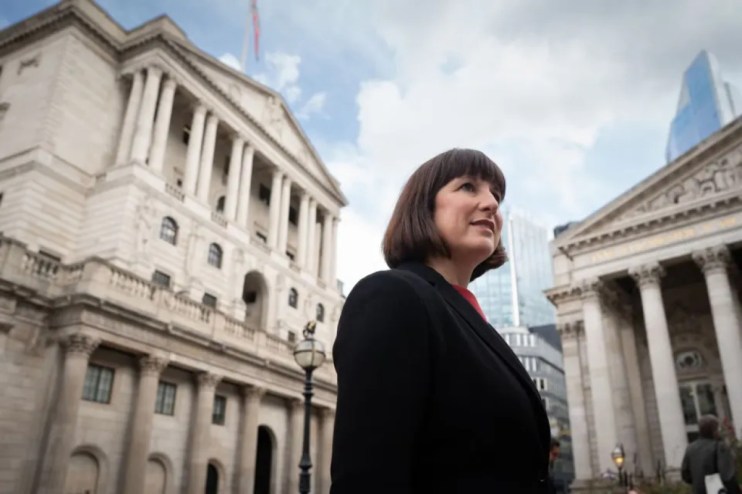
Reeves Bank exterior with modern architecture, showcasing its sleek design and prominent logo on a sunny day.
Reeves has been warned about the risk of a recession.

Rachel Reeves plans to end the paradox of British politics whereby local people bear the costs of growth but rarely feel the benefits. Will it work? Asks John Oxley

Rachel Reeves attracts many descriptions, but few would peg her as a revolutionary. Her new plan for the economic landscape of the country might change this. In her Mais lecture this week, the Chancellor hinted at a radical restructuring of the way the British state operates, especially in England, with a preliminary roadmap towards fiscal devolution. 

The UK is one of the most centralised states in the OECD. This is particularly true of how money is raised and spent. Council tax and business rates are our only true local tax, and even that is insufficient to meet local authorities’ needs. Instead, the Treasury engages in massive redistribution between regions. London and its surrounding areas are really the only net contributors, the rest of the country receiving the largesse from our Southeast-centric economy. 

Under Reeves’ plan, this will change slightly. City and regional mayors will get to keep some of the tax returns that result from higher growth. This doesn’t end the subsidy but changes the dynamic. For a long time, local areas have rarely felt the direct benefit of building their economies. Now they will have more to spend on services and investment when they start to boom. 

The hope is that this will make local people, and government, more enthusiastic about the steps needed to build the economy. At present, an odd dilemma exists. Local people bear the brunt of the cost of growth; the disruption of building, increased traffic, more pressure on services. The results, however, feel distant and disparate, lost in the ether of GDP projections no one quite notices or understands. As a system, it is the perfect incubator for Nimbyism. 

Tax receipts in local coffers

Fiscal devolution aims to change this. With tax receipts going into local coffers, there will be an incentive to push past the downsides and embrace the positives. In an ideal world, regions will compete to become the most pro-growth and reinvest the proceeds into a virtuous cycle of progress. Doing so should not just benefit them, but the whole economy – moving from a surging London and left-behind regions to a Britain where each area is hitting its potential. 

The question is how well the plan will hold up, and whether it will deliver. Our centralism is not entirely by accident. Westminster is a jealous hoarder of power, and the Treasury especially careful about spending rationales. They are sceptical about how local authorities spend their money. This is not entirely unfounded, with numerous councils worsening their financial situation in recent decades by ploughing money into ill-advised investment schemes. 

The British public are also wary. We baulk at the idea of postcode lotteries and are not natural enthusiasts for competition between regions. This also raises questions of fairness. Retaining the benefits of a boom is great for places that achieve it. Those that don’t are often the ones with the biggest challenges, and they may find the Treasury less willing to help in future. You can perhaps make a new London out of a Birmingham or a Manchester, you are unlikely to do so with a Lincolnshire. 

Moreover, this approach remains a tax-and-spend led plan. The ultimate devolution is not to lower layers of government, but to the people themselves.  

John Oxley is a political commentator

Read more

Reeves issues warning to successor as she battles to defend record

Reeves is eying mortgage reform as a key growth driver.

Share this article

  • Facebook
  • X
  • LinkedIn
  • WhatsApp
  • Email

Similarly tagged content:

Sections

  • Opinion

Categories

  • Opinion

People & Organisations

  • fiscal devolution
  • Mayor
  • Rachel Reeves
  • regional mayors
  • UK economy

Trending Articles

  • Revolut founder’s wealth set to balloon amid talks of share award at $500bn valuation

  • Rupert Lowe axes pensions triple lock and pledges tax cuts in economic plan

  • Liverpool owners tipped to sell – but not to Amazon boss Bezos – by former CEO

  • As it happened: Stocks rise as oil fluctuates after Red Sea attack; US-Iran deal ‘being circulated’

  • WPP slashes jobs as revenue continues to fall

More from Morning Wire

  • Reeves issues warning to successor as she battles to defend record

    Politics
    Reeves is eying mortgage reform as a key growth driver.
  • Bank of England governor opens door to ‘simplifying’ financial rulebook

    Regulation
    Bank of England Governor Andrew Bailey said cited several indicators that the labour market was softening.
  • Voters expect Burnham to hike taxes

    Politics
    Andy Burnham discussing capital gains tax increase during a press conference, highlighting potential economic impacts
  • Healey announces early Budget

    Politics
    Man in suit and red tie speaking at a podium to an audience in a modern building.
  • The City will bid good riddance to Rachel Reeves

    Opinion
    Reeves Bank exterior with modern architecture, showcasing its sleek design and prominent logo on a sunny day.
  • Big bank bosses on alert as tax noise gets louder under Burnham

    Banking
    Two men, one in a white shirt and red tie, the other in a navy jacket, conversing outdoors.
  • Burnham ‘aware’ of Healey’s extra £9bn spending demands

    Politics
    Andy Burnham, Mayor of Greater Manchester, in a suit and glasses, with a 10 NORTH logo in the background
  • John Healey becomes Chancellor as Andy Burnham names top Cabinet appointments

    Politics
    Chancellor John Healey speaking at a professional event, likely a press conference or address.
MorningWire

Independent European business, markets and political news for decision-makers.

Morning Briefing

Europe

  • Germany
  • France
  • Europe
  • UK & Ireland

Business

  • Markets
  • Banking
  • Technology
  • Energy
  • Property
  • Fintech

Editorial

  • Opinion
  • Editorial Policy
  • Corrections
  • Contact

Company

  • About Morning Wire
  • Privacy Policy
  • Terms of Use
  • Cookie Policy
© 2026 Morning Wire Ltd · Published by Morning Wire Media, Bahnhofstrasse 65, 8001 Zürich, Switzerland
Privacy · Terms · Cookies · Facebook