Career versus motherhood: When workplaces don’t support women, the result is a fertility crisis

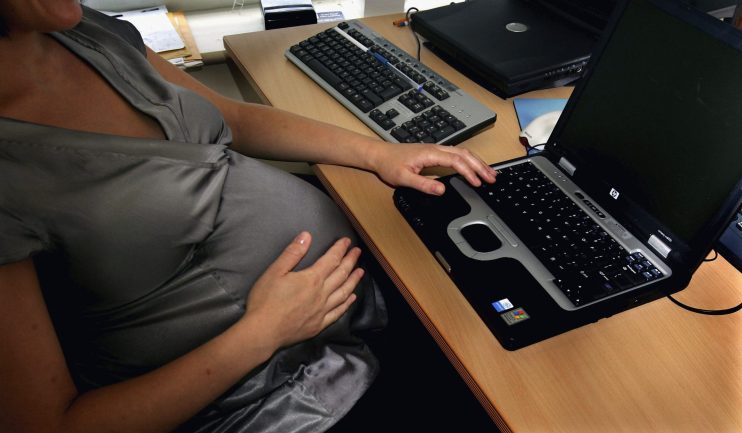
You’d think that a global crash in fertility rates, which will see the world’s population fall dramatically by the end of the century, might be music to the ears of any sustainability professional.
Lower populations, after all, equal lower environmental impacts.
Yet dig a bit deeper into the research published last week by University of Washington’s Institute for Health Metrics and Evaluation, and you see some grave and concerning statistics.
This crash, with fertility rates halved between 1950 and 2017, has nothing to do with a decline in health, which is a relief. Instead, it is being driven in large part by the higher number of women in education and work.
Again, this is in itself a positive trend. However, if it is leading women across the world to have fewer children, we need to ask ourselves why. The data suggests that careers and motherhood are in many cases seen to be in conflict. Women are still having to choose between the two — and they are increasingly choosing careers, access to wealth, and the fight towards an equal footing in society.
Gender inequality in the workplace is a vital issue in itself. But when viewed through the lens of the fall in fertility rates, creating structures that support women in the workplace becomes a global imperative.
The reduced birth rate will eventually result in an inverted age structure. Children under the age of five will rapidly decrease, while adults over 80 will soar from 141 million to 866 million by 2100.
In this massively ageing world, the burden of taxes, healthcare and welfare will fall to the shrinking working population — to be shouldered by both men and women — and drive a seismic social and economic shift which governments simply aren’t prepared for.
This is a sustainability crisis. The trend needs to be reversed, and understanding why balancing work with childcare responsibilities is seen as too much of a struggle for millions of women is paramount.
And a quick look at work and life during Covid-19 crisis offers some revealing answers.
According to the UN Policy Brief in April, the coronavirus pandemic has had a major impact on women, who have on average been “shouldering a disproportionate burden of the care work” as a result of the school and nursery closures. According to the brief, women are spending up to three times as many hours as men working in unpaid care roles.
There has been little political recognition of this fact. In the UK, the Prime Minister’s call for people to return to work coincided almost exactly with the start of the summer holidays, putting many working parents (and, overwhelmingly, working women) who have already spent months caring for children during what should have been term time in an impossible position. They have already used up their annual leave and the good will of their employers.
As lockdown continues across the world, women that businesses have invested heavily in, who can and do add huge value to their organisations, are at risk of leaving or scaling back their hard-earned roles, because they simply have no other choice.
Even before we were confronted with the global upheaval of a pandemic, the infrastructural support for childcare in many nations leaves much to be desired. The UK is by no means an outlier in facing these challenges, but the fact that childcare is so expensive many women simply cannot afford to go back to work is a major cause for concern — and goes a long way towards explaining the falling birth rate.
It doesn’t have to be this way. In Sweden, for example, employees pay higher taxes but many are able to take up to five weeks holiday in the summer, and can organise their working day flexibly to fulfill childcare responsibilities. The Swedish government also provides longer statutory paternity leave, providing more balanced parental responsibility for childcare. While it still has its challenges, Sweden ranks first in the EU on the Gender Equality Index.
Equalising and extending parental leave would go some way towards addressing gender inequalities. So would greater childcare provision and a renewed acceptance from businesses of flexible and remote working for all workers. Not only would this benefit worker wellbeing, but we might gradually start to see fertility rates recover, as women no longer have to choose between work and parenthood.
Change is challenging, but it is also unavoidable. The status quo is not sustainable. Without fundamental shifts in the way we work, we are at risk of grave demographic societal consequences — ones we may not be at liberty to fix if we wait much longer.
Main image credit: Getty