
Accounting Cashflows and the Quirk of “Factoring”

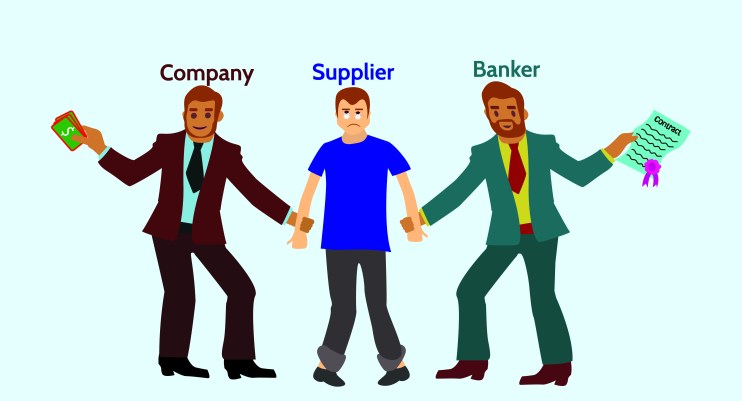
A common factor in the recent demise of Carillion in the United Kingdom and previously of Abengoa in Spain was creditor factoring used to bridge liquidity shortfalls. Creditor factoring generally delays payments to creditors to fund a company’s operations. Such arrangements may help companies in smoothing reported cash flows in the near term but creates an obligation to pay in the future. However, if the liquidity problem aggravates in the near term, it turns the clock ticking down against potential opportunities that could arise in the future.
The lack of transparency in reporting for such arrangements distort cash flow statements which a lot of investors use as a starting point. Unlike economic deterioration in liquidity and use of additional borrowing to firefight the current crisis – financial reporting paints a rosy picture of improving operating cash flows instead of reporting an increase in borrowing.
For investors, the key issue is to identify at what point in time a trade creditor (included in working capital changes; i.e., operating cash flows) becomes a financing liability (included in leverage calculations; i.e., financing cash flows). Current accounting practice does not specifically cover creditor factoring, and company management can use it without any specific disclosure requirements. This, however, is vitally important information for investors to identify in a timely fashion and to adjust in performance and leverage ratios. An omission to make a timely adjustment would overstate operating cash flows and understate leverage ratios.
A simple way to understand creditor factoring is considering an example of a cable tv provider. A customer asks to cancel his monthly subscription of £100 as he will be temporarily out of job. The service provider, who does not wish to lose a customer, offers to delay the payment term from paying each month to paying after 6 months (so January subscription is paid on the last day of June). The customer agrees to the extended term and thus improves his monthly net cashflows by saving £100 each month. Until the new payment cycle kicks in, the customer has saved £500 (£600 for 6 months service – £100 payment at the end of 6th month).
However, this in effect is a debt. When the subscription arrangement eventually ends, the customer will have to pay £500 to his service provider.
Following this example, let’s assume that a company with strong bargaining power forces a weak supplier to accept longer credit terms. The company is effectively making the supplier fund its working capital.
This scenario, however, could create liquidity problems for the supplier. So, the company uses its banking relationship to offer its supplier a factoring facility that could be cheaper and more effective than the supplier’s own factoring arrangements. This is an example of “bad reverse factoring” which will not show up anywhere in accounts, except in a lagging bloated account balance of “trade and other creditors.”
Let’s stick with this same example but assume that the supplier has a stronger bargaining power instead of the company. In this case, the supplier will not agree to an extension of the payment period or alternatively could force shorter payment periods. Here, the company will involve its bank to pay off the supplier on time and will pay back its bank over a longer period. This is called “confirming.” Like bad reverse factoring, this also receives a poor disclosure.
Unlike bad reverse factoring, we believe confirming should be reflected more clearly in the balance sheet and cash flow statement. For bad reverse factoring, it could be argued that economically there is no debt (from an accounting perspective), just an extension of the supplier payment period. In the case of confirming, there is both legally and economically a significant change. This often is classified in trade or other creditors and in operating cash flows instead of timely moving it to debt and financing cash flows.
CFA Institute believes that bad reverse factoring and confirming are economically similar. Therefore, we have advocated for an “outstanding number of days” disclosure for suppliers. In regard to confirming specifically, we have advocated for creditor balance and bank balance movements to be separately included in operating and financing activity of cash flows statement, respectively.
If you liked this post, don’t forget to subscribe to Market Integrity Insights.