Cazoo: The full story of how online car retailer went from $8bn valuation to staring into the abyss


Cazoo came out of nowhere – sponsoring sports teams, racking up market share and floating in New York. Jon Robinson looks at what happened next.
Stepping up to the iconic podium overlooking a throng of traders, employees and media, Alex Chesterman received his final instructions before he and his son rang the opening bell for the New York Stock Exchange.
The Cazoo founder and chief executive then embraced each of his family in turn before shaking hands with his fellow directors and celebrating a momentous milestone.
The online car retailer, just three years old at that point in August 2021, was now worth $8bn, having decided to snub London and float across the pond.
But its fortunes were about to “swan dive” to such an extent that Cazoo is now worth in the region of $20m and less than two-and-a-half years after the Wall Street set piece, Mr Chesterman is out of the business altogether.
Now, with the future of Cazoo appearing to be hanging by a thread, Morning Wire has taken a deep dive into how the business got into this position and what could lie ahead.
Despite recently completing a $630m move to reduce its debt, questions remain over why its directors decided to choose New York over London. Was it a case of thinking that the grass was greener on the other side of the Atlantic?
Would an IPO in London, where Cazoo is actually headquartered, have been a more sensible option and offer a better return for shareholders?
Was it inevitable that Cazoo’s shares would struggle once they were being publicly traded, given what has happened to its competitors?
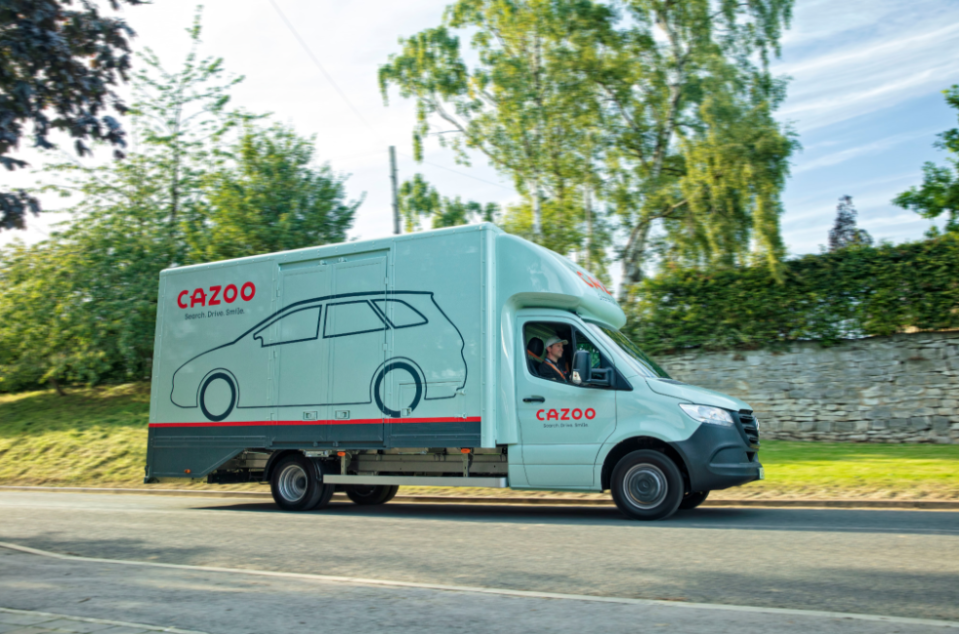
How did it come to this?
Cazoo was founded in 2018 by former Zoopla and Lovefilm boss Alex Chesterman.
Having raised more than £30m in seed funding, the fledgling company had welcomed the owner of the Daily Mail, Daily Mail and General Trust (DMGT), as well as Stride Capital, Octopus Ventures and Entree Capital as shareholders.
The platform officially launched in December 2019, having raised an extra £25m, and announced plans to sell more than 200,000 cars a year by 2025 but did later warn that it was expected to generate losses of up to £70m in its first three years.
Like most businesses across the world, the COVID-19 pandemic had a significant impact on the company but it didn’t stop it being valued at £800m in June 2020 following another funding round.
After snapping up the car supermarket group, Imperial Cars, it raised even more cash and also acquired the car subscription service, Drover.
Cazoo lost more than £100m in 2020, something that didn’t stop its founder from entering The Sunday Times Rich List with a fortune of £750m.
With a cool $1bn raised with its New York float, Cazoo’s shares rose by almost eight per cent on its first day of trading and it bought SMH Fleet Solutions and Vans365.
But by January 2022, Cazoo’s share price had been slashed to less than half of what it was just five months earlier and it was preparing to reveal a £180m loss for 2021.
Nevertheless, the business acquired Italian car retailer Brumbrum for £67m and raised an extra $630m from investors.
Cazoo started making a significant number of employees redundant, pulled out of mainland Europe, sold two companies and racked up losses of more than £700m during 2022 despite its revenue rising from £655m to £1.2bn.
By the start of 2023, the optimism that had greeted the opening bell in New York had all but disappeared and Alex Chesterman stepped down as CEO. He had departed the business altogether by the end of the year.
In September 2023, Cazoo agreed to a debt-for-equity swap on nearly $630m of debt. While investors were already facing a heavy loss, the deal would even further dilute the value of their shares.
News of the arrangement sent shares of the beleaguered car seller tumbling, with shares down 23 per cent in afternoon trading, taking them to under one per cent of their IPO value in 2020.
Cazoo’s fell from £583m to 419m in the first six months of 2023 while its losses were cut from £241m to £151. Its full-year results are expected to be published in the coming weeks.
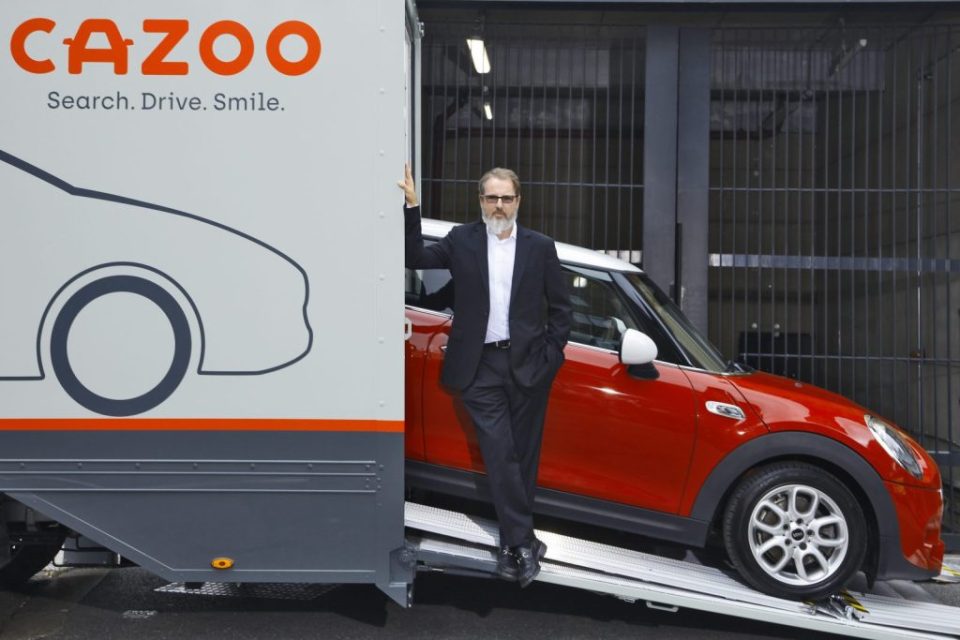
The origins of Cazoo’s share price “swan dive”
Cazoo’s shareholders are likely to be less than thrilled by its performance over the last couple of years since the IPO.
Those who received shares back in 2021 as part of the DMGT delisting perhaps thought that they were onto a good thing.
With the move to dilute the stakes of its existing shareholders even further at the end of 2023, Cazoo was able to survive to fight another day but at a cost.
But asking why Cazoo’s share price has crashed is to “ask the wrong question”, according to Russ Mould, investment director at AJ Bell.
In his analysis, the “real issue” is not why the shares have fallen, but “why on Earth they got to where they did in the first place”.
Mr Mould said: “Cazoo listed on the NYSE via a SPAC deal in August 2021, with a vehicle called AJAX I. It had a market valuation of some $8bn at the listing price of $10.
“That already looked like pretty good going for a young company that had generated $162m in sales in 2020 and went on to generate $662m in 2021 – that was a big multiple of sales (even allowing for the cash pile) especially as the business was in start-up mode and thus loss-making as it embarked upon a customer acquisition drive.
Throw in a supply crunch in new cars, thanks to Covid and lockdowns and ships blocking the Suez Canal, and cash and time-rich consumers had to buy a second-hand car if they wanted a vehicle within any reasonable time frame.
Russ Mould, AJ Bell
“SPAC deals were running hot. So were IPOs, M&A and meme shares and stock and bond markets as governments and central banks threw money at the economy to keep it on an even keel during the pandemic and lockdowns.
“But record low-interest rates, Quantitative Easing, furlough schemes and other initiatives saw a lot more of that cash slosh into financial markets, albeit as an unintended consequence, and a lot of investors lost their discipline, lulled by cheap money, the prospect of quick gains and a feeling that the world would never be the same again – we’d all work from home, only buy things online, interest rates would stay at zero forever and so on.
“Throw in a supply crunch in new cars, thanks to Covid and lockdowns and ships blocking the Suez Canal, and cash and time-rich consumers had to buy a second-hand car if they wanted a vehicle within any reasonable time frame.”
Mr Mould argues that the origins of Cazoo’s share price “swan dive” can be found there.
He added: “Furlough schemes stopped (and in some countries were replaced by tax hikes to pay for them). Interest rates rose as inflation reared its head after 40 years of lying dormant (thanks to too much free, newly created money chasing too few goods). QE ended.
“Recession fears hit the stock market and investor risk appetite in 2022 (even if those fears have yet to be borne out).
“The sheer number of SPAC deals and IPOs overwhelmed demand and investors pulled back as many of the deals proved to be overpriced duds.
“In addition, investors had to face the possibility that the Cazoo business model did not scale to profitability very easily.
“Yes, it scales, as Cazoo won lots of new customers and sold and shipped a lot of cars thanks to aggressive sponsorship and advertising campaigns.
“But even as sales surged from $162m in 2020 to $1.2bn in 2022, the firm still lost more than half a billion dollars.
“The deluge of free money meant a lot of other start-ups were operating in the same space and that combination tends to lead to low (if any) profits. Vroom, Carvana and Shift Technologies were notable rivals. All floated.
“All of their shares soared and then plunged as the second-hand car market cooled, and prices fell sharply from over-heated highs. At least in this respect, Cazoo is not an outlier. It is just one of many.”

Was listing in New York a mistake for Cazoo?
It’s easy to see why Cazoo chose New York over London in 2021, despite the move being “very usual”, according to Ian McMahon, automotive partner at UHY Hacker Young.
The London Stock Exchange has had its well-publicised issues over the last few years and US investors would have been familiar with Cazoo’s business model because of the likes of Carvana floating in New York a few years earlier.
Mr McMahon said: “During its rise, Cazoo benefited from a significant period where its stock of used cars appreciated in price.
“Even if a dealer didn’t sell a car, they could leave it in storage and watch its price rise. Now the opposite is the case – used car prices fell sharply at the end of 2023.
“Multiply a 10 per cent fall in value across a stock of 4,000 cars and a lot of money is being lost.”
He added: “At the time of its meteoric rise in the pandemic, Cazoo delivered a much smoother buying experience than traditional bricks-and-mortar used car dealers did. Once the rest of the market caught up to it, that advantage shrank.
“Some argue it was at a disadvantage since a lot of buyers still won’t buy a used car without driving it first. It hasn’t yet found a real way around that problem.”
So, what next?
Cazoo is expected to announce its final quarter and full-year results any day now.
Its performance over its latest financial year will be laid bare for all to see and will provide the best view yet on whether the company has a viable future in its current form.
Analysts and commentators will be looking at Cazoo’s share price closely for clues to how the finances go down with investors.
But it’s unlikely that Cazoo will be able to pull a rabbit out of the preverbal hat, given how it has performed over the three quarters which have already been announced.