Challenger banks face ‘profitability trap’ at growth crossroads

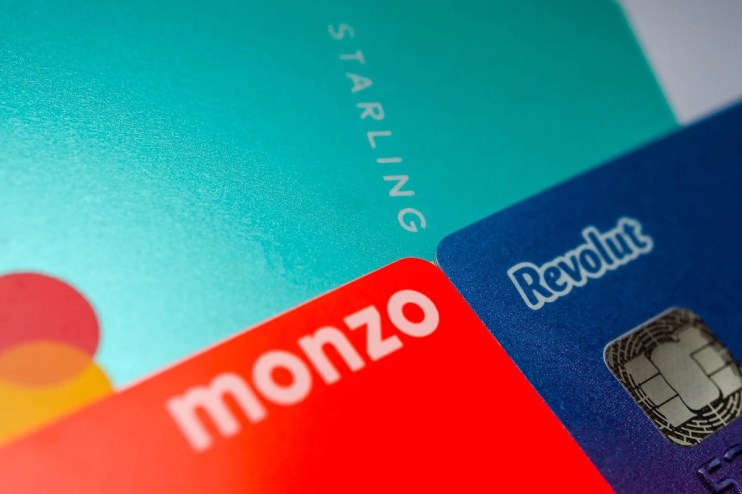
The UK banking sector faces a profitability roadblock that will give the industry’s challengers an “existential” turning point.
Fresh data from KPMG suggests the industry’s average return on equity will fall to eight per cent come 2027 down from 13 per cent four years prior.
This is set to spark an £11bn reduction in pre-tax earnings and follow on from a £3.7bn downturn in sector-wide profit in 2024.
For challengers, this marks both a problem and opportunity, Peter Westlake, head of challenger banks and building societies at KPMG UK, told Morning Wire.
“What these newer banks lacked and what is now non-negotiable for this type of business mode is scale.
“Without it, they struggle to deliver returns above their cost of equity. Despite strong brands and capable platforms, many are in a profitability trap,” Westlake said.
He said the first wave of challengers set out with “admirable intentions” but most had “simply built a faster horse, digitising the traditional model rather than rethinking it”.
Now, a combination of rising costs and tightening margins could be poised to alter the industry’s direction.
“Challenger banks, while once disruptive, now face an existential challenge: they must either adapt or face consolidation and decline.”
Challengers’ tech advantage slipping?
As headwinds across the industry intensify, analysts are pencilling in a series of new deals that could lead to consolidation in the banking sector.
The UK’s top six players – HSBC, Barclays, Natwest, Lloyds, Santander and Nationwide – are expected to lead this charge.
Westlake said challengers are facing a “critical strategic fork” where they can “bulk up” through deals, “reinvent their business model entirely,” or face acquisition.
Over recent years, challenger banks have been snapped up by industry giants.
Deals have included Barclays’ £600m takeover of Tesco, Sainsbury’s Bank paying Natwest £125m to take over its core retail banking assets and Nationwide’s blockbuster £2.9bn acquisition of Virgin Money.
Westlake argued the “most striking development” of recent years was the “shrinking of the digital gap” between big banks and challengers. He said the “competitive advantages” challengers once had were “no longer unique”.
Others in the industry agree.
Speaking at the Money 20/20 conference in Amsterdam in June, Monzo boss TS Anil said the next decade of banking would present a “race between two sides of the industry.”
Anil said legacy banks and “whether they get the tech” would square off against “fintech companies… and whether they get banking right”.
The fintech chief argued Monzo could go “toe to toe” with the incumbents but “will win with the power of technology”.
Britain’s banking titans have upped their tech game as challengers have snapped at their heels.
Lenders have gone all-in on AI, with Natwest partnering with Sam Altman’s OpenAI to focus on “bank-wide simplification” and Lloyds launching its own ‘AI Centre for Excellence.’
Strategic plays
KPMG data shows a large portion of neobanks hold loan-to-deposit ratios below 30 per cent. A lower ratio means a bank has plenty of cash from its depositors and is lending out a smaller portion, indicating strong liquidity but potentially lower profits.
Westlake said: “Without a broader customer relationship such as mortgages, credit cards, business lending, they won’t be able to drive the returns needed to sustain a business model.”
Challenger banks have already begun to ramp up their operations in a bid to find their niche and diversify revenue streams.
Fintech juggernaut Revolut has entered a flurry of new markets in recent years, including hotel bookings and mobile services.
Whilst other firms have scaled up their efforts to take the fight to traditional banks. In June, Zopa launched its current account “Biscuit” to rival the likes of Lloyds, Natwest and HSBC.
Merve Ferrero, chief strategy officer at Zopa Bank, told Morning Wire at the time the firm was not going to “move like Revolut does” and instead “go deep before we go broad”.
Prominent players in the UK fintech scene have also begun exploring acquisitions in a bid to secure a banking licence without the regulatory restraint.
OakNorth acquired Michigan-based Community Unity Bank in March – a firm insured by the Federal Deposit Insurance Corporation.
John Cronin, banking analyst at Seapoint Insights, told Morning Wire the deal would “likely support the development of OakNorth’s US ambitions far more quickly than applying for a national banking charter would.”
Cronin said Revolut and Starling were now echoing this thought process with their recent interests in US acquisitions.
Starling’s finance boss Declan Ferguson has said there is a “really interesting opportunity to own and operate a regulated bank in the US”.
“Starling’s growth in the UK has slowed down and that is, in my view, potentially part of the reason why they are looking at overseas markets for expansion purposes,” Cronin said.
He added Engine – the fintech’s banking-as-a-service product – had an international focus, creating “strategic congruence there too”.
A new road ahead
The success of the challengers has been measured by the number of customers they’ve been able to steal from the incumbents in the past.
However, the big four are now starting to fight back.
In the first quarter of 2025, Nationwide led the industry with a net gain of over 55,000 switchers. Monzo came in second at 8,850, whilst FTSE 100 giant HSBC scored third with 5,621.
Starling marked a net loss, with over 5,000 customers leaving the fintech and just 4,350 joining.
Westlake said: “If you can get a similar experience from a legacy bank as you do from a challenger and also benefit from its lending range, service stability, and cross-product scale, then the case for switching weakens.”
But the new road ahead was set to create a “conundrum for competition,” Westlake said.
“It is partly the threat of the newer digital start-ups nipping at the heels of the big banks that is pushing innovation in the sector.”