Champions League: Is the rise of the superclubs becoming a problem?

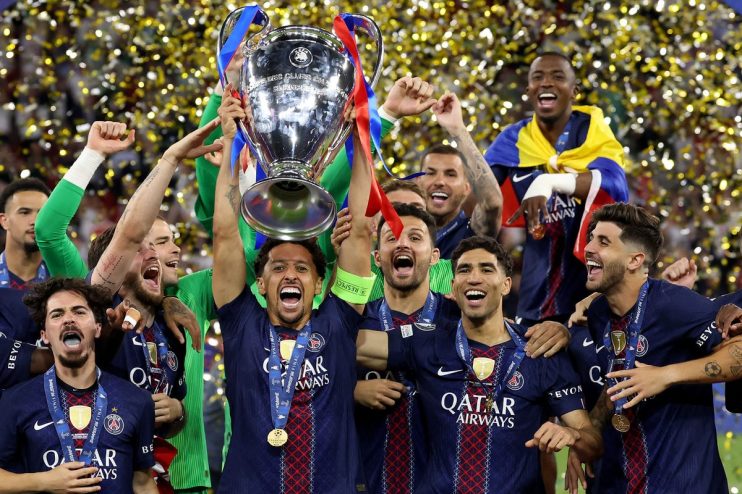
Eight clubs in this year’s Champions League have a massive financial advantage over the rest but, with TV and commercial revenue increasing, should Uefa be worried?
The Champions League kicks off in earnest this evening with a low-key fixture between AEK Athens and Austrian side LASK, the kind that, for most neutrals, could only be imbued with excitement by being a curtain-raiser for football’s top club competition.
Both clubs are in the bottom six of the 36-team league phase line-up when ranked by revenue, with income of around €40m each. To put that number in perspective, it is slightly over half what Real Madrid – who face Inter Milan in Tuesday’s most appealing clash – earn per season for wearing a patch with the brand of secondary sponsor HP on their sleeves.
And therein lies the uncomfortable truth: the financial gap between Europe’s superclubs and those just happy to be there has never been bigger.
Sitting at the top, revenue-wise, are Real Madrid and Barcelona, who both reported income in excess of €1bn for last season. The team from the Spanish capital alone earned more than the 15 poorest teams in the Champions League combined. Add Barcelona and the rival LaLiga giants make more money than the bottom 20 put together.
Perhaps the starkest gap, however, is between the top eight richest teams – Real Madrid, Barcelona, Bayern Munich, Paris Saint-Germain, Liverpool, Manchester City, Arsenal and Manchester United – and the rest. When we talk of superclubs, it is increasingly difficult to make a case for anyone outside of these eight.
The difference in earnings between Manchester United in eighth and Borussia Dortmund in ninth is around €330m. That is the biggest financial chasm among the 36 teams and greater than the gap between United and Real Madrid’s €1.2bn. To look at it another way, Dortmund are closer in revenue terms to 36th-placed Sabah, the Azerbaijani debutants, than to Barcelona. Most clubs are yet to report last year’s figures, but it is safe to assume the pattern is the same.
Champions League revenues continue to rise
This is, unsurprisingly, having an effect on outcomes on the pitch. Only twice in 16 years has a club other than one of the current eight richest in the Champions League won it: both times it was Chelsea, who would arguably make it a Big Nine had they qualified this year. Of last season’s eight quarter-finalists, only two were not from that gilded subset: Atletico Madrid and Sporting Lisbon.
For anyone seeking some unpredictability, there are other worrying trends. Teams from the biggest leagues are routinely earning additional places – the Premier League has five teams in the 36 this season; last year it was six – in a competition that receives 74 per cent of Uefa’s total prize €3.3bn pot for its three club competitions.
This is not a problem confined to the Champions League, of course. Germany’s Bundesliga and Ligue 1 in France are effectively one-horse races, such is the disparity in resources between Bayern and PSG and the cannon fodder who make up the numbers, while LaLiga is a straight coin-toss between Real Madrid and Barcelona.
The Premier League’s more equitable financial distribution mechanisms and the strength of its brands mean there is a little more jeopardy but no one expects another Leicester City to come along any time soon. And the less said about what has become of the shock 2015-16 title winners, now in League One and smarting from a 4-0 thrashing by Oxford United, the better.
Not that the market seems to mind too much yet. UC3, the joint venture between Uefa and clubs’ body EFC, has generated an increase of around 20 per cent on sales of broadcast rights for the next cycle, beginning in 2027. Commercial rights as a whole, also including sponsorship and licensing, are up even more.
No one complains that the World Cup is only ever won by one a handful of nations, but competitive tension is undoubtedly one of the factors that helps the Premier League rake in far more cash than any of its more predictable European rivals and US sports are constructed on the very premise. It remains to be seen whether the Champions League’s shrinking pool of contenders becomes a problem.