| Updated:
Changing Chanel: How the design house has adapted to modern times


Fashion is not something that exists in dresses only,” said Coco Chanel. “Fashion is in the sky, in the street, fashion has to do with ideas, the way we live, what is happening.”
For Chanel (that’s “Mademoiselle” to you and I) fashion was always more about the inherent predictability of the moment.
When in 1913 she started making ready-to-wear clothes out of jersey – a low-cost fabric usually used for men’s underwear – she did so simply because she was cold.
In a conscious break with the constricting finery of Victorian formal-wear, Chanel made clothes responsive to the emotional and physical states of the women who wore them.
She knew you could only arrive at a point where a woman looked her best via a consideration of how she felt. She cared, and the wealthy women of the day repaid her handsomely.
The story of Chanel is one of constancy and fluctuation. The brand’s guiding principle – that even the finest clothes should leave the wearer free to frolic – can be traced back to the first ready-to-wear boutique that Coco Chanel opened in Deauville in 1913.
Yet the brand has undergone countless transformations. Those at the helm – be it Chanel herself or latterly Karl Largerfeld – have always positioned themselves at the vanguard of modernity.
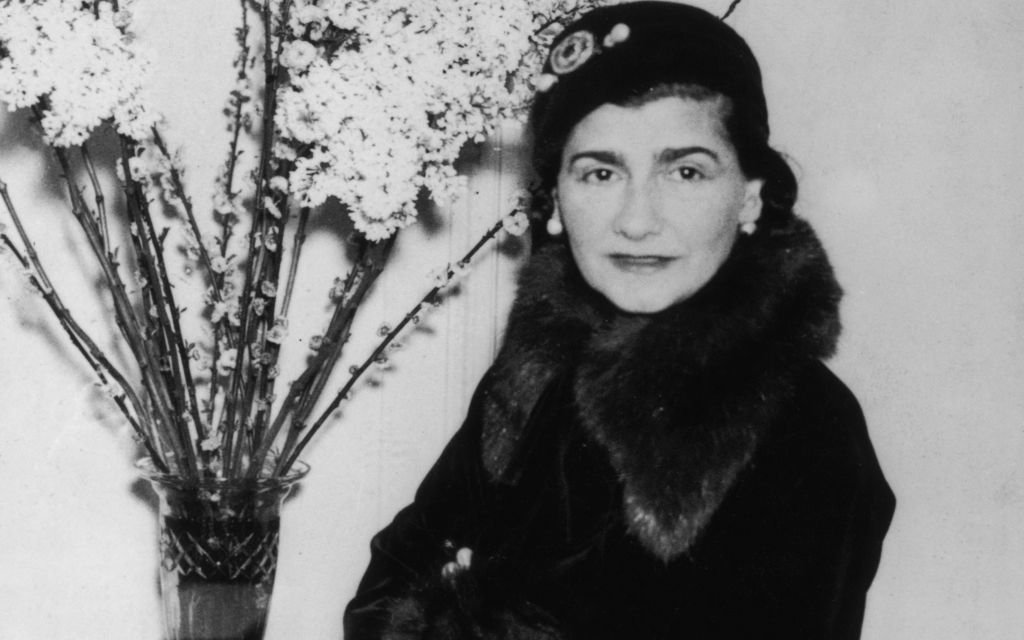
French fashion designer Gabrielle ‘Coco’ Chanel at a London hotel, 1932 (Source: Getty)
Barely a mid-20th century decade went by without Chanel making some game-changing contribution to womenswear. The first ready-to-wear shop, opened at the height of the first World War, introduced “sportswear”, a pared down alternative to the more formal “resortwear” fashionable at the end of the Victorian era.
She cut clothes that were practical and simple, often inspired by menswear. Jersey sweaters, flannel blazers and – mon dieu! – trousers for women were some of the shop’s staples.
Menswear continued to inspire Chanel as the business grew. Now working out of a boutique on a fashionable street in Paris, Chanel used flexible materials and military-style trim to create the “Chanel Suit”, another signature outfit that would endure for decades.
On the collarless, boxy woollen jacket she added metal, military-style buttons. On the bottom, she went for a simple, fitted knee-length skirt. It hit the lucrative sweet-spot between smart, comfortable and sexy.
In her later years Chanel herself was often seen wearing one. This image of her – suited, ear-ringed, hair cut short – lingers more vividly than any other.
The suit was one momentous moment in a decade full of them for Chanel.
In 1926 we saw the first incarnation of Chanel’s “little black dress”, the first time a major designer capitalised on the versatility of a colour usually reserved for formalwear. It was an instant hit, with US Vogue declaring it “Chanel’s Ford”.
And then there was Chanel No. 5, the perfume which first hit shops in 1921. Even Mademoiselle herself, with her supernatural attunement to the zeitgeist, couldn’t have imagined what a phenomenal and lasting success it would be.

Kendall Jenner and Karl Lagerfeld walk the runway during the Chanel show in Paris (Source: Getty)
Her quote “A woman who wears no perfume has no future” was surpassed in fame by a bold utterance from a 20th century sexual icon: asked what she wore in bed, Marylin Monroe replied, “nothing but Chanel No. 5”.
A bottle of the perfume, to which an upcoming Chanel exhibition at the Saatchi Gallery will have a special section devoted, is reportedly sold every 55 seconds. Not bad for a fragrance pushing 100-years-old.
Chanel continued to break ground in the decades after the war. In 1955 she began selling the 2.55 bag – named after the date it was created (February 1955) – an alternative to the handbag that women could hang from their wrist or shoulder rather than hold.
Again, she married practicality with style: the bag, with its chain-link strap, quilted leather and interlocking Cs, has been a mainstay of high fashion ever since.
The vociferous media of the post-war world precipitated a new era for Chanel.
No longer a mere designer of fine clothing, Chanel was also now an international brand sought after and worn by the world’s most glamorous women, from the president’s wife to the most beautiful film stars.
In the famous image of Audrey Hepburn on the poster for Breakfast at Tiffany’s, the floor-length evening gown she wears is Chanel. The glamorous two-pieces so loved by Jackie Kennedy: Chanel.
Coco Chanel died in 1971 at the Ritz Paris suite where she’d lived for thirty years. She was 87.

Kendall Jenner walks the Chanel Couture catwalk
When she died she was still working on her next collection, and the subsequent decade without her was the only time the brand lost its way.
Without a figurehead Chanel struggled to register an identity in a market suddenly awash with commercially savvy designer labels.
Step forward Karl Lagerfeld, a lubricious German with a feel for the way things were headed: the age of glamour was giving way to a new age of sex and hedonism.
He made it his life’s work to position the brand at the vanguard of this new sexy. Lagerfeld added an unthinkable edge and exuberance to a brand some believed to be on its way out.
In a recent interview he said that, for all Coco Chanel’s genius, she made two mistakes: 1. she never thought jeans would catch on, and 2. her dismissal of the miniskirt as an irredeemably unattractive garment.
Under Largerfeld the brand became more open to influences beyond the top end of the market.
His early collections were receptive to the taste for prominent branding among younger people and he filled his designs with the double C logos, pearls and chains for which Chanel was famous.
Today, the brand is strong in every department, from ready-to-wear to jewellery to haute couture. The upcoming exhibition at the Saatchi Gallery will focus on the history of the latter.
It will channel the personality and spirit of the two great imaginations behind the brand, and show why it was one of the leading design houses of the 20th century. And why, after more than a century, it remains that way today.
Mademoiselle Privé opens at the Saatchi Gallery on 13 October and runs until 1 November