
China’s Evergrande: not so grand financial statements?

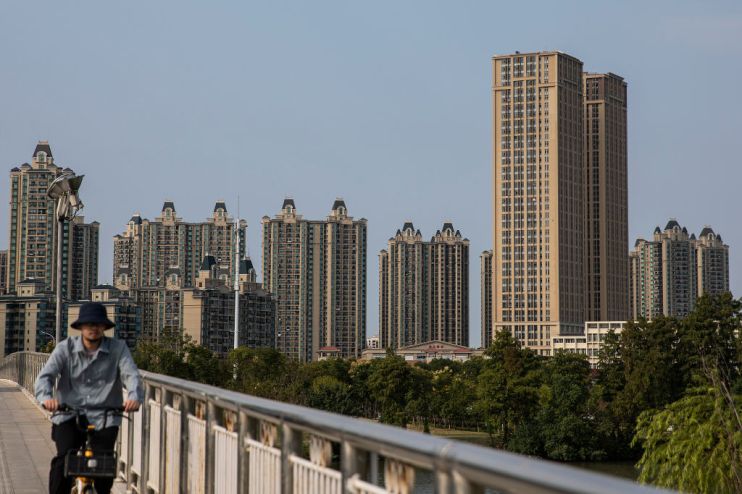
Evergrande Group is the latest listed company to unexpectedly find itself on the verge of bankruptcy.
When businesses are thrust into public view for the wrong reasons, my first thought is always whether trouble could have been coming.
To see if the Chinese property development giant’s travails could have been anticipated, I looked at its annual reports from 2016 to 2020.
Should we have seen the Evergrande storm brewing?
Growth falls off a cliff
| 2016 | 2017 | 2018 | 2019 | 2020 | |
| Revenue, in millions renminbi (RMB) | 211,444 | 311,022 | 466,196 | 477,561 | 507,248 |
| Revenue growth | 59% | 47% | 49% | 2% | 6% |
Rapidly slowing growth, as displayed by Evergrande, is more than just a warning sign: it can also incentivise bad behaviour in the form of accounting tricks and risky business practices in an effort to make the critical top- and bottom-line numbers look pretty.
Disappearing margins
| Change, 2017 to 2020 | 2016 | 2017 | 2018 | 2019 | 2020 | |
| Gross profit margin (GPM) | -12% | 28% | 36% | 36% | 28% | 24% |
| EBITDA margin | -14% | 20% | 30% | 30% | 20% | 16% |
| Operating profit margin (OPM) | -15% | 20% | 29% | 30% | 20% | 15% |
| Net profit margin (NPM) | -6% | 8% | 12% | 14% | 7% | 6% |
| Selling and marketing expenses, in millions RMB | +86 | 15,983 | 17,210 | 18,086 | 23,287 | 31,962 |
| Selling and marketing expenses as % of revenue | +2% | 8% | 6% | 4% | 5% | 6% |
Evergrande’s margins didn’t do well either. Gross profit margin (GPM), EBITDA margin, operating profit margin (OPM) and net profit margin (NPM) all decreased between 2016 and 2020.
The most worrying decline was the GPM slump. GPM fell by 12 per cent over just three years, from 2018 to 2020.
According to the annual report for 2020, gross profit for the year decreased ‘mainly due to a decrease in average selling prices caused by nationwide sales promotion activities and sales price concessions of the Group as a result of Covid-19’.
The 2019 report stated that gross profit rate was 27.8 per cent for the year, ‘which was mainly due to the lower selling prices of clearance stock properties and the slight increases in construction and installation costs per square metre for delivered properties, land costs and interest capitalised’.
Translation: the fall in GPM was mainly due to sharp cuts in selling prices to push property sales.
As the table also shows, other margins also fell significantly. This collapse was driven, of course, by slowing GPM. But increasing selling and marketing expenses were critical contributing factors as well. These expenses not only rose as a percentage of sales over the last three years of our sample, they also ballooned by 86 per cent between 2017 and 2020. The main reason? An effort to kickstart rapidly flagging sales. This may have been an indicator of the larger issue: serious sectoral weakness.
Big cashflow swings
| 2016 | 2017 | 2018 | 2019 | 2020 | |
| Cashflow from operations (CFO) (in millions RMB) | -58,610 | -150,973 | 54,749 | -67,357 | 110,063 |
| CFO before interest payments | -27,734 | -96,901 | 109,837 | -566 | 188,097 |
| Free cashflow to the firm (FCFF) | -44,063 | -111,696 | 99,487 | -15,729 | 169,791 |
While Evergrande’s revenues rose and its profits stayed flat over the five-year sample, the firm’s cashflows tell a different story. Both CFO and free cashflow to the firm (FCFF) kept swinging from negative to positive and back to negative.
The CFO should be positive. Otherwise, it indicates that the company is unable to make money from its operations. An erratic CFO means that the firm may be at the mercy of lenders just to fund its operations.
When a firm delays payment to suppliers, it is often an attempt to bolster CFO in response to poor cash inflows.
The relevant indicator is the number of days payable outstanding (DPO), or how many days the cost of sales is lying unpaid.
Trade payables bounty
| 2016 | 2017 | 2018 | 2019 | 2020 | |
| Trade payables, in millions RMB | 182,994 | 257,459 | 423,648 | 544,653 | 621,715 |
| Number of days payables outstanding (DPO) | 379 | 404 | 418 | 513 | 553 |
The company’s 2020 cashflow statement shows that CFO soared from a deficit of RMB 67 billion in 2019 to a surplus of RMB 110 billion in 2020. That’s a net increase of RMB 177 billion. A big driver of this cash surge? The bounty of trade payables, which rose by RMB 77 billion in 2020 over 2019 despite declining property construction activity. That is unsustainable.
The cashflow statement reveals how Evergrande misallocated cash in 2020. The adjusted CFO is a good starting point. It shows the effect of delaying payments to suppliers. If the increase in payables in 2020 had been the same as that in 2019, or RMB 29 billion, then 2020 CFO would not be a RMB 110 billion surplus but a deficit of RMB 16 billion: 110-155+29.
That’s an important number to keep in mind when we see that Evergrande repurchased RMB 4 billion in shares and paid RMB 59 billion in dividends in 2020.
Since the firm borrowed RMB 303 billion in 2020, we’d expect at least some of those funds paid for the share repurchases and dividend payments. But that was not the case. Repayments to lenders of RMB 398 billion outstripped that RMB 303 billion in new loans.
What does that mean? Payments to suppliers were likely delayed, boosting CFO mainly to pay dividends and buy back shares.
Increasing write-downs
Evergrande held significant amounts of properties under development (PUD) and properties held for sale (PHS) on its balance sheet. In aggregate these accounted for approximately 60 per cent of the firm’s assets as of year-end 2019 and 2020.
While PUD is self-explanatory, PHS is property that has been constructed and is awaiting sale. Evergrande’s accounting policy requires PUD and PHS be written down to their net realisable values (NRV) if their NRVs are less than the cost. This write-down totalled RMB 3.22 billion in 2020, a 39 per cent increase from the 2019 write-down of RMB 2.32 billion which itself was a 132 per cent increase from the 2017 write-down of RMB 1 billion.
Evergrande’s note to accounts mentions the weighted average rate of the company’s general borrowings. This is used to capitalise interest costs. This rate had been increasing since 2017.
Borrowing costs increasing
| 2016 | 2017 | 2018 | 2019 | 2020 | |
| Borrowing rate (weighted avg) | 8.27% | 8.09% | 8.11% | 8.63% | 9.46% |
Now, this rate could increase for only two reasons: either a rise in China’s general lending rate or increased credit risk on the part of the borrower.
China’s prime lending rate has stayed flat since 2017, dropping only due to pandemic-induced stimulus efforts in 2020. Yet Evergrande’s cost of borrowing didn’t fall. Overall, its rate jumped by a significant 137 basis points in three years. This suggests that lenders believed extending credit to Evergrande was an increasingly risky proposition.
Evergrande’s overreliance on debt is the popular explanation for its predicament. But its all-important debt-to-equity ratio actually fell between 2016 and 2020.
Debt-to-equity ratio decline
| 2016 | 2017 | 2018 | 2019 | 2020 | |
| Debt to equity | 2.78 | 3.02 | 2.18 | 2.23 | 2.04 |
This bizarre trend has an easy explanation, however: it is solely due to equity jumping from RMB 193 billion in 2016 to RMB 350 billion in 2020. To a casual analyst, that may not have raised any red flags.
(Evergrande’s equity increased for two main reasons: the firm acquired majority — but never 100 per cent — interests in subsidiaries. So, the resulting amounts of non-controlling interests (NCI) kept increasing group equity. Secondly, these NCIs kept injecting cash as equity.)
So how could we have discovered that Evergrande’s debt problem was worsening?
Two calculations give us insight. In both cases, the higher the number the better.
- ‘Total debt to CFO’ reveals how long a firm would need to pay off existing loans if current CFO held steady.
- ‘Total debt to FCFF’ indicates how much time it would take to repay the debt if current FCFF was maintained.
For Evergrande, both of these ratios were extremely volatile and negative in three of the five years.
Debt under the microscope
| 2016 | 2017 | 2018 | 2019 | 2020 | |
| Total debt to CFO | -19 | -8 | 6 | -1,413 | 4 |
| Total debt to FCFF | -12 | -7 | 7 | -51 | 4 |
So what could we have pieced together from examining Evergrande’s audited financials?
Altogether our analysis reveals a story of rapidly slowing growth, rising expenses, shrinking margins, shoddy quality of earnings, cashflow deficits that were plugged by delaying payments to suppliers and vast borrowing, the cost of which kept rising.
Debt defaults, bankruptcies, etc., never happen suddenly. They’re less like a lightning strike than a long-term illness. Heart disease and other such maladies tend to operate in stealth mode for much of their life cycles – undetected and thus untreated. Yet during this time, they are slowly building up and becoming more and more dangerous. By the time their symptoms explode into view, drastic treatment is required.
Yet Evergrande-like risks can be detected early. We just have to be curious enough.
If you liked this post, don’t forget to subscribe to the Enterprising Investor.
By Binod Shankar, CFA, blogger, keynote speaker, executive coach, podcaster at The Real Finance Mentor, and appears frequently on CNBC and Bloomberg as a market analyst.
All posts are the opinion of the author. As such, they should not be construed as investment advice, nor do the opinions expressed necessarily reflect the views of CFA Institute or the author’s employer.
For more insight from Binod Shankar, CFA, visit The Real Finance Mentor.
Image credit: ©Getty Images / Stringer