Citi's Jane Fraser warns UK on taxes while staying silent on Trump's DEI rollback
The Citigroup chief executive delivered a stark warning to Britain's new government while refusing to challenge the US president's equality rollback.
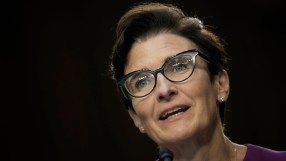
Citigroup chief executive Dame Jane Fraser issued a blunt warning to the UK government during a London appearance on Tuesday, arguing that higher taxes would push the bank toward lower-tax jurisdictions including Ireland, Germany, France and Japan. Speaking at a Financial Times event, she said Britain's advantages in infrastructure, regulation and talent could be "overcome pretty quickly" if the fiscal environment deteriorates.
The remarks, delivered in response to a question about the Labour government's tax plans, amounted to a choreographed threat from one of Wall Street's most powerful leaders. Fraser, a Scottish-born executive who has led Citi's turnaround since 2021, described herself as "not ruthless, but damn tough", a toughness she deployed freely against the UK's policy direction.
That same toughness was notably absent when the conversation turned to Donald Trump. Since returning to the White House, Trump has repeatedly praised Fraser and Citi on his Truth Social platform, congratulating her for a "BIG comeback" and erroneously crediting the bank with topping advisory league tables. While rivals Jamie Dimon of JPMorgan Chase and David Solomon of Goldman Sachs have faced public attacks and lawsuits, Fraser has cultivated a cordial rapport, citing a shared Scottish maternal heritage.
Asked about the administration's dismantling of federal diversity, equity and inclusion programmes, Fraser offered only: "We follow the law." Pressed on whether the policy annoyed her, she replied: "I keep my personal opinion to myself on all different matters... whether I agree, disagree, or whatever is utterly irrelevant." She acknowledged internally that diversity has a "strong economic case" but said she had not made that argument to the president. "My job's to run the company, my job isn't to go and tell politicians what to do," she added.
I need to follow the laws, rules, and regulations in the countries I'm in, and I follow my clients' interests. My job's not to comment on politics.
The contrast is stark. In London, Fraser warned that high taxes, sluggish growth and excessive spending risk disincentivising work, a lecture to elected officials from a foreign-based executive. In the US, she frames political engagement as outside her remit, even as the administration rewrites rules that affect her workforce and clients. Other CEOs have taken a different path: Dimon has publicly defended DEI initiatives, while Solomon has absorbed Trump's barbs about his side career as a DJ.
Why the UK warning carries weight
Citi employs roughly 6,000 people in the UK and operates its European hub from London. The bank's threat to relocate activity is credible; several financial firms have already shifted roles to Dublin, Paris and Frankfurt since Brexit. Fraser's intervention arrives as Chancellor Rachel Reeves prepares her first budget, with speculation mounting over potential increases to capital gains tax, carried interest relief and the bank levy. The Treasury will need to weigh the revenue gains against the risk of accelerating a gradual erosion of London's financial pre-eminence.
The Trump factor
Fraser's silence on US policy is a strategic choice. The president's praise has coincided with a recovery in Citi's share price and a cleaner regulatory slate after years of consent orders. A public disagreement could invite retaliation, witness the $5 billion lawsuit alleging JPMorgan improperly closed Trump's accounts. For a bank still rebuilding trust with regulators, the cost of presidential disfavour is existential. The calculation appears to be that quiet compliance buys operational stability.
Yet the long-term risk is reputational. Employees, investors and clients increasingly expect corporate leaders to articulate values, not just obey minimum legal standards. Fraser's admission that diversity has an economic rationale, coupled with her refusal to advocate for it publicly, may undermine internal morale and external credibility. The tightrope she walks is narrowing; the next policy shock from either side of the Atlantic could force a choice she has so far avoided.