Morning Wire talk with Bink cofounders Lee Clarke and Greg Gormley about resuscitating the loyalty marketing industry


The road to a cashless society has been a fairly smooth one so far – the ubiquity of contactless payments and online shopping have made it so.
But where cash may have once made your wallet bulge, often the weight has been replaced with a deck of loyalty cards. Before we’re quite done eradicating cash, Bink co-founders Greg Gormley and Lee Clarke are already dreaming of a cardless society.
The concept behind Bink is simple: consumers have lots of loyalty cards, so consolidate them in one app where they’re linked to a payment card. That way, every time a shopper pays, they get the benefits of their various programmes, but without having to carry the cards around.
The idea first came to founder Lee Clarke when shopping at Boots with his family before a holiday. He’d spent upwards of £300, but neither he nor his wife had their rewards card, and so missed out on loyalty points. It’s a common story. A study in 2013 found that 92 per cent of consumers use loyalty schemes at least once a month, but 30 per cent admitted that, like Clarke, they often forget to bring their loyalty cards with them.
Staying Loyal
Loyalty marketing is big business. The industry is estimated to be worth around $100bn per year worldwide. Just about every company depends on repeat business – it’s simply not enough to get customers to shop at a business once, so they need to be brought back. On average, American households are part of 29 different loyalty programs, but are only active in 12. In the UK it’s slightly less, at six, but still a significant demographic.
The app itself is designed to be highly convenient for your average shopper – Clarke describes it as a “consumer-centric solution”. Convenient perhaps, but the potential dataset on consumer behaviour Bink possesses is nothing short of a game-changer for high street loyalty marketers.
Read more: We're becoming less loyal
“Loyalty cards are all about identifying customers that shop in store. You collect your clubcard points, for example, and they’ll collect data on you. They can then identify down to the individual, the recency, frequency and value of their customers”, says Clarke.
Tesco learned what its customers were frequently buying and was able to track the lifetime value of each customer, to then tailor offers based on that data. It seems primitive now, but Clubcard was a model for loyalty schemes thereon.
But loyalty marketing has been through a dark age in recent years. Clarke puts it partly down to changing shopping habits and behaviours: “people aren’t doing so many weekly shops anymore… time constrained consumers are far more infrequent with their shopping, and with smaller shopping baskets, people just aren’t reaching for their loyalty cards.”
Gormley adds that “to participate in, and then manage lots of different loyalty programmes, is near enough impossible. There’s different cards, apps and pages, and you have to manage different passwords for each one, just to try and understand what the benefits of engaging with those brands are.”
Data
For customers, the decline of loyalty schemes means little more than missing out on offers, but to brands the decline is like losing an arm. “Brands aren’t able to identify customers coming into store”, says Gormley. “So they’re not able to tailor bespoke offers to entice customers back, which costs them revenue.”
By processing loyalty schemes via one centralised point, linked to a payment card, it no longer matters if a customer doesn’t bring their card – meaning that brands using Bink get 100 per cent capture of customer data that they can analyse to drive future sales.
“The data that we actually collect are very brand specific – in terms of how often they go shopping, and to identify their shopping basket. So each time a customer shops with that one brand, the data is ring fenced and separated”, says Gormley.
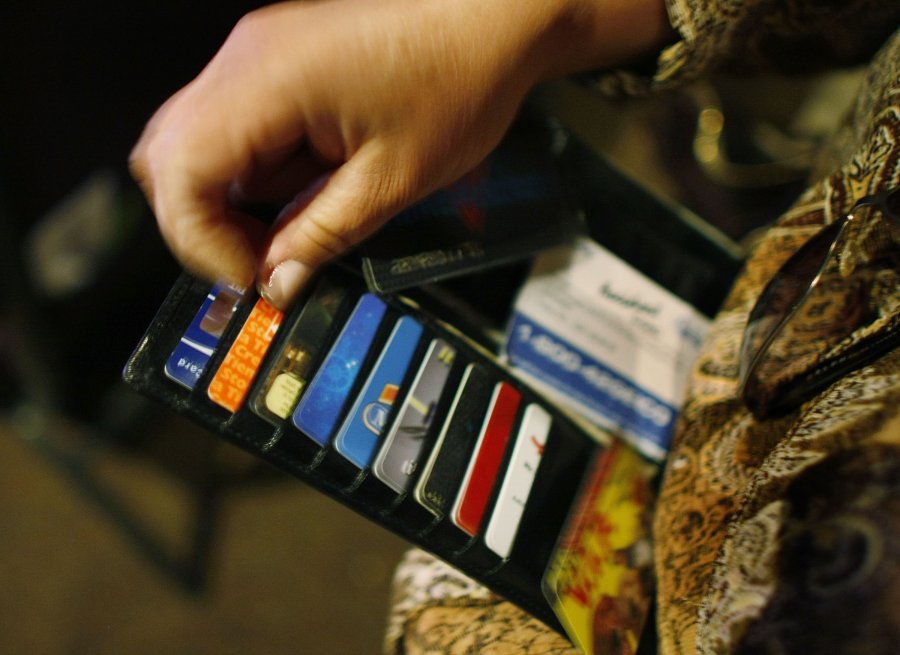
Consumers are carrying around more cards than ever – Bink aims to eradicate that (Source: Getty)
“Brands can better understand shopping behaviour because they don’t miss any data – it doesn’t matter if you’re only spending £1.50 on a sandwich or £55 – we can understand you much better as a customer, and then offer you much better rewards.”
What Bink aims to do is better equip brands to bring pre-existing loyalty schemes up to speed with current technology. “What we’re doing with the data is empowering merchants to better use the systems that they already have in place,” says Gormley. “By identifying the customer from the payment card alone, merchants are able to identify footfall, and to better drive their data analytics, to then better engage with their customers. We’re a marketing platform for the retailers that we work with – another digital footprint.”
App
The app launches this week with support for the loyalty schemes of Arcadia Group, Virgin Airline and a whole host of others, with many more to come. “Bink is compatible with all the loyalty schemes on the high street today, and allows consumers to upload their card details, and where able, view their latest transactions and access marketing offers and other content”, says Clarke.
“We’re signing up more and more retailers”, adds Gormley. “Some of them you may not even know have a loyalty programme”.
Conversion is quite central to Bink’s success. If a consumer uses a shop often enough, the app will detect so, and recommend that they sign up for that brand’s loyalty scheme.
“It’ll pop up on screen saying ‘would you like to join our programme’, and you can collect your points for the last transaction… we make it really simple to register straight away. You don’t have to go online, you don’t have to collect a card in store, it makes it all nice and simple within the app.”
For marketers in a data driven, digital world, it’s easy to forget that loyalty schemes are the original consumer data model. It’s almost ironic that technology has made them less accesible at a time when shopping is at an all time high, but Bink aims to change that, for the benefit of consumers – and brands.