City impact investment chief Jim Roth on greenwashing: ‘If you can’t measure it, you cannot manage it’

So-called “green” investment claims, and the substance behind them, are dominating the agenda of many City firms and the wider UK business community.
ESG disclosure regimes aim to counter “greenwashing” by requiring financial firms who have marketed their investment products as “green” to disclose data relevant to their investments’ sustainability.
However, the relatively new City minister – Richard Fuller – warned in July that sustainable investing needs stricter standards in place or greenwashing will continue to rise,.
Fuller said the UK was moving to clampdown on firms abusing the environmental, social and governance (ESG) label to cover the impact of their operations.
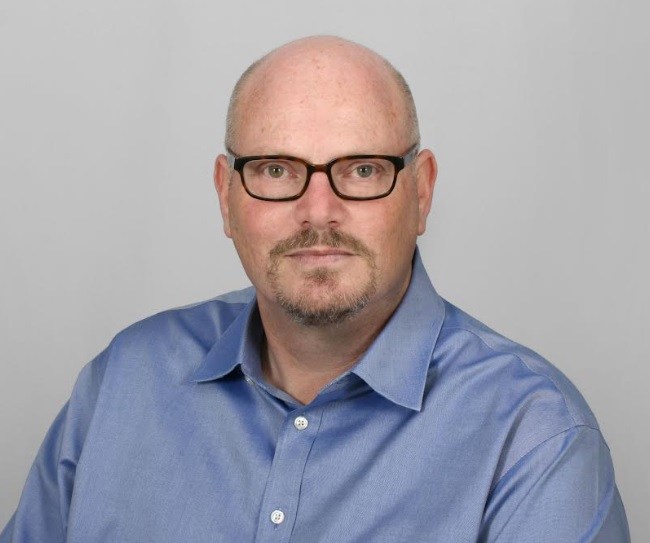
Time for Morning Wire to catch up with one of the City’s biggest impact investors, Zamo Capital. Its founder, Jim Roth, is also the driving force behind LeapFrog, where he raised over £1.5bn.
Specialised in all things ESG, greenwashing and impact investing in general, Roth sits down with this paper to discuss what is next for British investors and other key players who face the impossible task of navigating the ESG maze.
Greenwashing is a hot topic at the moment, basically on the mind of every investment manager in the Square Mile. So how do companies avoid greenwashing scandals like the recent goings on at asset management giant DWS?
It is a four step process. The first step is a “the sniff test”. Take a step back and think is what is going on here genuinely having an obvious and transformational social or environmental impact. A luxury apartment development in central London can be framed as an impact investment because it generates employment but it is quite different from the redevelopment of polluted land being turned in quality, relevant and affordable social housing and homes for key workers.The second step involves measurement.
“The old management adage, if you can’t measure it, you cannot manage it.”
Jim Roth
The third step is understanding the extent to which profit and purpose are co-linear, to what extent is the activity that is generating returns simultaneously generating meaningful social or environmental impact. The final step involves setting ESG and impact targets, and then reporting to the board in much the same way as they would with financial targets.
Am glad you bring up ESG. Such a buzzword at the moment. What do companies need to do to make sure ESG is inherent in their culture and business, rather than just being an afterthought?
As you know, people do things because they have economic incentives to do them or because they align with their culture and values. With respect to culture and values, avoiding negative impacts (ESG) or having a positive impact, impact investing, is much more likely to come about, if the team running the business has that culture and those values in the first place.
“The endowment of a lung cancer foundation is not likely to exclude tobacco investments as an afterthought.”
Jim Roth
With respect to economic incentives if profit and purpose are collinear, then what generates purpose, generates wealth. If profit is increased by installing solar panels and re-engineering production process to be more natural resource efficient, companies are much more likely to do them. So its two things companies need to do, set and then manage the values and the culture. Secondly consider and manage the alignment between economic incentives and the ESG and impact outcome wanted.
So based on those principles,what do you see as being the most difficult challenges for the impact investing industry over the next two to three years?
I see a similar set of challenges in both public and private markets in impact investing. Impact fund managers are emerging with most having less than a billion pounds of assets under management.
“Asset owners want impact and commercial returns but also want to invest with large established fund managers.”
Jim Roth
The challenge over the next few years will be bridging the divide. Bridging the divide will be the key challenge. It will require impact fund managers to scale and asset owners to engage more with emerging impact managers.
Let’s zoom in a bit more on you and your firm. Firstly,what does responsible investing mean to you?
In the context of impact investment, it means being responsible to clients e.g. the pension funds, insurers and others who invest because they need to achieve both a financial return, as well as achieving positive social or environmental outcomes. It means understanding what they need to achieve and then carefully setting out to achieve it.
So what led you to set up Zamo Capital?
I was struck by a paradox. Investor demand for impact investments was and is roaring. Yet my inbox was filling up with requests from good, commercial impact businesses struggling to raise capital. These included businesses selling innovative affordable medical equipment, rooftop solar energy, online apps to lower the cost of special needs education, developers looking for capital to convert polluted inner-city sites into green low cost housing. These were good commercial businesses. They generated the financial and social/environments returns impact investors said they wanted, yet somehow investor capital wasn’t reaching them.
“The key cause of this mismatch is that the pipe through which the capital flows is too small. Impact fund managers are this pipe.”
Jim Roth
Most impact fund managers have started up over the last five years and are emerging managers, often on their first or second fund. However, multi-billion pound pension funds and insurers looking for impact investments need to be able to invest cheques of at least £30m+ into a fund and want to be no more than 15 per cent of any single fund,
What differentiates Zamo Capital from other impact managers?
We focus on scaling European impact managers, and have a range of financial tools to achieve this. All our investments go either into an impact manager, such as working capital, or alongside an investment manager, such as helping them secure a larger deal that would have been out of reach(co-investment) or capital to do a representative deal in advance of fundraise (warehousing).
Finally, where do you look for investment opportunities?
We look for opportunities among European impact managers. There is a universe of about 500 of these managers and it is growing rapidly. They invest in a wide range of sectors including energy transition, healthcare, education, real estate, infrastructure, land rehabilitation, agriculture; bio-tech and financial inclusion.