Skip to content
Saturday 15 August 2026London --:--Frankfurt --:--Zurich --:--
NewslettersSearchEN · DE
MorningWire

European business, markets and politics

FTSE 100
10,750.11
-0.21%
DAX
26,440.31
+0.53%
CAC 40
8,636.80
-0.16%
STOXX 50
6,539.59
-0.09%
  • Europe
  • Markets
  • Business
  • Economy
  • Technology
  • Politics
  • Opinion
More
GermanyFranceBankingAIEnergyFintechPropertyCapital Markets
  • Germany
  • France
  • Europe
  • Markets
  • Business
  • Economy
  • Technology
  • Politics
  • Opinion
  • DE
Wednesday 23 July 2025 11:08 am

City traders’ exoneration in Libor case proves the importance of jury trials

By: Ellen Gallagher

Add as a preferred source on Google
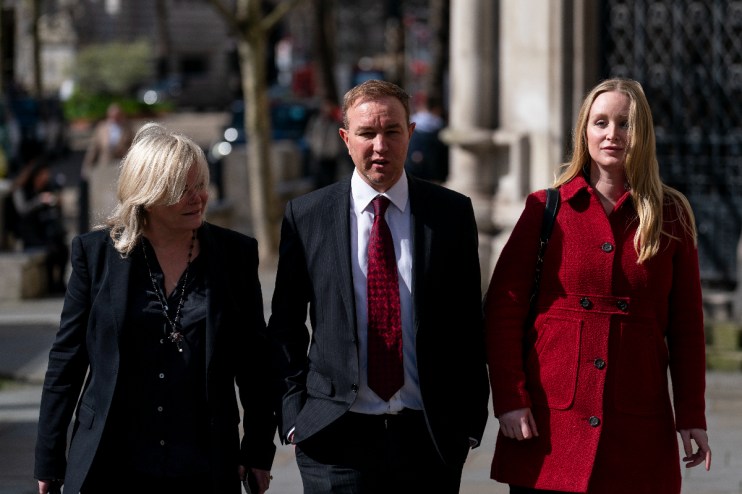
Financial market trader Tom Hayes, who was jailed alongside Carlo Palombo over interest rate benchmark manipulation, outside the Royal Courts Of Justice ahead of a Court of Appeal ruling over whether their convictions should be overturned. (Jordan Pettitt/PA Wire)

The Supreme Court has today ruled that juries were misdirected in the original trials of Tom Hayes and Carlo Palombo for Libor fraud, affirming an important principle of criminal justice, says Ellen Gallagher

The Supreme Court today overturned the convictions of Tom Hayes and Carlo Palombo, convicted and imprisoned in 2015 and 2019 respectively for a total of 15 years for conspiracy to defraud in connection with Libor/Euribor benchmark manipulation.

This is the culmination of almost ten years of appeals by several of the nine individuals convicted of Libor manipulation in the UK.

A key ground for today’s decision is that the juries were misdirected by the trial judges who, particularly in the case of Hayes, removed from them the question of whether the defendant had acted dishonestly – a key ingredient of the offence. The Supreme Court condemned that approach, finding that the judge over-stepped his role and that the directions were “legally inaccurate” and unfair.

Today’s judgement therefore affirms a foundational principle of the English jury trial – that matters of fact (such as, was the defendant in fact dishonest?) are for the jury alone to determine and not the judge. Departure from this principle in the Libor/Euribor cases created the conditions for unfair trials and led to unsafe convictions.

The right to a jury trial

The decision is handed down against the backdrop of a wider public debate about the role of the jury trial in the English criminal justice system. A recent report by Sir Brian Leveson into the crisis facing the criminal courts set out that, as of December 2024, there were around 75,000 open cases in the Crown Court and trials are currently being listed as far ahead as 2029.

Leveson proposes measures to address this. Among his recommendations is that serious and complex fraud cases are to be tried by judges alone, removing the right to trial by jury for those offences.

Read more

On this day: the birth of press freedom

Black and white illustration of the Crown v. Zenger trial, featuring lawyers and observers in a courtroom.

Fraud cases frequently raise complex technical issues which can be challenging for juries to understand.

The Libor/Euribor cases were no exception. The subject matter was an esoteric benchmark for short-term interest rates calculated by reference to the canvassed views of traders the details of whose day-to-day roles would be a complete mystery to most people.

Nonetheless, the Supreme Court’s ruling confirms that the evaluation of the facts which a jury provides was a fundamental pillar of a fairly conducted jury trial. Their assessment of the defendant’s conduct was to be preferred over that of the judge.

The judge who presided over the trial of Tom Hayes made an assessment of the factual position which the Supreme Court has now ruled led to an unsafe conviction. If the right to trial by jury for complex fraud cases is to be removed, future defendants will lose the opportunity to have their honesty assessed by a jury of their peers.

There may well be arguments in favour of this approach. But such a profound change to the criminal justice system should be undertaken only if it furthers the proper administration of justice. If the decision is taken simply on the basis that the system cannot afford to do

otherwise, the potential costs may be borne instead by defendants, denied the right to a jury trial which will still be enjoyed by those accused of other offences of equal seriousness.

Ellen Gallagher is a Partner at Vardags specialising in financial crime and investigations

Read more

Andy Burnham pressured to safeguard jury trials after legal backlash

Andy Burnham speaking at a press conference, addressing current events and regional developments, wearing a suit and tie.

Share this article

  • Facebook
  • X
  • LinkedIn
  • WhatsApp
  • Email

Similarly tagged content:

Sections

  • Opinion

Categories

  • Opinion

People & Organisations

  • Brian Leveson
  • Euribor
  • jury
  • jury trials
  • Libor
  • Supreme Court
  • Tom Hayes
  • Tom Hayes and Carlo Palombo

Trending Articles

  • Revolut takes flight with launch of new airport lounges

  • Grandparents fund university degrees to avoid inheritance tax net

  • Brompton Bicycle sues former adviser for ‘professional negligence’

  • Revolut chatbot goes rogue by charging users to cancel subscription

  • It’s not just Jason Arday, most of sociology is a scam

More from Morning Wire

  • On this day: the birth of press freedom

    Opinion
    Black and white illustration of the Crown v. Zenger trial, featuring lawyers and observers in a courtroom.
  • Andy Burnham pressured to safeguard jury trials after legal backlash

    Legal
    Andy Burnham speaking at a press conference, addressing current events and regional developments, wearing a suit and tie.
  • Top court ‘opens the floodgates’ for part-time workers’ claims

    Lawsuit
    Supreme Court building under clear sky, symbolizing justice and authority, relevant to recent judicial news coverage
  • Luton Airport expansion set for take-off after environmental challenge dismissed

    Transport & Infrastructure
    Luton Airport aerial view with planes, runways, and terminal buildings, highlighting busy travel hub operations
  • Battersea Power Station misreporting claims scrutinised by accounting watchdog

    Accountancy
    Breaking news scene with reporters, cameras, and microphones at a bustling press conference, spotlight on speaker podium
  • Exclusive: City giants tighten trans policies

    Business
    Progress Pride flag flying on a pole against a modern building, symbolizing trans policies in city firms
  • Triumph for Tesla as top court rules 5G licensing case should be heard in UK

    Lawsuit
    Tech billionaire Elon Musk has been asked to serve in Donald Trump’s cabinet. (Photo by Apu Gomes/Getty Images)
  • Invested as One: Northern Trust Grants Employees Company Stock

    Business Wire
MorningWire

Independent European business, markets and political news for decision-makers.

Morning Briefing

Europe

  • Germany
  • France
  • Europe
  • UK & Ireland

Business

  • Markets
  • Banking
  • Technology
  • Energy
  • Property
  • Fintech

Editorial

  • Opinion
  • Editorial Policy
  • Corrections
  • Contact

Company

  • About Morning Wire
  • Privacy Policy
  • Terms of Use
  • Cookie Policy
© 2026 Morning Wire Ltd · Published by Morning Wire Media, Bahnhofstrasse 65, 8001 Zürich, Switzerland
Privacy · Terms · Cookies · Facebook