Commuting in the post-Covid world

It’s a cliche to say that the Covid-19 pandemic has changed everything — we need to get over this and embrace “the new normal”.
But change needs more than an embrace: it needs to be understood and thought-through, not rushed into headlong because everyone else is doing it. And nowhere is such consideration more necessary than when it comes to the daily commute.
If you type “hate commute” into an internet search engine, you’ll get nearly 12 million results. The journey to and from work is something which matters to people, matters desperately, despite it seeming a rather humdrum part of our lives.
So yes, the aftermath of the pandemic will change it, but let’s think carefully about how that necessary change can be influenced and exploited.
For a start, big crowds are out. The old commute on crammed Tube or train carriages, face into armpit, elbow into kidneys, simply won’t work in the age of social distancing. People will refuse to travel under these conditions, and speaking from an epidemiological point of view, who can blame them?
So as a bare minimum, employers as well as transport providers will have to be prepared for people’s journeys to be staggered. Some workers might start at 8.30am, some at 9, and some mid-morning, with accordingly gapped finishing times.
This has implications for the whole paradigm of public transport funding, which is based on charging at peak times. If “peak” becomes longer and less intense, does Transport for London’s approach need to be rethought? Are we heading for an era of flat fares?
Public transport is also likely to lose some — even many — of its passengers. Some may seek the relative isolation of their cars, though the recent extension of the congestion charge is a deterrent to that.
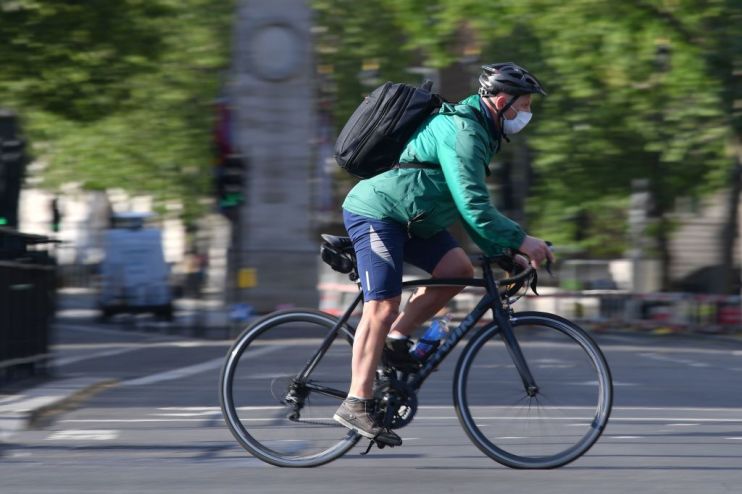
The evidence suggests that many travellers are looking more towards pedal power for their transport needs. Halfords has reported an 80 per cent increase in sales of hybrid bikes, and iconic manufacturer Brompton has caught the public mood with its “Wheels for Heroes” campaign, which provides free bicycles for rental to key front-line workers.
Cycling is not only often quicker and less crowded than public transport — it is greener and better for public health, both physically and mentally. No wonder people have turned to two wheels to get around the city.
Transport planners and employers need to adapt. Cycle lanes and bike storage facilities could be about to become just as important as stations and rail cards.
But perhaps we should be thinking bigger, and questioning the whole notion of the daily commute.
Lockdown forced people in myriad industries to work from home — and, in the main, it has been a successful experiment. Productivity has not slumped — in fact, many people report that they are getting more work than ever done — and the freedom from physical presence in the workplace has been a boon for a lot of employees.
Reports of the death of the office may be somewhat premature, with only 5.1 per cent of the workforce doing their job fully from home pre-Covid, but the pressure to rethink how we work is stronger than ever. Barclays boss Jes Staley noted recently that “the notion of putting 7,000 people in a building may be a thing of the past”, while Mark Zuckerberg has said that half of Facebook will work from home within a decade.
That’s a future the tired Londoner can look forward to: the daily commute transformed into a quieter, more relaxed twice-a-week affair, visiting a “hub” for meetings and to connect face-to-face with colleagues, but otherwise enjoying the comforts and freedoms of a home office.
It sounds like a fantasy, but it could happen. Covid-19 might be the burning of the stubble, the catalyst that the world of work needed to rethink its whole approach. After all, if not now, when?
Main image credit: Getty