Skip to content
Saturday 8 August 2026London --:--Frankfurt --:--Zurich --:--
NewslettersSearchEN · DE
MorningWire

European business, markets and politics

FTSE 100
10,901.09
+0.31%
DAX
26,319.45
+0.69%
CAC 40
8,714.93
+0.17%
STOXX 50
6,523.86
+0.33%
  • Europe
  • Markets
  • Business
  • Economy
  • Technology
  • Politics
  • Opinion
More
GermanyFranceBankingAIEnergyFintechPropertyCapital Markets
  • Germany
  • France
  • Europe
  • Markets
  • Business
  • Economy
  • Technology
  • Politics
  • Opinion
  • DE
Tuesday 20 August 2024 10:30 am  |  Updated:  Tuesday 20 August 2024 10:35 am

Compulsory liquidations hit highest level in almost six years

By: Chris Dorrell

Add as a preferred source on Google
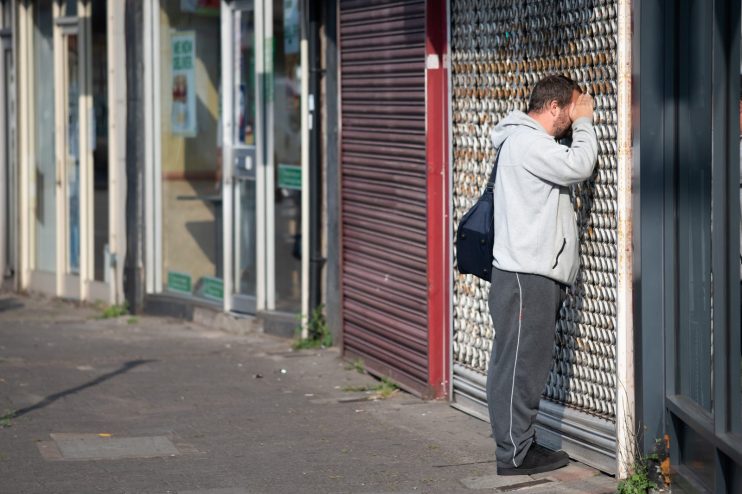
New figures from the Insolvency Services showed that there were 320 compulsory liquidations in July, the highest number since before the pandemic.

The number of insolvencies remained stubbornly high in July with the number of compulsory liquidations rising to its highest level since before the pandemic, official figures showed.

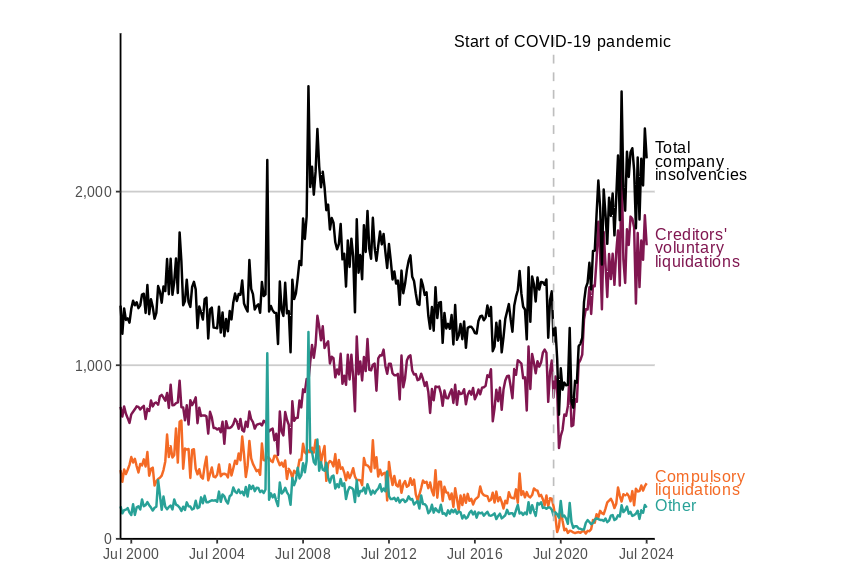
New statistics from the Insolvencies Service showed that 2,191 firms went bust in July, seven per cent lower than June but 16 per cent higher than the same month last year.

The vast majority of insolvencies last month were voluntary liquidations, accounting for 77 per cent of the total. But the figures also showed that the number of compulsory liquidations rose to its highest level since August 2018 at 320.

A compulsory liquidation is a process through which a company is forcibly closed down when it fails to meet its obligations. During the pandemic, the number of compulsory liquidations fell to record lows as restrictions were placed on the use of statutory demands and winding-up petitions.

John Cullen, insolvency partner at Menzies said the increase in compulsory liquidations “appears to be a legacy of businesses that have failed since Covid”, suggesting it was a trend that is “likely to continue for a time yet”.

All forms of insolvency have picked up since the pandemic as firms have struggled with a cocktail of weak demand, soaring inflation and high interest rates.

Last year there were just over 25,000 insolvencies, the highest annual number since 1993. Average monthly numbers over the first half of 2024 have been similar to 2023, revealing the pressure that many firms are still facing.

“The latest insolvency figures are a strong reminder that many businesses are still a long way off from recovery,” Rebecca Dacre, partner at Forvis Mazars, said.
Source: Insolvency Service

However, although insolvencies remain relatively high, there are signs that the broader business environment is improving.

The latest figures put inflation at 2.2 per cent, slightly higher than the previous month but well down from the peak of over 11 per cent in autumn 2022.

With inflation hovering at the target, the Bank of England cut interest rates for the first time since the pandemic earlier this month, meaning the Bank Rate now stands at five per cent.

Most economists expect at least one further rate cut to come before the end of the year which will further help to ease the pressure on firms.

Read more

The debate: should voting be compulsory?

Ipsos Mori is one of the largest polling companies operating in the UK.

Share this article

  • Facebook
  • X
  • LinkedIn
  • WhatsApp
  • Email

Similarly tagged content:

Sections

  • News

Categories

  • Economics

People & Organisations

  • Inflation
  • insolvencies
  • Insolvency Service
  • interest rates

Related Topics

  • UK interest rates

Trending Articles

  • WPP slashes jobs as revenue continues to fall

  • Liverpool owners tipped to sell – but not to Amazon boss Bezos – by former CEO

  • Revolut founder’s wealth set to balloon amid talks of share award at $500bn valuation

  • Starling plans to ‘come out swinging’ in diversification bid

  • As it happened: Stocks rise despite new tensions in Strait of Hormuz; Oil price climbs

More from Morning Wire

  • The debate: should voting be compulsory?

    Opinion
    Ipsos Mori is one of the largest polling companies operating in the UK.
  • Financial services bankruptcies rise as MFS collapse ripples through sector

    Advisory
    Breaking news banner with bold headline and abstract background for a general news article on a business website.
  • Exclusive: Nothing slashes jobs in cost-cutting push

    Tech
    Nothing Phone 1 showcasing its transparent back design and unique LED light interface, representing innovation in smartpho...
  • Revealed: KPMG and Deloitte offer bumper redundancy packages to slash headcount

    Big Four
    Breaking news event showcasing a bustling city street scene with diverse pedestrians, modern buildings, and vibrant urban ...
  • Second time lucky for Lucy Rigby?

    Markets
    City minister Lucy Rigby advocating for compulsory financial education in primary schools to empower young learners
  • Perpetuals Reports 380% Hypothetical Return in Backtest of AI Engine Powering Risk-Free Trading Platform ‘UpsideOnly’

    Business Wire
  • Brits say Burnham should call an election

    Politics
    Number 10 Downing Street entrance with iconic black door, symbolizing British political power and leadership
  • Warning for John Healey as key fiscal target missed

    Economics
    Labour MP John Healey in a professional headshot, likely for news or political profile.
MorningWire

Independent European business, markets and political news for decision-makers.

Morning Briefing

Europe

  • Germany
  • France
  • Europe
  • UK & Ireland

Business

  • Markets
  • Banking
  • Technology
  • Energy
  • Property
  • Fintech

Editorial

  • Opinion
  • Editorial Policy
  • Corrections
  • Contact

Company

  • About Morning Wire
  • Privacy Policy
  • Terms of Use
  • Cookie Policy
© 2026 Morning Wire Ltd · Published by Morning Wire Media, Bahnhofstrasse 65, 8001 Zürich, Switzerland
Privacy · Terms · Cookies · Facebook