‘Corbyn was spot on’: The radical MP shaping Burnham’s economic agenda

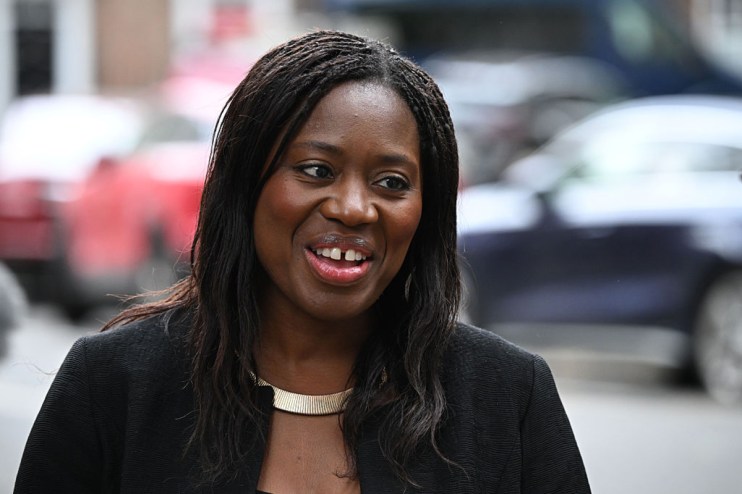
Miatta Fahnbulleh is one of Andy Burnham’s key confidants, spearheading his agenda on energy, devolution and the cost of living. Policies the MP for Peckham has previously endorsed suggest the country is in for a sharp leftward lurch, writes Ali Lyon.
The red wall had been demolished. Boris Johnson, imperious. And Jeremy Corbyn’s Labour movement was left shell-shocked by the party’s worst performance at a general election in its hundred-year history.
Many of its youthful, starry-eyed supporters were licking their wounds. But aware of a restive centrist faction poised to yank the party rightward, the boss of a little-known think tank felt compelled to put pen to paper, and issue a stark warning.
“The Labour party will have to change if it is to reconnect with the broad coalition of voters it needs to win back power,” Mattia Fahnbulleh, the chief executive of the New Economics Foundation, told Guardian readers in 2019. “But as it does this, it must not lose sight of the one thing it got right in this election.”
The silver lining in question was Corbyn’s radical 2019 Labour manifesto, a valiant attempt – in Fahnbulleh’s eyes – to “grasp the scale of the economic and environmental challenge the country faces”.
The 107-page tome brimmed with alluring promises: free broadband for everyone, nationalising the country’s utilities and railways, free bus travel for under-25s and juicing government spending by £135bn.
The electorate had deemed it profligate and unworkable. To Fahnbulleh, it “would have undoubtedly begun the process of transforming our economy”.
Corbynite ‘at the heart of Burnham’s inner sanctum’
Seven years on, and the policy wonk has turned Peckham MP. And after just one short stint as a junior minister straddling energy and housing – a post from which she resigned amid the imbroglio caused by Keir Starmer’s welfare reforms – she now finds herself in prime position to implement the kind of economic agenda she endorsed in 2019.
The Liberian-born politician is, according the the New Statesman, at the heart of Andy Burnham’s inner sanctum, orchestrating policy programme that will focus on three themes: “essentials of living, changing politics and the devolution of power.”
Fahnbulleh’s first port of call – the Labour party periodical says – is markedly similar to one of the flagship measures in Corbyn’s ill-fated 2019 pitch to voters. Using former transport secretary Louise Haigh’s railway network as inspiration, she is examining ways to take Britain’s water companies into public ownership.
With voters justifiably incensed at the putrid state of both Britain’s rivers and the balance sheets of the companies responsible for them, the move is bound to be popular. But it will come at a cost: one that official estimates put at north of £100bn.
Ministers remain inexorably hemmed in by a toxic combination of sky-high government debt and anaemic economic growth, the fiscal firepower available for such a sweeping move is minute.
But noises emerging from the Burnham camp – be they the likely move to bring capital gains tax in line with income tax, a loosening of the fiscal rules to fund investment, or the reams of spending pledges the former Manchester mayor made in his former political life – suggest a move away from Reeves’ fiscal straitjacket is inevitable.
But other than boosting the likelihood of a negative bond market reaction, what might that borrow-to-spend agenda entail? Like many on the left of her party, Fahnbulleh supports a wealth tax, equalising capital gains tax with income tax and a increasing the top rates of income and corporation taxes.
Morning Wire also picked through the back catalogue of the woman shaping Burnham’s bid to be Prime Minister to find out what other – less orthodox – policies she might be pressing for behind the scenes.
Net zero by 2030
A blueprint for Fahnbulleh’s political philosophy can be found in a 2020 essay she wrote for the respected periodical, Foreign Affairs. The polemic – titled The Neoliberal Collapse – opened declaring capitalism to be “in crisis”, before suggesting the only solution lay in toppling the UK’s market-led economy.
“What’s needed in developed economies across the world is not tinkering around the edges,” she wrote, “but a full-scale reformation of the relationship among the state, the economy and local communities.”
The first step on that long road to an “active but decentralised state” was agreeing a Green New Deal: “a massive mobilisation of resources to decarbonise and at the same time create millions of jobs and lift living standards”.
To do so would allow the UK to reach net-zero within 10 to 15 years. Today, that would be between 2030 and 2035, meaning an extraordinarily fast transition away from natural gas – which currently makes up just shy of 40 per cent of our overall energy demand – toward renewable sources.
Free public transport and universal childcare
As part of the same Foreign Affairs essay, Fahnbulleh also endorsed a vast expansion of the number of public services free at the point of use. Increased investment in “high-quality healthcare and education” would be required, after being “weakened under neoliberal governments”.
But improving the quality of existing taxpayer-funded services would not, the NEF boss argued with a nod to Corbyn’s 2019 manifesto, be sufficient to boost Britain’s flatlining living standards. Just as important, is going “beyond those familiar elements by offering universal access to childcare [and] public transportation”.
The cross-party Institute for Public Policy think tank puts the cost of universal childcare at £17.8bn year, considerably more than the Ministry of Justice’s annual budget.
Meanwhile, making all public transport entirely free at the point of use – a considerable expansion on Corbyn’s election-losing promise to make bus fares free for under 25s, is estimated to cost roughly £30bn a year – half the current defence budget.
Universal basic income
Above and beyond the promise of free childcare and transport, Fahnbulleh has also called for the introduction of what the New Economics Foundation has called ‘Living Income‘.
During the Peckham MP’s stint at the think tank, it launched a campaign for the measure, bedecked with its own website, which would set an ‘income floor’ – “an amount of money no one can fall below whether they are in or out of work”.
The push – touted in 2021 – would be funded by an increase in borrowing, the cost of which then was at a record low. In the longer term, that debt would be replaced by taxes targeted at “those with higher incomes or greater concentrations of wealth”, the website said.
According to the Institute for Fiscal Studies, paying every working age adult a payment matching the basic rate of Universal Credit would cost over £200bn. Other designs of the policy put the cost closer to £70bn.
Compulsory staff ownership and four-day week
Both Fahnbulleh and her former think tank come from the cooperative tradition of the left, which believes in an active state, but one whose power is rooted in communities, not centralised in Westminster.
Instead power and decision-making is devolved not just to local authorities but the communities within them – or as Fahnbulleh put it in her Foreign Affairs essay: “[Our] model would empower people and give them a larger stake in the economy by establishing common ownership of public goods and essential infrastructure”.
That philosophy extends to workers’ relationship with – and stake in – their jobs. The solution promoted in her essay was for central government to mandate employers giving staff a compulsory share in their company – those shares would come with “voting rights, enabling employees to become the dominant shareholders over time”.
Along with forcing the Bank of England to drive the transition agenda through credit guidance policies, forcing businesses to pay workers ‘fairly’, and making landowners place their property into community-owned trusts, enforcing the multifaceted and radical agenda would require patience, the woman the New Statesman has referred to as ‘Burnham’s brains’ concluded. “But,” she added, “such patience must also have a limit: when it comes to fixing the damage that neoliberalism has done, time is running out.”
Fahnbulleh and Burnham did not respond to request for comment.