Coronavirus: Imagine if the state could respond like this all the time?

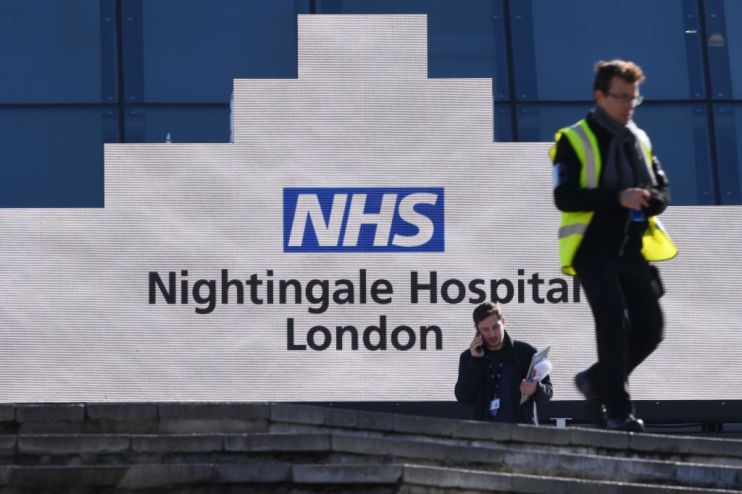
The effort has been extraordinary. Within a few days, entire hospitals have been constructed from scratch. Vast numbers of intensive care units and ventilators have been assembled at speed. The NHS, once a byword for bureaucracy, has been swift and nimble in getting ready for the Coronavirus emergency to come.
Processes that would normally have taken officialdom months, have been delivered in days. Local councils have been instructed to find accommodation for every local homeless person right away. The Treasury devised a system to stave off bankruptcy for millions of businesses over the course of a weekend.
Imagine if public administration in Britain could be can-do like this all the time?
Read more: The Nightingale Hospital is opening soon
It has not escaped the notice of those in Downing Street and the Cabinet Office coordinating our national response that there are some parts of the British state that have responded better than others. While the NHS made things happen, Transport for London responded to the crisis by shutting tube stations and reducing services, thereby forcing those that had to travel onto crowded trains and platforms.
When the call went out to help find a quarter of a million NHS volunteers, Wales had to be excluded from the scheme. Why? Certain devolved institutions were slow, if not outright intransigent.
Public Health England has been curiously slow in rolling out a testing programme of the size and scale we need. Ministers mutter of other instances of even deeper dysfunction elsewhere, too.
For years in Britain, we have had a sterile debate about the size of the state. What this crisis has shown is that it’s not how big, but how effective, officialdom is that matters most.
Singapore’s government, for example, spends a mere 15 percent of GDP. Yet when the crisis came, the city state’s officials made the sort of early interventions needed early on. At every stage, Singapore’s public administration has been more effective in tackling the problem than our own, despite the fact that our government spends something like 40 percent of GDP.
One of the consequences of this crisis has been to convince ministers that a radical overhaul of public administration is needed. What was once regarded by some as an obsession of Dominic Cummings, the Prime Minister’s chief of staff, is appreciated across much of Whitehall.
But will that be enough to drive through the kind of changes that our often moribund system of public administration requires?
Two decades ago, Tony Blair won a massive majority in Parliament. Within three years of his 1997 win, he was complaining about the ‘scars on his back’ in frustration with a system that wore down his desire to do things differently.
David Cameron, in Coaltion with Nick Clegg, had a majority for his Big Society agenda. Five years on, what did he have to show for it?
Even if the Corona crisis radicalises Boris’ ministers in favour of radical change, unless they have a real strategy to overhaul the machinery of the state, they too risk being smothered by an unresponsive bureaucracy.
One of the glaring lessons of the government’s handling of this crisis – from Rishi Sunak’s economic rescue package, to the drive to get more ventilators – is that there needs to be more strategic coherence at the heart of government.
Can you imagine how long it might have taken the Treasury under Philip Hammond to have devised a scheme to help the self-employed? Creating a unified team of advisors working for Downing Street and the Treasury turned out to be a godsend.
Perhaps we now need to go even further, hardwiring strategic coherence into Whitehall with a Department of the Prime Minister and Cabinet?
The Good Governance Project, which started work shortly before Boris won his landslide victory, has set out a series of proposals to overhaul the way Whitehall works, starting with an overhaul at the centre.
Many of the responses to the Corona crisis required on effective cross Whitehall collaboration. Looking beyond this crisis, imagine if were had a strategically coherent centre, capable to commission ad hoc teams, bringing together the capable people, backed by financial firepower and Prime Ministerial fiat, to improve outcomes?
Current Whitehall rules preclude people unless they happen to have sat civil service exams many years ago. This needs to change. Within the civil service, the careers of individual civil servants should be tied up to successful outcomes – for which they should be accountable over the long-term – instead of courting the patronage of top mandarins.
Over the past few weeks, small teams of highly motivated people right across the public sector, have delivered some quite extraordinary outcomes. Thanks to their courage, boldness and verve, we are much better prepared to withstand the virus than we would have been without them.
Once we have beaten the virus, we need to learn from some of these remarkable successes in public administration, and ensure that even when we are not in crisis mode, we have a system of public administration in which the public can have confidence.
Douglas Carswell and Radomir Tylecote run the Good Governance Project (GoodGovernment.uk)