Coronavirus: Will rescue package make tax hikes inevitable?

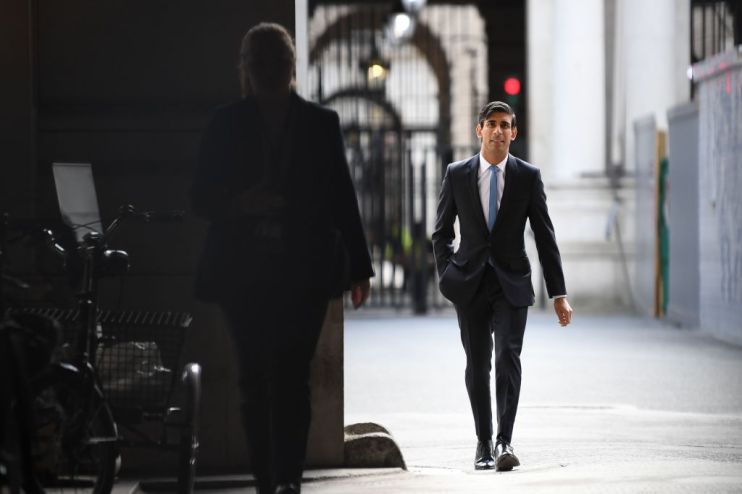
In the past six weeks the Chancellor has, quite rightly, announced a far-reaching package of measures to support the economy through the Covid-19 crisis that could cost up to £100bn. He may yet need to do more.
Tax revenues will also be much lower than expected due to the hit to economic activity from the lockdown, and there could be a case for temporary, well-targeted tax cuts to support the recovery in the months after the lockdown starts to be eased. A short-term cut in VAT, as Alastair Darling introduced in 2009 after the global financial crisis, might be one such option to consider for later this year.
Measures to encourage business investment, such as a temporary rise in capital allowances, could also be considered, as well as following through with the significant increases in public investment announced in the Budget.
Read more: Deficit expected to hit record levels
Public borrowing will therefore rise sharply this year, probably to well over £200bn. The Chancellor can fund that for now because the Bank of England has pledged to buy a similar amount of government bonds, so propping up the gilt market, and it could buy more if needed. In the short term, the government can also run up its overdraft facility at the Bank, although it will need to pay this back later.
As and when we can move safely out of lockdown and the crisis passes, the economy should gradually recover. The annual budget deficit should then fall significantly in 2021/22 as temporary measures to support the economy come to an end and higher growth boosts tax revenues. While the deficit this year may be greater than after the global financial crisis, the fall in the deficit next year should also be faster.
But it would be optimistic to think that the budget deficit will automatically come all the way back down to pre-crisis levels. Clearly there is likely to be a longer-term economic toll from higher unemployment and business failures. Global trade is also likely to take a while to come back , which will hit UK exporters. The economy is likely to be smaller than expected before the crisis and tax revenues will be lower than planned.
Once the crisis has passed, some tough choices are therefore likely to be needed to put the public finances back on a sustainable basis. By sustainable, I mean that the total stock of public debt should not indefinitely be rising faster than the economy grows. This does not mean you need a fully balanced budget, but you do need the annual deficit to be brought back down below 3% of GDP, which is around the level that the Office for Budget Responsibility was forecasting before the crisis.
One option would be to constrain government spending. There will be some areas where, for example, new digital technologies can bring efficiency gains. But a renewed period of austerity seems unlikely to be acceptable. The pandemic has shown – perhaps as never before in peacetime – the value of public services and key workers so, as in 1945, all the political pressure will be to increase rather than reduce spending. This is particularly true given the longer term need for increased NHS and social care spending to meet the needs of an ageing population.
Another option might be for the Chancellor to tell the Bank of England to aim for a higher inflation target, so gradually eroding the real value of the government’s debt if interest rates are kept relatively low. This kind of ‘inflation tax’ has been used by governments throughout history to help pay off their war debts, and many see the battle against COVID-19 as a kind of war. But, as we saw in the 1970s, there is always a danger that inflation could get out of control, with serious adverse consequences for the economy.
The government may therefore also need to consider the option of higher taxes. It is far too early to start writing detailed Budgets for 2022 or 2023, but if tax increases are eventually needed there will be a lot of pressure to do this fairly. This could involve putting more of the burden of paying for the crisis on those most able to pay, particularly given that lower income groups and smaller companies have generally been hit the hardest by the current lockdown.
At the same time, policymakers will need to be careful not to undermine incentives for wealth creation and drive foreign investors away from the UK. A delicate balancing act will therefore be required, but eventually it is possible that some tax rises may be needed to put the public finances back on a stable footing after the current crisis has passed.