Could Britain survive a blackout?

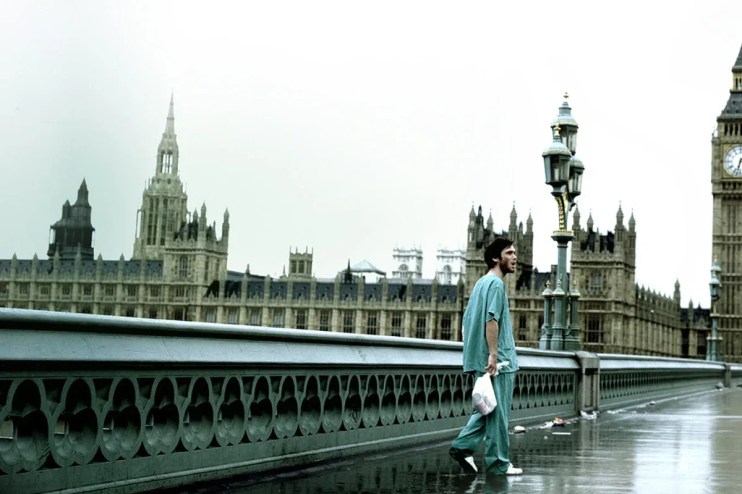
Blackouts across the Iberian Peninsula have exposed the fragility of our highly-connected infrastructure – and Britain is uniquely ill-equipped for a similar incident, says James Price
In Ayn Rand’s Atlas Shrugged, society comes crashing down because the most talented people are not respected or rewarded for their endeavours, so they go on strike. Quickly, things fall apart. “He said that we had to extinguish the lights of the world, and when we would see the lights of New York go out, we would know that our job was done.”
Well, this week we saw the lights of the whole of the Iberian Peninsula go out for a day, and for a moment the curtain was pulled back on the utter fragility of modern society. The cause may not have been the self-removal of Spain and Portugal’s elite, (though that is certainly a trend in Britain and across Western Europe), but the consequences are similar.
In Spain, the socialist prime Minister, Pedro Sanchez, hardly inspired confidence, when he admitted: “This has never happened before…and what caused it is something that the experts have not yet established”. There have now also been reports of failures in British power networks, notably at the Keadby 2 gas-fired power plant in Lincolnshire, and then the Viking Link interconnector between Britain and Denmark.
This leads to the question: What if this had happened in Britain? How would you have fared without access to power, water or food? We saw how one substation managed to take out all of Heathrow Airport for a day, and with increasingly complex, brittle, and fragile modern systems, it’s worth reflecting on how poorly prepared we are for a similar incident. Unless our competence is addressed, things could get very dark very quickly.
Skills shortages
For starters, in a trend also seen across the Atlantic, Britain will face a cliff edge of skilled engineers retiring and not being adequately replaced. One report by the ECTIB in 2018 suggested that a fifth of the engineering workforce would be retiring or close to retiring by next year. Given much of our legacy infrastructure was built in the Victorian period, this augurs ill for our resilience against even general wear and tear.
So, things seem bad enough before we even start to factor in malign actors. MI5 already has over 50,000 people on terrorist watchlists – the overwhelming majority of which are Islamists, intent on murder and mayhem on a mass scale. But academics are now also starting to predict increasing civil disorder from other groups.
Dr David Betz, a well-respected professor of war studies at Kings College London, grimly predicts increasing levels of behaviour akin to a Latin American style dirty war, as tensions caused by mass migration and economic failure begin to radicalise many. Betz sees much of this conflict as between the urban and the rural, with much of Britain’s urban life supported by poorly maintained, poorly defended, infrastructure outside the cities.
Even one day without power in Spain brought people close to panic, and 30,000 civil guards were brought in to keep the peace. What if this outage lasted longer and people started to get truly hungry and thirsty? Even without an ideological or any other active reason behind the blackout, Spain and Portugal must have felt fairly scary, certainly according to reporting on the ground.
Now imagine a Southport-style mass murder, rioting following it, and then active damage to critical infrastructure causing panic and looting to set in. Big cities are, at best, balancing acts between different strata. But coordinated attacks by one or even two sides and suddenly the final pages of Atlas Shrugged, with complete societal breakdown, don’t seem quite so far-fetched.
How to fix this? There are two problems that must be addressed. Investment in securing and modernising infrastructure is one, and that will require seriousness in government, and a sense of mission to make Britain feel like the secure fortress it should.
But there is another, deeper malaise – one of communities living side by side with no connection or love for one another. A village can survive a blackout, but a sprawling, roiling city like London? The tearing social fabric will need more than infrastructure to weave it back together.
James Price is a senior fellow at the Adam Smith Institute