Skip to content
Monday 10 August 2026London --:--Frankfurt --:--Zurich --:--
NewslettersSearchEN · DE
MorningWire

European business, markets and politics

FTSE 100
10,867.76
-0.31%
DAX
26,406.17
+0.33%
CAC 40
8,703.97
-0.13%
STOXX 50
6,540.21
+0.25%
  • Europe
  • Markets
  • Business
  • Economy
  • Technology
  • Politics
  • Opinion
More
GermanyFranceBankingAIEnergyFintechPropertyCapital Markets
  • Germany
  • France
  • Europe
  • Markets
  • Business
  • Economy
  • Technology
  • Politics
  • Opinion
  • DE
Thursday 11 September 2014 7:13 am  |  Updated:  Friday 07 June 2019 6:55 am

Could independent Scots be charged more in shops? John Lewis’ boss thinks so

By: Catherine Neilan

Add as a preferred source on Google

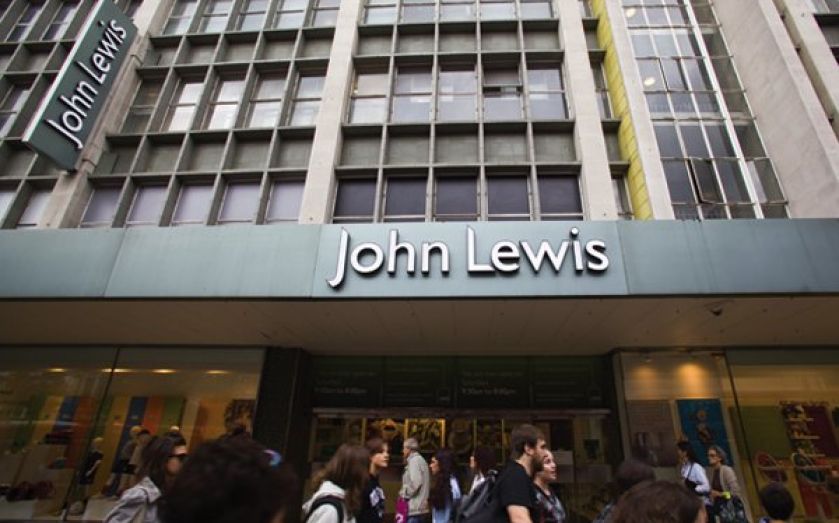
Could an independent Scotland pay more than the rest of the UK for its groceries, clothing and white goods?  John Lewis Partnership chairman Sir Charlie Mayfield certainly seems to think so. 
 
The retail boss, who this morning revealed half year gross sales had risen a steady six per cent to £5.01bn, told the BBC's Today Programme that most retailers absorb the costs of trading in parts of Scotland, but warned this could change if it becomes a separate country. 
 
Though he started out by saying it was “not my place to tell Scottish voters how to vote in next week's referendum”, Mayfield's words may give those on the fence something to think about: 
 
It does cost more money to trade in parts of Scotland and therefore those hard costs, in the event of a Yes vote, are more likely to be passed on.
 
He explained:
 
Most retailers don't run different prices, they absorb that in the totality. If you go forward several years… you see a divergence of different things – particularly currency – that creates the likelihood, not the certainty, that costs would be higher. And when you are talking about two different countries it is most probable that most retailers would then start pricing differently. My view would be the likelihood is, that would lead to some higher prices.
 
Mayfield said he had a “thriving” business in Scotland, adding that should independence carry the vote, the partnership would endeavour to retain its staffing practices (which sees each “partner” receive a bonus equivalent to the year's growth – in recent years that has worked out as high double-digits). However, he stopped short of guaranteeing that would be the case:
 
I would regret anything, obviously, which started to create divergence and really significant differences in the two markets that made it harder to achieve that.
 
Will it achieve those levels for the current financial year?
 
Although JLP says the outlook for the grocery sector is “challenging” and is expected to remain so “for some time”, the non-food sector is performing better. 
 
For the six months to July 26, gross sales at department store business John Lewis rose 9.4 per cent to £1.87bn, with like-for-likes up 8.2 per cent. Waitrose grew 4.1 per cent to £3.15bn, with like-for-likes edging up by 1.3 per cent. 
 
Pre-tax profit for the group, excluding exceptional items, climbed 12.1 per cent to £129.8m. 
 
And for the first six weeks of the second half, trading has continued to be strong with John Lewis gross sales up 11.3 per cent, and up 5.2 per cent at Waitrose, generating a gross group sales rise of 7.5 per cent. 
 
JLP said its plans for Christmas “look excellent” and it expects to continue outperforming the market. 
 
In which case, partners stand to do very nicely indeed (again). 

Share this article

  • Facebook
  • X
  • LinkedIn
  • WhatsApp
  • Email

Similarly tagged content:

Sections

  • News

Categories

  • Business

Related Topics

  • John Lewis

Trending Articles

  • Back to basics: Sainsbury’s gradual retreat from the British high street

  • Thames Water faces fresh threat to survival after pensions regulation breach

  • Hargreaves Lansdown orders staff back to office

  • PwC’s Embankment HQ to get major makeover ahead of Canary Wharf move

  • FTSE 100 Live: Stocks drop as US-Iran peace stalls; Oil climbs higher

More from Morning Wire

  • Scotland’s tax hike may have backfired as receipt falls

    Economics
    Andy Burnham and John Swinney shaking hands, both wearing dark suits and ties, in a professional setting.
  • Scotland is a warning of what Andy Burnham’s devolution experiment will look like

    Opinion
    Former SNP leader Nicola Sturgeon has said results for the SNP, now led by John Swinney, were worse than expected in the exit poll
  • Stop burying us in swollen corporate reports, says audit watchdog boss

    Accountancy
    Richard Moriarty, FRC unveils new stewardship code reducing reporting burdens
  • Will Drastic Dave live up to his name at Diageo?

    Retail
    Dave Lewis, former Tesco CEO, smiling in a supermarket aisle with products on shelves
  • How can wealthy Scots save £46,000 on income tax? Commute from England

    Tax
    Baillie Gifford runs three of the trusts targeted by Saba Capital.
  • ‘Hard work ahead’: Diageo shares soar as Drastic Dave’s cost savings lift investor spirits

    Markets
    Diageo is expected to reveal a drop in profits for the past year
  • Natwest hikes targets again after jump in profit

    Banking
    NatWest sign on a dark pillar with vertical slats, set against a blurred background of a modern office building
  • Lloyds beats profit target as bank sets sights on more cost-cutting

    Banking
    Lloyds Bank logo and sign on the exterior glass facade of a modern building in Manchester
MorningWire

Independent European business, markets and political news for decision-makers.

Morning Briefing

Europe

  • Germany
  • France
  • Europe
  • UK & Ireland

Business

  • Markets
  • Banking
  • Technology
  • Energy
  • Property
  • Fintech

Editorial

  • Opinion
  • Editorial Policy
  • Corrections
  • Contact

Company

  • About Morning Wire
  • Privacy Policy
  • Terms of Use
  • Cookie Policy
© 2026 Morning Wire Ltd · Published by Morning Wire Media, Bahnhofstrasse 65, 8001 Zürich, Switzerland
Privacy · Terms · Cookies · Facebook