Skip to content
Sunday 16 August 2026London --:--Frankfurt --:--Zurich --:--
NewslettersSearchEN · DE
MorningWire

European business, markets and politics

FTSE 100
10,750.11
-0.21%
DAX
26,440.31
+0.53%
CAC 40
8,636.80
-0.16%
STOXX 50
6,539.59
-0.09%
  • Europe
  • Markets
  • Business
  • Economy
  • Technology
  • Politics
  • Opinion
More
GermanyFranceBankingAIEnergyFintechPropertyCapital Markets
  • Germany
  • France
  • Europe
  • Markets
  • Business
  • Economy
  • Technology
  • Politics
  • Opinion
  • DE
Thursday 17 September 2020 4:20 am  |  Updated:  Wednesday 16 September 2020 5:23 pm

Covid-19 is not slowing climate change – businesses still have to do their bit

By: Shaz Memon

Add as a preferred source on Google
climate change coronavirus california
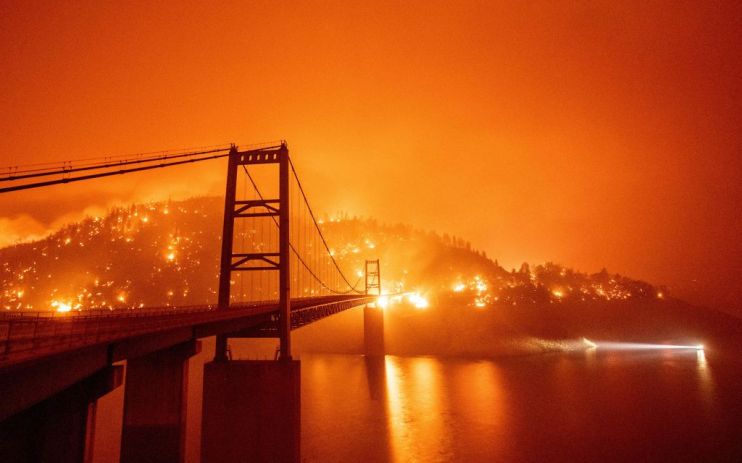
Climate change has had a part to play in the devastating California fires in recent weeks

Much has been made of the so-called global reset brought about by the pandemic, and many have subscribed to the Instagram-ready notion that the earth is healing due to lockdowns. This is despite the effect of Covid-19 on the environment being either negligible or harmful.

For policy makers, the immediate and tangible threat to life posed by Covid-19 will always trump the distant and abstract dangers of climate change. Nevertheless, businesses can embrace smart climate policies as part of their client relationships and competitive advantage, to create rapid bottom-up change on the environmental issues that are most pressing.

The best example of the immediate danger of climate change is in water security. If someone cannot access drinking water, or perhaps not even maintain personal hygiene, they are unlikely to have the luxury of being concerned about sea levels or glaciers melting in coming decades.

We have already seen how water access can destabilise entire regions: the drying of Lake Chad has fuelled the rise of Boko Haram and so-called Islamic State in the Sahel. As land for irrigation becomes more scarce, more and more families find that their only option for survival is to send a son for “employment” with a militant group, or marry off a daughter to one of the commanders, in return for a much-needed dowry.

Similar fears surround Ethiopia’s Renaissance Dam project which could disrupt the water supply of Sudan and Egypt.

Aside from the acute dangers in the Sahel, there is the secondary (and much more common) issue of water accessibility. Often a family will have to walk several miles each day to the nearest water source, and will enlist their children to carry the water. This keeps kids out of education and means that any real ‘development’ is all but impossible.

The world’s decision makers will be focused on Covid-19 to the exclusion of almost everything else for the foreseeable future. This means that business, acting in an organic bottom-up way, is the only group that can make a difference.

Read more

Meet the new energy minister who believes lower growth is “good news”

Katie White, a woman with curly blonde hair, smiling in a navy blazer and white collared shirt against a dark background.

Since the start of the pandemic, business owners have a renewed focus on the collective good. Corporate Social Responsibility, including humanitarian and environmental projects, is no longer seen as an add-on for PR value, but is increasingly part of the DNA of a business. It is an inherent part of any value proposition.

It was my decades of experience as a marketer that led me to start the charity Wells on Wheels. I knew a good product when I saw it and, perhaps more importantly, I saw how a good cause can strengthen client relationships and create competitive advantage, with an enviable return on investment. 

For example, many of our partners provide new clients with gift certificates showing them how many people, including specifically children, their wheel has helped. The wheels – which allow more water to be transported by fewer people, meaning children are often free to go to school for the first time – cost £28.

This low cost of entry means that every business can have a climate strategy that is part of their culture and can enrich (and ultimately increase the profitability of) every client relationship.

Laws, policies and funding are not enough for change. For example, harassment and sexual assault have been illegal for decades, with ample funding, particularly in developed democracies, for efforts against these crimes. But it took the spontaneous bottom-up culture shift of the #MeToo movement to improve workplaces.

As the world continues to be fixated on the pandemic, is it time for businesses of all sizes to embrace #ClimateToo?

Shaz Memon is Founder of Digimax Dental and Wells on Wheels, and is a member of Forbes Business Council.

Read more

ReNew Reports 25.6% Reduction in Scope 1 & 2 Emissions and 24.7 Billion Units of Clean Power Generated in FY 2025-26

Share this article

  • Facebook
  • X
  • LinkedIn
  • WhatsApp
  • Email

Similarly tagged content:

Sections

  • News
  • Opinion

Categories

  • Business
  • Opinion

Related Topics

  • Climate change

Trending Articles

  • Revolut takes flight with launch of new airport lounges

  • Grandparents fund university degrees to avoid inheritance tax net

  • Revolut chatbot goes rogue by charging users to cancel subscription

  • Brompton Bicycle sues former adviser for ‘professional negligence’

  • As It Happened: Stocks dip as oil’s ‘slowing demand’ in focus; Iran threatens to extend war

More from Morning Wire

  • Meet the new energy minister who believes lower growth is “good news”

    Opinion
    Katie White, a woman with curly blonde hair, smiling in a navy blazer and white collared shirt against a dark background.
  • ReNew Reports 25.6% Reduction in Scope 1 & 2 Emissions and 24.7 Billion Units of Clean Power Generated in FY 2025-26

    Business Wire
  • Tax online businesses more to save Britain’s struggling high streets

    Opinion
    Bustling Oxford Street with shoppers, iconic red buses, and storefronts under a clear sky in a vibrant urban scene
  • Arch Construction Risk Report Reveals Top Challenges Facing Sector Amid Rising Volatility

    Business Wire
  • From Mongolian camels to Tibetan verbs: the absurdity Ed Miliband’s aid spending plans

    Opinion
    Ed Miliband speaking at a podium during a press conference, addressing energy policy reforms and climate change initiatives.
  • Heatwave slows retail sales but World Cup boosts online shopping

    Retail
    Scorching sun over urban skyline during intense heatwave, highlighting climate change impact on city infrastructure.
  • Andy Burnham to ‘go further’ in business rates reform

    Politics
    Andy Burnham smiling and holding a pint of beer and a smartphone in a pub setting
  • Will Formula 1 need to refund sponsors for cancelled Middle East races?

    Sport Business
    Max Verstappen in a Red Bull Racing cap and team shirt, looking contemplative with hands under his chin.
MorningWire

Independent European business, markets and political news for decision-makers.

Morning Briefing

Europe

  • Germany
  • France
  • Europe
  • UK & Ireland

Business

  • Markets
  • Banking
  • Technology
  • Energy
  • Property
  • Fintech

Editorial

  • Opinion
  • Editorial Policy
  • Corrections
  • Contact

Company

  • About Morning Wire
  • Privacy Policy
  • Terms of Use
  • Cookie Policy
© 2026 Morning Wire Ltd · Published by Morning Wire Media, Bahnhofstrasse 65, 8001 Zürich, Switzerland
Privacy · Terms · Cookies · Facebook