
COVID-19 – the latest challenge to ‘levelling up’ the UK economy

In uncharted territory …
When I flew out of Buenos Aires in late 1990, having ended my stint working as part of a team supporting the economic reform programme of President Menem, I genuinely believed I would never again work in such a severe economic situation like the one Argentina had been in. Prices in the shops often doubled at midnight, the US dollar was the effective currency and there was an eight-year waiting list for a telephone. The current situation is different, but the scale is similarly daunting to that Argentina faced 40 years ago. COVID-19 has changed everything – the economic rule book has been ripped up and we are in uncharted territory.
The signs of economic stress are obvious. EY’s latest profit warnings report shows that, at the close of markets last night, COVID-19 had triggered 130 profit warnings in 2020. In the last five days, there have been 76 COVID-19 related warnings – far more than a typical quarterly run rate in normal times.
Read more: Practical guide to the UK Government’s COVID-19 support for business
And this is not a normal economic shock. As Nobel Laureate Paul Krugman suggested, it is more akin to a combination of a recession and a natural disaster. This means that the impact across the economy is different to that of a typical recession. As the profit warnings demonstrate, the FTSE travel and leisure sector is in the eye of the storm, with segments of the retail and media sector next in line. As the crisis continues, we can expect other sectors will experience greater stress.

In common with its peers, the UK Government has launched a massive economic support programme to shore up businesses and protect jobs. Sector specific initiatives have been launched in transport and we can expect others to follow. However, sector is not the only axis that we need to worry about. As EY’s recent regional economic forecast for England’s regions, cities and towns showed, sector performance is a key determinant of local economic performance. It is important that we don’t forget ‘levelling up’ in our response to the COVID-19 emergency.
… with clear signs of geographic stress, regional profit warnings almost double year-on-year …
The first lens on the geographic impact comes from quoted companies headquartered in the regions. These businesses have issued an extraordinary number of profit warnings already in Q1 2020, almost double the same quarter of last year. The most striking increases are in the South East and North West, where the number of profit warnings have more than doubled year-on-year in the first quarter due to an exceptionally high proportion of coronavirus-related downgrades.
In the Midlands and East Anglia, the spike in warnings pre-dates COVID-19, which accounts for just a half of Q1 20 warnings so far – the lowest of any region. We’ve seen a significant increase in warnings from this region in the last week – concerning given the vulnerability the previous spike in warnings highlights. This is something that is likely to come into sharper focus as corporate distress spreads out from consumer sectors into the wider economy.

… highlighting longer-term concerns …
The stress created nationally by COVID-19 is amplified by the fact that the UK’s towns and smaller places don’t start with a level playing field. They were already playing catch-up, as recognised by the Government’s levelling-up agenda.
Even more significantly, many local economies are dominated by the sectors showing the early signs of stress. We know that outside of the major cities, retail, hospitality, the public sector and manufacturing account for a greater share of employment and activity than the national average. These places don’t have the level of professional, business and financial services that we find in larger cities and towns, and therefore are more exposed to the impact of COVID-19.
Read more: COVID-19 – The first test for purposeful business?
Analysis by the Centre For Towns of the number of businesses in each place in the most vulnerable sectors clearly highlights the risks. In Bridlington, 13% of business are in the retail sector, nearly 12% are pubs and restaurants and almost 3% support the arts and leisure. In Ambleside in the Lake District, the comparable figures are 22%, 12% and 4% – in total, two-fifths of all businesses in sectors facing high stress.
When we consider hotels and other holiday accommodation, the picture is even clearer. In Bridlington another 7% of businesses fall into this category and we see a similar picture across seaside places. 26% of all businesses in Newquay, 24% in Skegness and 23% in Minehead provide accommodation services. There is a real risk of irreparable damage to vulnerable local economies.
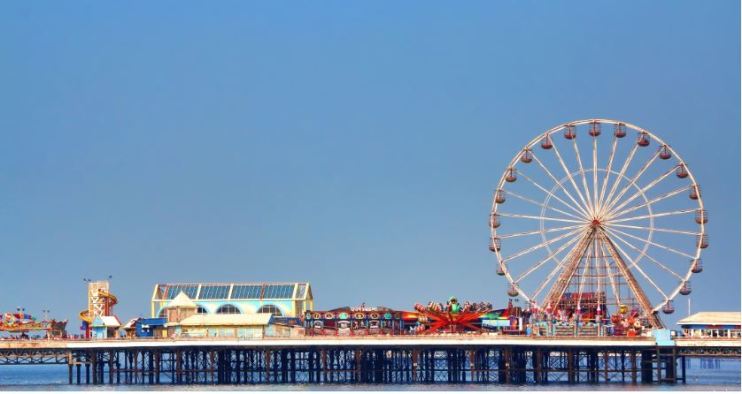
The South West is the region most exposed to the vulnerable sectors, followed by the North East, Wales and Yorkshire and the Humber, and small towns are the places under most pressure. However, up and down the country and especially in those regions, it is coastal towns that are facing real stress. Whitley Bay, Cleethorpes, Skegness and Clacton have at least 50% more businesses in exposed sectors than the average for their regions, Deal, Whitstable and Ramsgate are examples of similar challenges in Kent, and Falmouth, Penzance and Newquay are the tip of the iceberg in the South West.
… for the Government and business
For the Government, the message is clear. Once the initial stabilisation programme is in place, it will be important to turn to the geographic impact of COVID-19 and to identify what additional schemes are required to protect and then restore local economies. When economic activity is concentrated in a small number of vulnerable sectors, the risk of a downward collapse is all too real. There is an urgent requirement for an initiative to protect and then rebuild our coastal towns. National, generic support programmes will not be sufficient given the levels of concentrated stress identified by the Centre For Towns. A strategic effort is needed.
Read more: COVID-19 – A framework for business response
Businesses also need to build geography into their thinking. Firstly, a geographic analysis should be undertaken to ensure all potential vulnerabilities have been factored in. Once the business has been protected as best as possible against the initial shock, planning will have to recognise the impact that geographic differences mean for plans to restore the business. For example, if the slowdown extends through the summer holiday period, then the recovery and level of effort required to get operations up and running in the tourist areas of the country is likely to be more significant.
This is not just an issue for businesses in the most challenged sectors, the whole economic infrastructure in some places may be so shocked that it will take longer to get normal services up and running effectively.
For more EY insights on responding to COVID-19, visit ey.com/uk/covid