Skip to content
Saturday 15 August 2026London --:--Frankfurt --:--Zurich --:--
NewslettersSearchEN · DE
MorningWire

European business, markets and politics

FTSE 100
10,750.11
-0.21%
DAX
26,440.31
+0.53%
CAC 40
8,636.80
-0.16%
STOXX 50
6,539.59
-0.09%
  • Europe
  • Markets
  • Business
  • Economy
  • Technology
  • Politics
  • Opinion
More
GermanyFranceBankingAIEnergyFintechPropertyCapital Markets
  • Germany
  • France
  • Europe
  • Markets
  • Business
  • Economy
  • Technology
  • Politics
  • Opinion
  • DE
Wednesday 03 February 2021 8:25 am

Covid antibodies last at least six months after infection

By: Poppy Wood

Add as a preferred source on Google
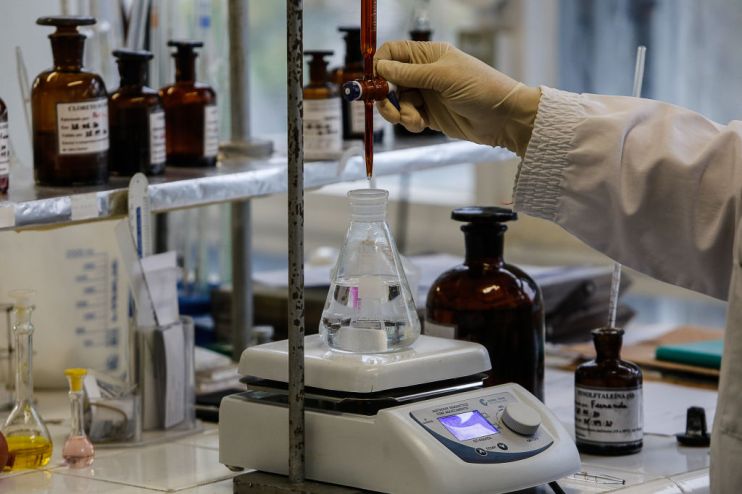
Instituto Vital Brasil Develops Medication Against the Coronavirus (COVID - 19) Using Horses's Plasma
Almost all people had antibodies three months after infection, while 88 per cent did after six months

Coronavirus antibodies last for at least six months after infection for almost all people who have had the virus, according to a new study.

A wide-scale study, by medical database UK Biobank, found that 99 per cent of participants who tested positive for coronavirus retained antibodies for at least three months, while 88 per cent did so for at least six months.

The study lasted for six months. It is not currently known how long Covid antibodies last in total.

The research also suggested 8.8 per cent of the UK’s population had been infected by December.

London had the highest level of antibodies of any region in the country, with around 12 per cent of people across the capital previously having contracted the virus by December last year. As many as 14.7 per cent of people living in east London had antibodies at that time.

Professor Naomi Allen, chief scientist with UK Biobank, said: “Although we cannot be certain how this relates to immunity, the results suggest that people may be protected against subsequent infection for at least six months following natural infection.

“More prolonged follow-up will allow us to determine how long such protection is likely to last.”

Read more

Cabenuva demonstrates superiority to daily oral therapy in adolescents living with HIV, as ViiV Healthcare highlights new long-acting injectable data at AIDS 2026

For the six-month period between the end of May and December 2020, UK Biobank collected monthly blood samples and data on potential symptoms from 20,200 participants and their adult children and grandchildren.

There was no gender difference in antibody levels, but the proportion of participants with detectable antibodies was highest in younger people (13.5 per cent among those under-30) and lowest in the elderly (6.7 per cent among those over-70).

The most common symptom associated with having antibodies was a loss of sense of taste and smell, which was reported by 43 per cent of people who had previously been infected with the virus.

Around a quarter of people with antibodies had contracted the virus completely asymptomatically, while 40 per cent did not have any of the three major tell-tale signs — a fever, persistent cough or loss of sense of taste or smell.

However, scientists warned that people with antibodies may still be able to pass the virus on to others.

Professor Sir Rory Collins, UK Biobank principal investigator said this meant it was “important to maintain the social distancing and the lockdown measures in line with the government guidance”.

Read more

ViiV Healthcare to present phase IIIb data comparing Dovato with Biktarvy in treatment-naïve adults; alongside INSTI-powered long-acting injectable innovation at AIDS 2026

Share this article

  • Facebook
  • X
  • LinkedIn
  • WhatsApp
  • Email

Similarly tagged content:

Sections

  • News

Categories

  • Business
  • Tech

Related Topics

  • Coronavirus
  • Vaccine

Trending Articles

  • Revolut takes flight with launch of new airport lounges

  • Grandparents fund university degrees to avoid inheritance tax net

  • Revolut chatbot goes rogue by charging users to cancel subscription

  • Brompton Bicycle sues former adviser for ‘professional negligence’

  • As It Happened: Stocks dip as oil’s ‘slowing demand’ in focus; Iran threatens to extend war

More from Morning Wire

  • Cabenuva demonstrates superiority to daily oral therapy in adolescents living with HIV, as ViiV Healthcare highlights new long-acting injectable data at AIDS 2026

    Business Wire
  • ViiV Healthcare to present phase IIIb data comparing Dovato with Biktarvy in treatment-naïve adults; alongside INSTI-powered long-acting injectable innovation at AIDS 2026

    Business Wire
  • Prothena Reports Second Quarter 2026 Financial Results and Business Highlights

    Business Wire
  • IGI Reports Second Quarter and First Six Months of 2026 Unaudited Financial Results and Declares Ordinary Common Share Dividend

    Business Wire
  • New Oxford Economics Study Shows the Social and Economic Impact of Bars

    Business Wire
  • On a roll: Greggs shares soar as it doubles down on aggressive expansion

    Retail
    Interior of a Greggs bakery with a staff member behind the counter, displays of pastries, drinks, and The Big Deal signage.
  • Kolibri Global Energy Inc. Announces Another Record for Its Highest Quarterly Revenue of $22.5 Million With a 46% Production Increase and a 197% Net Income Increase for the Second Quarter of 2026

    Business Wire
  • Iksuda receives US FDA IND clearance for IKS04

    Business Wire
MorningWire

Independent European business, markets and political news for decision-makers.

Morning Briefing

Europe

  • Germany
  • France
  • Europe
  • UK & Ireland

Business

  • Markets
  • Banking
  • Technology
  • Energy
  • Property
  • Fintech

Editorial

  • Opinion
  • Editorial Policy
  • Corrections
  • Contact

Company

  • About Morning Wire
  • Privacy Policy
  • Terms of Use
  • Cookie Policy
© 2026 Morning Wire Ltd · Published by Morning Wire Media, Bahnhofstrasse 65, 8001 Zürich, Switzerland
Privacy · Terms · Cookies · Facebook