Skip to content
Monday 24 August 2026London --:--Frankfurt --:--Zurich --:--
NewslettersSearchEN · DE · FR
MorningWire

European business, markets and politics

FTSE 100
10,854.32
+0.35%
DAX
26,106.60
-0.11%
CAC 40
8,453.01
-0.37%
STOXX 50
6,447.98
-0.22%
  • Europe
  • Markets
  • Business
  • Economy
  • Regulation
  • Politics
  • Opinion
More
GermanyFranceEU InstitutionsCompetitionPublic AffairsBankingTechnologyEnergy
  • Germany
  • France
  • Europe
  • Markets
  • Business
  • Economy
  • Regulation
  • Politics
  • Opinion
  • DE
Tuesday 24 March 2020 12:01 am  |  Updated:  Monday 23 March 2020 6:54 pm

Getting through the Covid-19 pandemic will require markets as well as strong government

By: Callum Price

Add as a preferred source on Google
Coronavirus is showing that markets work
Markets, which gives us access to food, is coping fairly well, despite huge surges in demand

Covid-19 is a major shock to our system. With the UK speeding towards lockdown and much of Europe in similar or worse straits, this crisis — as with most crises — is causing people to look to their governments. 

This is both understandable and necessary. Rishi Sunak’s excellent pledges (and performances) last week reassured tens of millions of households, at a time when many are worried about what the next few months will bring. With more essential support in the pipeline, including for the self-employed, it is clear the government is not shying away from intervening — nor should it. 

But while government action is required, markets also have a crucial part to play. 

Consider the food distribution system we all rely on. The decentralised market mechanism, which gives us access to all the food we need and with more choice and at a lower cost than ever, is coping fairly well, despite huge surges in demand. 

Beyond occasional Twitter pictures of missing toilet rolls on shelves, most people are getting what they need despite a major increase in food purchases. 

The UK has spent an extra £1bn on groceries in the last month of covid-19 stockpiling, and we are yet to hit major shortages, even if sometimes the shelves are emptied quicker than they can be refilled. 

Retailers are also acting to stop damaging stockpiling by themselves, limiting key purchases to a reasonable number of items each. 

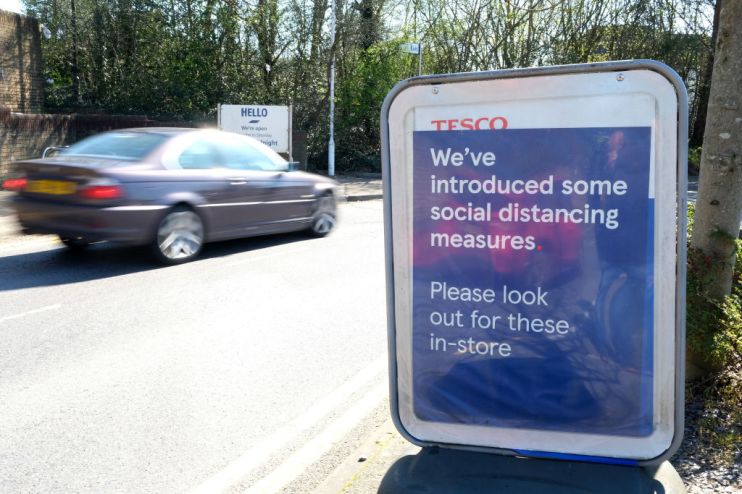
Tesco is managing this by hiring 20,000 workers to distribute food both in stores and online, as are almost all the other major retailers. Some people are being processed so fast they apply for a job and start working on the same day. Apps and online systems are being redesigned at breakneck speed to support this. 

Read more

UK debt ‘hits £3 trillion’ milestone

Houses of Parliament in Westminster showcasing historic architecture under a clear sky, central to UK government and politics

Supermarkets including Tesco have sent this message to customers: we are doing everything we can to ensure you and your families have the food and essentials you need. We ask everyone to shop as they normally would – there is enough for everyone. https://t.co/v655SKv80i

— Tesco News (@tesconews) March 15, 2020

The flexibility of the market and the private sector, driven by incentives and adjusting constantly to new information, provides this. The fact that those working in food retail have been designated “key workers” is a reminder that the private sector is crucial in getting through this time. 

Even social distancing is made easier by capitalism. Technology companies are improving their apps and coping with unprecedented usage, and the reduction in face to face interaction will be infinitely more bearable due to the apps, streaming and broadband services most households enjoy. Not to mention the plethora of TV, films, online learning, video-games, and more that we now have at our fingertips. 

It is more than just Sunak’s big financial bazooka which is getting us through this. Markets are by their nature more hidden than government, but they are fantastic providers and flexible operators. They will be incredibly necessary to adjust to the post Covid-19 world. 

No central planner will know which sectors will flourish and which will not. This uncertainty is the reason that we have a welfare system, people have savings, and why we need to build up ownership and other sources of wealth and support. 

Successful government and markets work with, not against, one another. The post-coronavirus world may change in many ways, but if there is one thing we must not lose, it is this partnership between markets and government.

In the chancellor’s words, Covid-19 is first and foremost a public health emergency. This is not a crisis of capitalism — or of governments. 

Those who seek to claim that the only way forward is more government — both now and in the future — are ignoring the reality on the ground, and risk damaging our society’s ability to get back on track after the worst of this passes. 


Callum Price is head of external affairs at the Centre for Policy Studies.

Read more

‘Alice in Wonderland’ workspace firm lands £129m Aberdeen-backed finance

Modern reception area with unique legs art installation, white desk, and colorful stools.

Share this article

  • Facebook
  • X
  • LinkedIn
  • WhatsApp
  • Email

Similarly tagged content:

Sections

  • News
  • Opinion

Categories

  • Business
  • Opinion
  • Retail

Related Topics

  • Coronavirus

Trending Articles

  • Can debt-ridden Morrisons become a Big Four supermarket again?

  • Ratcliffe’s Ineos saves Runcorn plant

  • As it happened: Stocks rally; US to unveil ‘economic D-Day’ Iran sanctions

  • Amazon says it buys books in bulk to ‘improve products’

  • HMRC mansion tax inspectors to target homes for property valuations

More from Morning Wire

  • UK debt ‘hits £3 trillion’ milestone

    Economics
    Houses of Parliament in Westminster showcasing historic architecture under a clear sky, central to UK government and politics
  • ‘Alice in Wonderland’ workspace firm lands £129m Aberdeen-backed finance

    Property
    Modern reception area with unique legs art installation, white desk, and colorful stools.
  • Heathrow overtaken by Istanbul as Europe’s busiest airport

    Transport & Infrastructure
    Commercial airplane landing at Heathrow Airport, seen from behind, with a prominent Heathrow sign below.
  • Andy Burnham is on course to rack up the second highest debt interest bill on record

    Opinion
    UK National Debt Clock showing £3 trillion, with Big Ben and the Union Jack in the background.
  • Will Formula 1 need to refund sponsors for cancelled Middle East races?

    Sport Business
    Max Verstappen in a Red Bull Racing cap and team shirt, looking contemplative with hands under his chin.
  • Ari Emmanuel snaps up West End theatre group ATG for £4.5bn

    Hospitality
    Paddington Bear in a blue duffle coat and red hat on a purple background with BAFTA and EE logos
  • Jobs market ‘stops moving’ as employment costs weigh on hirers

    Economics
    The recruitment industry is grappling with a slowdown in hiring among UK employers and wider macro-economic uncertainty.
  • Andy Burnham to ‘go further’ in business rates reform

    Politics
    Andy Burnham smiling and holding a pint of beer and a smartphone in a pub setting
MorningWire

Independent European business, markets and political news for decision-makers.

Morning Briefing

Europe

  • Germany
  • France
  • EU Institutions
  • Europe

Business

  • Markets
  • Business
  • Economy
  • Regulation
  • Competition
  • Public Affairs

Editorial

  • Opinion
  • Editorial Policy
  • Corrections
  • Contact

Company

  • About Morning Wire
  • Privacy Policy
  • Terms of Use
  • Cookie Policy
© 2026 Morning Wire Ltd · Published by Morning Wire Media, Bahnhofstrasse 65, 8001 Zürich, Switzerland
Privacy · Terms · Cookies · Facebook