Wieden + Kennedy’s Neil Christie: The man behind Three’s Dancing Pony on the secrets of good viral marketing

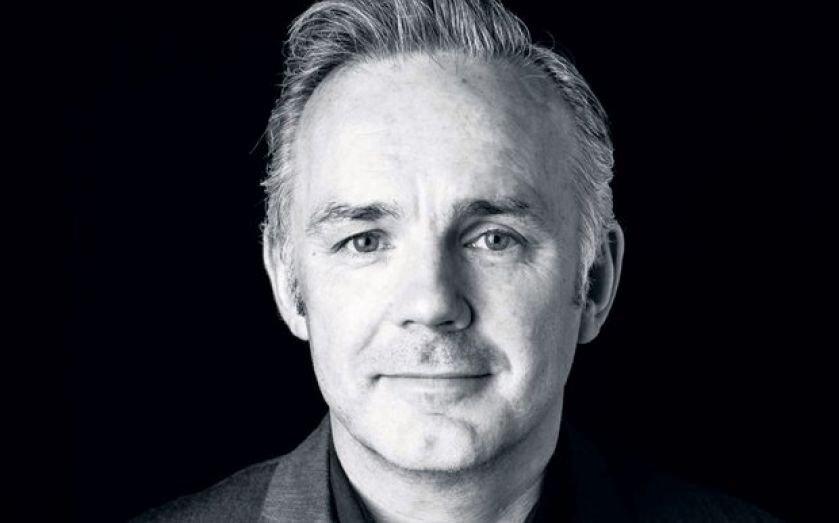
As one of the biggest independent agencies in the world, Wieden and Kennedy (W+K) is an increasingly rare variety of heavyweight in a media industry frequently characterised by its consolidation. Over three decades after its inception in Portland, Oregon, the firm now has eight offices around the world, and a solid reputation for its creative work. The agency behind Honda’s Grrr campaign, and Nike’s Write The Future, W+K maintains and develops some of the industry’s best-known relationships. Its Pony advert for Three – a Shetland pony moonwalking to Fleetwood Mac – exceeded 1m views on Youtube in its first weekend. Neil Christie, managing director of W+K’s London office, tells Morning Wire the secrets behind a viral hit, and how staying independent has ensured his firm’s success.
Everybody knows Three’s Dancing Pony. How do you design a viral ad?
People use the internet to share silly things – including animal videos. The insight with Pony was recognising that that’s a good thing, because it’s a means of communication – it brings people together.
Increasingly, science is telling us that most of the decisions we make are gut reactions – we don’t necessarily listen to rational information. This is at odds with traditional thinking, which says that you need a unique selling proposition that differentiates your product or service. What you actually need is to make people feel something, to make an emotional connection – and that doesn’t have to be a rational message. The Ehrenberg-Bass Institute found that the key to viral diffusion is stirring “high arousal emotion” – and stirring positive feelings was more successful than neutral or negative. So we said we can create something that is itself something people want to pass on. From the outset, it was designed to be a viral campaign.
Is a viral campaign harder to create?
Yes. You’re trying to do something that isn’t just a one-way piece of communication. You’re trying to enlist people who, by sharing it, strengthen the campaign.
Of course, you can’t necessarily copy things that have previously gone viral, because novelty is crucial to the appeal. It wasn’t that we looked into viral videos and said, “You know what, what people really love are Shetland ponies and moonwalking. So let’s combine those two things.” Obviously there’s more judgement and strategy involved.
We tried to generate buzz very early on by spending in a concentrated period. It’s still early days in the science of sharing, but we do know that, if something’s immediately passed on and shared, it’s far more likely to continue spreading. The opposite is also true: once you’ve got something fresh and exciting that people will want to watch and share, it’s crucial to release content at the right moment, on the right platform and among the right users. We are always looking for early social proof.
But virality doesn’t always ensure success?
A campaign can be viral without being successful, and vice versa. A good example of the moment is the Better Together’s campaign ad for Scottish independence – The Woman who made up her Mind (aka the “patronising BT woman”). That is definitely a viral phenomenon, but absolutely not in a good way. It’s being ridiculed, rather than achieving its objectives. It always has to come down to “does this achieve its stated aims?” After all, virality is just one measure we use regarding the success of a campaign, and it certainly doesn’t work for all.
You’re one of the largest independent agencies in the world. How does that affect your work?
We have a real focus on creative excellence, and I suppose we are somewhat reticent to be associated with some of the advertising industry’s values. It’s important to us to remain fiercely independent and outside the mainstream. It actually makes life easier. It keeps the business really simple, and means we’ve got the freedom to focus on creative elements over the long term, rather than worrying about a holding company or shareholders. We haven’t got tiers of international management and subsidiaries to deal with. It’s the relationship between us and our clients. It also means my job is focused on managing those within the office, and making sure we do the best work for our clients.
But in an age of consolidation, do you risk losing out to bigger players?
I can’t think of any other agency that’s been around for as long as we have and that hasn’t sold out and joined a holding company. We are unusual. But the reason is that, when it comes down to it, we’d rather be better than bigger. We’ve never wanted to sell out in order to build a network, grow and diversify. We want to keep our work tight, maintain quality, choose carefully what we do and who we work with. We like to keep the mainstream bit of the industry at arm’s length. @harrietsgreen