Credit Suisse crisis: What’s going on and what will happen next?

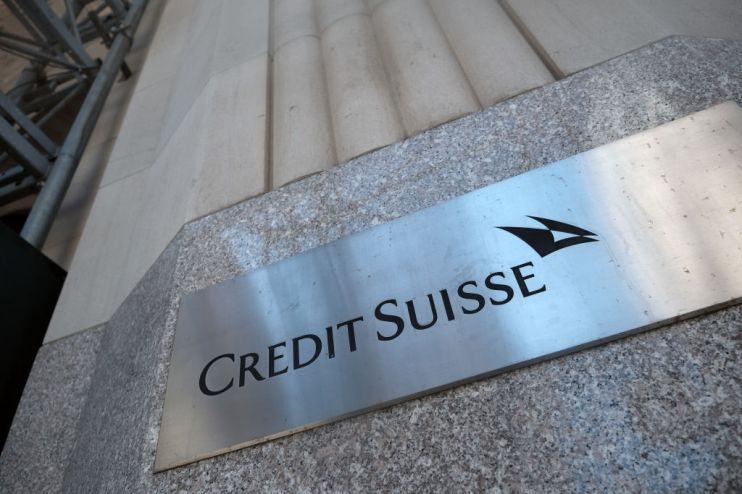
Credit Suisse was once one of the world’s largest and most respected financial institutions but this week its shares have been on a downward spiral. Although the Swiss bank had been caught up in market speculation over the health of the global financial system it has been beset with problems over the last few years .
Morning Wire’s banking correspondent Chris Dorrell looks at what caused the crisis and experts believe will happen next.
What’s happened so far this year?
The current crisis was sparked on Wednesday when Credit Suisse’s largest shareholder, the Saudi National Bank, said it was not able to increase its shareholding in the bank for regulatory reasons, amongst others.
The Saudi National Bank took a 9.8 per cent stake, worth CHF4bn in October last year. Chair Ammar Al Khudairy said the Saudi National Bank could not go over the 10 per cent threshold for regulatory reasons.
This makes it difficult, although not impossible, for the Saudi National Bank to inject further capital into Credit Suisse.
Though Credit Suisse’s CEO Ulrich Koerner attempted to reassure investors the bank was adequately capitalised, Al Khudairy’s comments spooked the market, sparking a huge sell-off in Credit Suisse.
The wider European banking sector soon caught the cold, no doubt not helped by the collapse of Silicon Valley Bank last week.
Some analysts even suggested the crisis at Credit Suisse might prompt another financial crisis.
Nouriel Roubani, nicknamed Dr Doom after he predicted the 2008 sub-prime crisis, said the Credit Suisse crisis is potentially a “Lehman moment” for European and global markets.
In order to address these concerns, the Swiss National Bank made a CHF50bn (£44bn) liquidity lifeline available, which the bank later said it would use to its liquidity.
Markets have stabilised today, but Credit Suisse – and the wider financial sector – still faces severe stress.
Why is Credit Suisse in trouble?
Credit Suisse has faced a host of bad headlines over the last few years, including spying on former employees, embroiling itself in a Mozambique corruption case and failing to stop drug dealers laundering money in Bulgaria.
Perhaps unsurprisingly, this has eroded confidence in the bank, and a mammoth loss in 2022 has resulted in a steep share price decline.
In the fourth quarter of last year alone, it faced outflows of CHF110.5m and has been seen as the weak link in European banking for a while.
To combat these issues, it announced major restructuring plans last year designed to create a “new Credit Suisse” centred around the traditionally stable wealth management and domestic bank divisions.
Its investment banking arm – which has been the source of many of the wider group’s scandals – is being carved out.
The deeper question is whether this restructuring can turn the bank back to profitability quickly enough to assuage investors and attract depositors.
As JP Morgan analysts wrote: “(we) believe Credit Suisse’s situation is about ongoing market confidence issues with its investment banking strategy and ongoing franchise erosion.”
How is this related to the collapse of SVB?
There are no clear links between Silicon Valley Bank’s collapse and Credit Suisse’s problems.
The Swiss National Bank said “the problems of certain banks in the USA do not pose a direct risk of contagion for the Swiss financial markets.”
As a ‘globally systemic financial institution’, Credit Suisse faces much stricter regulation than Silicon Valley Bank.
Credit Suisse is well-capitalised with a CET1 ratio of 14.1 per cent at the end of 2022. It had an average liquidity coverage ratio of 144 per cent which will be “further strengthen(ed)” by the Swiss National Bank’s liquidity provision.
Additionally, the bank confirmed it is fully hedged against interest rate movements and holds a low volume of hold-to-maturity bonds.
In short, it is completely unlike Silicon Valley Bank, which was poorly capitalised and completely exposed to interest rate movements through its large portfolio of hold-to-maturity bonds.
However, SVB’s collapse has put investors on high alert for further instability. While there are few similarities between the two banks, it is not surprising that markets reacted so viciously on Wednesday given SVB’s failure was so fresh in the memory.
What’s going to happen next
The big question is whether the Swiss National Bank’s intervention will be enough to restore confidence.
So far, it seems to be working with Credit Suisse’s share price climbing over 20 per cent and the cost of insuring the company’s debt falling slightly.
More important though will be whether money starts coming back. To repeat, there were CHF110.5m of outflows from Credit Suisse in the fourth quarter alone last year.
As Bloomberg Intelligence’s Alison Williams said, “steadying of flows is a pivotal factor in stemming investor fears.”
If the stricken lender is unable to restore confidence, more regulatory action might be needed such as full deposit protection or an equity injection.
Credit Suisse has also long been rumoured as a target for Swiss rival UBS. JP Morgan analysts said they view “a takeover as the most likely scenario especially by UBS.”
More broadly, financial instability has raised the prospect that central banks will have to rein back on their interest rate hikes due to the febrile market environment.