Crisis in Bangladesh shows that draconian regimes are always doomed to fail

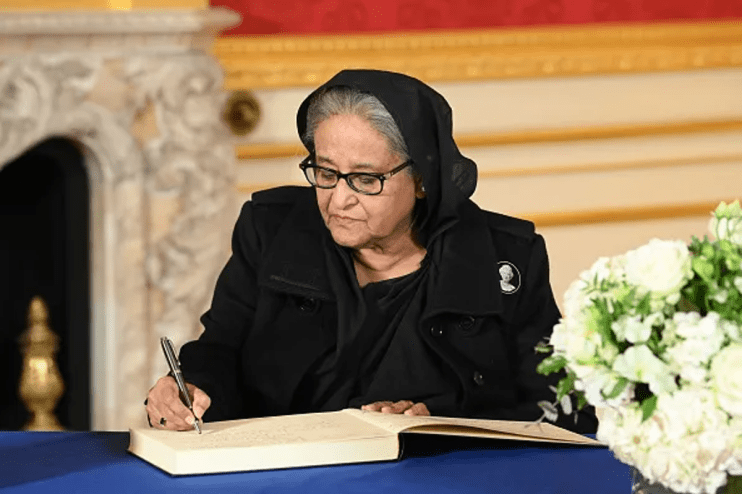
Repressive governments don’t just brutalise their people, they impoverish them too, writes Will Cooling
If you were in Tower Hamlets early last week, you may have been forgiven for thinking that bonfire night had come early as jubilant crowds in Altab Ali Park celebrated as an effigy burned.
But rather than celebrating the saving of a King, the Londoners present were celebrating the deposing of a Prime Minister. This is because last Monday saw London’s Bangladeshi community celebrate Sheikh Hasina fleeing the country she had ruled for 15 years in the face of growing protests and unrest.
It was not long ago that international economists praised Bangladesh for its strong economic growth, with a focus on the production and exporting of clothes seeing average income surge ahead of both Pakistan and India. However, at the heart of this growth story was an increasingly repressive government, as Hasina brought the armed forces, judiciary and civil society under the control of her Awami League political party. The independent press was hounded by draconian legislation that explicitly forbade damaging the country’s reputation, hundreds of opposition activists were disappeared or murdered at the hands of the security forces, and human rights abuses became so undeniable that the American government imposed sanctions against the leadership of the Rapid Action Battalion, a leading government paramilitary force.
The upshot of this onslaught on the freedoms of the Bangladeshi people could be seen in this January’s parliamentary elections, with the Awami League winning over 75 per cent of the available seats in a vote boycotted by the largest opposition party and marred by violence and unusually low turnout.
But there was an economic cost to this repression too. The slump in demand for clothes during the pandemic, followed by disruption in supply chains and increased inflation exacerbated by the war in Ukraine, hit Bangladesh hard due to its dependence on the clothing industry. Hasini had used her repressive powers to maximise returns for the textiles industry, thereby creating a brittle economy that couldn’t cope with sudden changes in the global economy.
Worse, a particular focus of the regime had been preventing trade union activity within its factories for fear that international investors would go elsewhere if their business was disrupted by strikes, meaning workers had no way to secure a fair share of the economic growth they were generating. Consequently, inequality only worsened, while living standards failed to rise anywhere near as high as implied by the GDP figures.
In the long-term, an economic strategy built around using the state’s powers to coerce the local population into accepting substandard wages and working conditions could not meet the aspiration of Bangladesh’s middle class. A regime used to stealing from its population was poorly placed to ensure the ambitious could fulfil their potential, with nearly 20m young people in neither work or education. Indeed, at the heart of the recent protests was the practice of the Awami League to reserve the best public sector jobs for its own allies, manipulating a quota system that claimed to privilege those whose families fought alongside Hasina’s father in the nation’s 1971 war of independence against Pakistan or who came from minority communities.
What comes next for Bangladesh is far from clear, with Muhammad Yunus, a nobel-winning economist and longstanding critic of Sheikh Hasina, having been called back from attending the Paris Olympics to lead a caretaker government whilst fresh elections are organised. But what the fall of her regime reminds us all is that the argument often pushed by rich people across the world – that we should sacrifice our freedoms for prosperity – is wrong. Repressive governments don’t just brutalise their people, they impoverish them too. It was the hard work of the Bangladeshi people that grew the Bangladeshi economy this century, whilst the wrongheaded and corrupt policies of the Awami League sowed the seeds for today’s crisis. Government of the people, by the people, for the people is often slow and frustrating, but it’s the only way to ensure that the people get what they need.