Skip to content
Friday 14 August 2026London --:--Frankfurt --:--Zurich --:--
NewslettersSearchEN · DE
MorningWire

European business, markets and politics

FTSE 100
10,766.81
-0.05%
DAX
26,420.33
+0.46%
CAC 40
8,647.08
-0.04%
STOXX 50
6,540.80
-0.07%
  • Europe
  • Markets
  • Business
  • Economy
  • Technology
  • Politics
  • Opinion
More
GermanyFranceBankingAIEnergyFintechPropertyCapital Markets
  • Germany
  • France
  • Europe
  • Markets
  • Business
  • Economy
  • Technology
  • Politics
  • Opinion
  • DE
Tuesday 01 July 2014 5:10 pm  |  Updated:  Thursday 06 June 2019 11:39 pm

The crisis isn’t over: The Eurozone’s laggards still need disciplining

By: Paul Ormerod

Add as a preferred source on Google

THE POLISH banking and financial elite gathered last week at a conference in the Baltic seaside resort of Sopot. The proceedings were enlivened by the presence on the platform of Jacek Rostowski, one of the senior Polish politicians recently caught on tape badmouthing David Cameron, in very colourful terms, for his failure to stand up to British Eurosceptics. 

Poland is, of course, Europe’s great economic success story, the only EU country to avoid a recession during the financial crisis. So it is easy to see why the Poles are enthusiastic about Europe. For them, it has been both a great liberation and an opportunity, of which they have taken full advantage through hard work and enterprise.

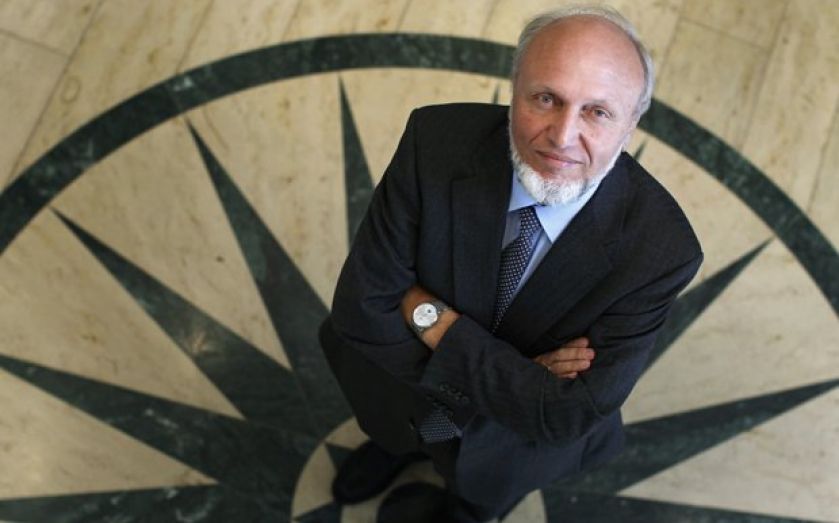
An altogether more cautionary note was delivered by professor Hans-Werner Sinn, president of the august IFO Research Institute, and possibly Germany’s most influential economist. Sinn estimated the cost to the taxpayer to date of the bailout of the Eurozone’s Mediterranean countries as being almost €1 trillion – trillion! For him, the euro crisis is certainly not over.

A key issue is the astonishing lack of competitiveness in the countries of Southern Europe. Hourly unit labour costs in the manufacturing sector in Poland are just €6.90, according to Sinn. In Spain, they are €20.40. In the 1990s, Germany had serious competitiveness problems, with the collapse of the Soviet economic bloc and the ability of German companies to relocate to neighbouring countries such as the Czech Republic and Poland, each with cheap but well educated workers. But the Germans have both improved productivity and accepted real wage reductions, so they are once again highly competitive.

This is a fundamental fault line in the Eurozone, which exists entirely separately from the banking crisis. The latter does not help, because it gives cover to the massive subsidies which are now being provided to countries like Spain, Greece and Italy. Receipt of these transfers blunts the incentive to make the necessary adjustments to real wages. Sinn argues that these countries need to exit the Eurozone temporarily, restructure their debts, improve their competitiveness, and then rejoin. 

The UK’s experience in the forerunner of the euro, the Exchange Rate Mechanism, suggests that this may very well be a viable option. Introduced as long ago as 1979, it was not until October 1990 that we joined. However, the British workforce refused to curb wage demands, a recession followed, and we were thrown out by the markets on that famous day in September 1992. It cost the Tories the next three General Elections, but it was the making of the British economy. Between 1992 and 2007, our annual GDP growth was over 3 per cent, compared to not much more than 1 per cent in Germany.

Paul Ormerod is an economist at Volterra Partners, a visiting professor at the UCL Centre for Decision Making Uncertainty, and author of Positive Linking: How Networks Can Revolutionise the World.

Share this article

  • Facebook
  • X
  • LinkedIn
  • WhatsApp
  • Email

Similarly tagged content:

Sections

  • Opinion

Categories

  • Opinion

Related Topics

  • Eurozone

Trending Articles

  • Revolut takes flight with launch of new airport lounges

  • Grandparents fund university degrees to avoid inheritance tax net

  • It’s not just Jason Arday, most of sociology is a scam

  • Brompton Bicycle sues former adviser for ‘professional negligence’

  • IT consultant ordered to pay £50,000 after being accused of stealing Soho House members’ personal details

More from Morning Wire

  • Bank regulation, not austerity, explains why Britain is poorer than America 

    Opinion
    Aerial view of a residential cul-de-sac with houses, green lawns, trees, and a swimming pool
  • 22 months of cuts: Jobs crisis deepens despite growth boost 

    Economics
    London has defied national trends as job postings in the capital rose.
  • Number of British millionaires sinks to lowest level since financial crisis

    Wealth
    Canada skyline with modern skyscrapers under a clear blue sky, showcasing iconic financial district architecture
  • Jaecoo 8: A Premium SUV with Substance and Surprising Polish

    Motoring
    White JAECOO 8 SHS P Executive SUV parked at night with illuminated London skyscrapers in the background
  • Rightmove: Housebuilders face worst conditions since financial crisis

    Property
    Numerous For Sale and To Let signs from various real estate agents outside a brick building.
  • Dimon threatens to ditch JP Morgan tower in tax warning to Burnham

    Banking
    Jamie Dimon speaking at a JP Morgan event, wearing a suit and tie, addressing financial trends and market strategies.
  • Britain has the lowest level of millionaires since the financial crisis – and that’s no accident

    Opinion
    Experts believe an exit tax could stem to flow of wealthy residents leaving the UK
  • Luis Figo: ‘Deceitful and cravenly self-interested’ Infantino must quit Fifa now

    Sport Business
    Gianni Infantino and Luís Figo smiling, walking outdoors with security, on a wet day.
MorningWire

Independent European business, markets and political news for decision-makers.

Morning Briefing

Europe

  • Germany
  • France
  • Europe
  • UK & Ireland

Business

  • Markets
  • Banking
  • Technology
  • Energy
  • Property
  • Fintech

Editorial

  • Opinion
  • Editorial Policy
  • Corrections
  • Contact

Company

  • About Morning Wire
  • Privacy Policy
  • Terms of Use
  • Cookie Policy
© 2026 Morning Wire Ltd · Published by Morning Wire Media, Bahnhofstrasse 65, 8001 Zürich, Switzerland
Privacy · Terms · Cookies · Facebook