Our housing crisis will become a catastrophe without a national crusade to fix it

HOUSING is a basic human right, and we are denying it to our children. If current house price rises continue, babies born today will pay £6.3m in 2048 for a one bedroom London flat. Already, at around £428,000, the average London house price is over 16 times the average national salary. There is a vast and growing wealth chasm between the housed upper middle class and the hard working but un-housed (except in precarious rented accommodation) young middle class.
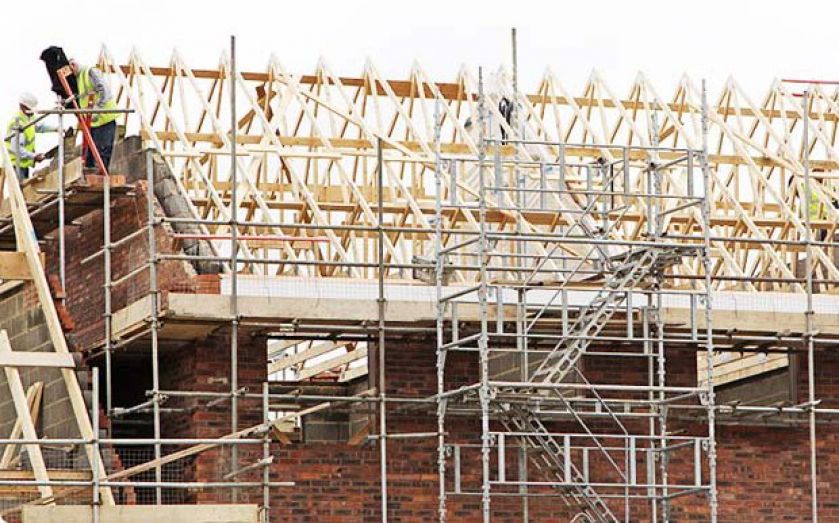
We need to build over 250,000 homes a year to make an impression on our national housing shortage. Even with recent improvements in building and supply rates, we are nowhere near that. Meanwhile, the housing shortage worsens and prices show no sign of falling. How acute must this housing famine become before it compromises social cohesion?
In the past, social unrest has followed bread shortages. A decent home is the UK’s twenty-first century bread. If we don’t solve the housing crisis, the extreme gap in wealth and life chances between those who can afford houses and those who can’t will increase. We will get the society we deserve, but it won’t be a society we want to live in.
What should be done?
What is needed is a coordinated national effort. The government must find more public money for housing (and empower local authorities to do the same). Both national and local government must work in active partnership with housing associations, institutions and house-builders. The situation has become so desperate that this housing crisis can only be solved by direct government intervention.
The public debate tends to miss the point. It concentrates on housing hot spots, such as Hyde Park, where flats are worth hundreds of millions. They are irrelevant. What this country needs is hundreds of thousands of flats and houses in the £30,000 to £200,000 bracket, and a thriving private and social rented sector.
This vast problem demands a vastly ambitious solution. It is too big for the public or private sector to solve alone. The government should match institutional investment with its own money to build new towns, garden cities and housing estates, and make such developments tax and stamp duty free zones.
Each of these new garden city and town developments should be an enterprise zone (like the 1980s Docklands Development Corporation). Special powers should be given to those running them to make housing happen without bureaucratic or planning fetters. House-builders and supermarkets should be incentivised to release their land more quickly. Planning controls should be relaxed to enable build-to-rent and green belt development. Local councils should be prepared to put their covenants on long leases, and to contribute their excess land and offices to a National Crusade for Housing.
Most importantly, all of these initiatives need to be strategically joined up, so that together they can overwhelm the problem, and give people a decent, housed life. As a country, we must approach our crippling housing shortage with a policy of the very widest vision and imagination. Its centrepiece cannot simply revolve round re-inflating the debt bubble every seven years.
The optimistic news is that the UK has overcome housing crises before, so we can do it again. Harold Macmillan liked being housing minister. “Like cricket, you could see the runs; the houses were built”: 275,000 in 1952, 318,750 in 1953. Restrictions were released and licenses were abolished. Local authorities were empowered to build and borrow. Rent restrictions were relaxed. More could have been done – tax incentivisation and more direct government investment, for example – but much was achieved.
Macmillan found a radical “One Nation” solution to the housing shortage: a balanced market approach, combining state intervention with private enterprise. If it wants to promote social justice, close the wealth gap and enhance labour mobility, the government must start making runs like Macmillan: seeing the houses built. Macmillan used this cricketing metaphor for housebuilding because housing people in homes they can afford is about fair play and justice.
The government needs to form a coalition of all interested parties: institutions, house-builders, local authorities and housing associations. Working with them, it should formulate an ambitious national housing policy. If the government rises to this challenge, we can stop this crisis becoming something far worse.