Croydon tram disaster driver cleared over fatal crash

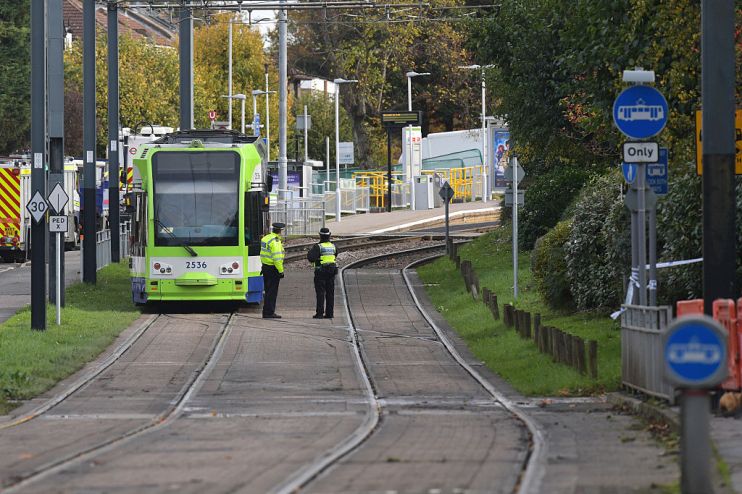
A driver has been cleared over the Croydon tram disaster in which seven passengers were killed and 21 others were seriously injured.
Alfred Dorris, 49, appeared visibly shaken when a jury at the Old Bailey acquitted him of failing to take “reasonable care” of the health and safety of himself and his 69 passengers on tram 2551 in November 2016.
The jury deliberated for less than two hours on Monday to reach its unanimous verdict following the prosecution brought by the Office of Road and Rail (ORR).
Transport for London (TfL) and Tram Operations Limited (ToL) have previously admitted health and safety offences relating to significant failings ahead of the catastrophic derailment and will be sentenced at a later date.
Families of the victims had sat in Court One of the Old Bailey or attended the trial by video link from Croydon.
The people who died were Dane Chinnery, 19, Philip Seary, 57, Dorota Rynkiewicz, 35, Robert Huxley, 63, and Philip Logan, 52, all from New Addington, and Donald Collett, 62, and Mark Smith, 35, both from Croydon.
The court had heard Dorris, of Beckenham, South London, was doing three times the speed he should have been going when his tram derailed on a sharp corner at Sandilands in south London on the morning of 9 November 2016.
Dorris denied he had a “micro-sleep” and said he became disorientated in the tunnel on approach to the curve, believing he was heading the other way.
He blamed his confusion on a combination of external factors including poor lighting and signage in the Sandilands tunnel complex, darkness and bad weather.
By the time he realised the fatal mistake the tram was already tipping over and he was thrown from his seat, causing him to hit his head and pass out, he said.
Speaking publicly about the crash for the first time, the driver apologised to the victims’ families and survivors during his tearful evidence at the Old Bailey.
He told them: “I’m a human being and sometimes as a human being things happen to you that you are not in control of.
“I’m sorry that I became disorientated. I’m sorry I was not able to do anything to stop myself from becoming disorientated.
“And I’m deeply sorry I was not able to do anything to reorientate myself and stop the tram from turning over. I’m deeply sorry.”
The court heard that it had been a wet, wintry morning when tram 2551 embarked on its route from New Addington to Wimbledon via East Croydon.
At a sharp left turn on the approach to Sandilands, drivers are instructed to reduce speed to 12mph (20kph) to safely negotiate the curve, with a sign on the bend confirming it.
Dorris was travelling in excess of 43mph (70kph), causing the inner wheels to come off the track and the tram to tip over.
Survivors described being “flung” about as if in a washing machine or a pinball machine, then a moment of silence before people began to scream and shout.
Dorris was found in his cabin with his eyes shut and one passenger called for him to “wake up”.
When he came to, he said: “I’m sorry, guys. Is everyone all right? I saw something in front of the tram.”
Dorris broke down in court as he recalled the moments before the tragedy, saying: “It was like I went into shock. I could not do anything. I wanted to reach for the brake but at that stage the tram was already going over and I was thrown out of the chair and I could not do anything.
“I can remember being thrown from the chair to the side of the cabin and my shoulder took the impact and I hit the side of my head on the side of the cabin.
“I can remember lying on the floor and then it goes black; I passed out, because I cannot remember the tram sliding or becoming stationary.
“The next thing, I remember hearing voices and people kicking trying to open the cabin door.”
Prosecutor Jonathan Ashley-Norman KC said it was an “accident waiting to happen”.
He told jurors: “Whether by virtue of a micro-sleep, or by virtue of becoming disorientated in some other way, or a combination of the two, Mr Dorris failed to attend to the most basic of requirements of a driver of a passenger vehicle, namely remaining alert and attentive at the controls.”
Dorris was described as having an “impeccable” past record and was seen as one of the better drivers.
The court heard of an alleged “near miss” 10 days before the derailment in an identical location at a similar time involving another driver.
Defence barrister Miles Bennett said a passenger had “genuinely feared for their safety”.
But Sarah Claypole, who was a senior manager at the time, told jurors she was unaware of the alleged incident or of drivers failing to report errors.
It was also suggested that other “environmental and external factors outside his control” relating to the infrastructure around the Sandilands area combined to cause the defendant to become disorientated.
The Old Bailey jurors were not told that an inquest in 2021 concluded that the victims died as a result of an accident and were not unlawfully killed.
At the time, several members of the victims’ families walked out of the room at Croydon Town Hall in tears and there were demands for a new inquest with more witnesses called to give evidence about alleged safety failings.
Dorris had been excused from attending the inquest because he was suffering from severe post-traumatic stress disorder.
Press Association – Emily Pennink