Skip to content
Saturday 5 September 2026London --:--Frankfurt --:--Zurich --:--
NewslettersSearchEN · DE · FR
MorningWire

European business, markets and politics

FTSE 100
10,831.09
0.00%
DAX
26,046.40
+0.17%
CAC 40
8,278.77
-0.09%
STOXX 50
6,392.93
+0.16%
  • Europe
  • Markets
  • Business
  • Economy
  • Regulation
  • Politics
  • Opinion
More
GermanyFranceEU InstitutionsCompetitionPublic AffairsBankingTechnologyEnergy
  • Germany
  • France
  • Europe
  • Markets
  • Business
  • Economy
  • Regulation
  • Politics
  • Opinion
  • DE
Tuesday 23 July 2019 4:01 am  |  Updated:  Monday 22 July 2019 5:47 pm

Data is our NHS’ most precious asset – the next Prime Minister must protect it

By: Paul Drayson

Add as a preferred source on Google
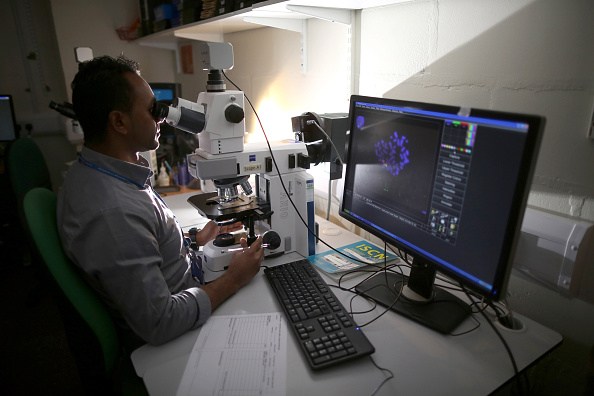
BIRMINGHAM, ENGLAND - JANUARY 22: Editors Note: This image may have been digitally manipulated for confidentiality to remove any patient identidy data. A scientist observes chromosones through a microscope using FISH (Flourescent Insitu Hybridisation) at Birmingham Women's Hospital on January 22, 2015 in Birmingham, England. Birmingham Womens Hospital provides a range of health services to women and their families using the latest scientific procedures and care. Last year the maternity unit delivered over 8,000 babies, cared for 50,000 patients and performed over 3000 procedures in its state of the art theatres. The hospital is also home to world renowned research scientists, fertility clinic and the national sperm bank. (Photo by Christopher Furlong/Getty Images)

Britain is about to have a new government.

And in a few months’ time, there could be a General Election resulting in the third government of 2019. On top of this, Brexit has still not been resolved.

But in the fog of these political crises, we must not lose sight of innovations which, if adopted effectively, will bring substantial economic and health benefits to this country – the most significant of which is artificial intelligence (AI).

Like so many sectors, healthcare is being radically changed by developments in AI and the use of big data. There is enormous potential to transform how we diagnose illness, treat patients, and understand complex conditions within our NHS. 

But in addition to these incredible opportunities, AI could help to actually fund the health service. After all, royalties on intellectual property from scientific discoveries have provided income to our hospitals and universities, and help to fund the world-class scientific research for which the UK is justly renowned. 

These returns can be significant, as we saw recently with the $1.3bn cheque written to the Medical Research Council’s technology transfer company LifeArc by Merck for the royalties on a new cancer drug developed from UK research over 10 years ago.  

And the quality of an AI algorithm depends upon the quality of the data on which it is trained. The depth and breadth of the NHS means that it now has the best dataset in the world. 

So while in 1948 the creation of the NHS was a bold political decision, in 2019 it is a huge competitive advantage for the UK. 

Read more

NHS data counters claims that £330m Palantir deal has led to ‘no improvement’

Brit are seeking financial support from the ‘Bank of Mum and Dad’ to afford private healthcare.

Voters recognise this potential. New YouGov research, commissioned by my company Sensyne Health, shows that more than three quarters of the public support analysis of anonymised NHS patient data by medical researchers. However, people have strong views on the kinds of organisations they are comfortable accessing this data. 

Just 13 per cent trust multinational tech companies to handle sensitive health data in a confidential manner, while 69 per cent raised concerns about it being analysed in countries with different laws governing data security. Only 11 per cent are happy for it to be analysed by businesses that do not pay tax here. 

Therefore, the next Prime Minister surely has to outline how he will guarantee the security of Britain’s patient data. He also needs to decide what constitutes a fair deal for patients and for Britain. Some 86 per cent of people (and 84 per cent of MPs) agree that the NHS should receive a fair share of any financial gains made from AI-linked medical discoveries, and four fifths of the public explicitly call on the government to ensure that the NHS and taxpayers stand to benefit. 

The UK has the opportunity to become a world leader in ethical data analysis and medical discovery. My company is working with a number of NHS Trusts to develop AI that analyses ethically-sourced, anonymised patient data. The NHS retains full control over the data, and Trusts will receive a financial return from the commercialisation of any discoveries. 

But we are not the only ones trying to crack this; global companies are eyeing partnerships with the NHS and UK healthcare providers. 

Clearly, we can’t afford to let this opportunity slip through our grasp. The NHS is a national asset and must remain that way. The public understandably want data analysis done here, and done right – with the NHS benefiting above all, both financially and in terms of improving patient care.

The next Prime Minister must prioritise creating a national data strategy for healthcare, so that the UK does not lose its competitive advantage or compromise the independence of NHS patient data. And he must heed public concern and protect the NHS as a national asset. 

It could bring enormous benefits to the UK and to patients – long after the Brexit question is settled.

Read more

Leeds NHS Innovation to Accelerate Global Adoption of AI-enabled Pathology for Cancer Diagnostics Through Epredia Partnership

Share this article

  • Facebook
  • X
  • LinkedIn
  • WhatsApp
  • Email

Similarly tagged content:

Sections

  • News
  • Opinion

Categories

  • Business
  • Opinion
  • Tech

Trending Articles

  • Victoria Beckham owed £350,000 by Harvey Nichols

  • M&G: FTSE 100 giant hits out at Rayner’s ground rent cap as it suffers loss

  • Fulham owner Khan sees his £1bn stadium construction project take next steps

  • John Lewis boss: UK economy facing a ‘permacrisis’ 

  • Don’t underestimate the free trade agreement Britain just joined

More from Morning Wire

  • NHS data counters claims that £330m Palantir deal has led to ‘no improvement’

    Tech
    Brit are seeking financial support from the ‘Bank of Mum and Dad’ to afford private healthcare.
  • Leeds NHS Innovation to Accelerate Global Adoption of AI-enabled Pathology for Cancer Diagnostics Through Epredia Partnership

    Business Wire
  • Sorry Elon, universal basic income won’t solve the AI jobs apocalypse

    Opinion
    Elon Musk smiling and waving from a podium with the Seal of the President of the United States.
  • Virtana Brings System-Aware Agentic AI to Sovereign Cloud Operations

    Business Wire
  • Limbic Becomes First AI-Led Mental Healthcare Company Selected for FDA TEMPO

    Business Wire
  • Britain has an AI minister – now it needs an AI answer

    Opinion
    Kanishka Narayan, prominent figure in the news, engaging in a public event or discussion, showcasing leadership and influe...
  • GPTZero founder: Even with watermarks, AI slop isn’t going anywhere

    Opinion
    Woman leaning on a desk with a typewriter, looking up thoughtfully, a pencil in hand.
  • Acceldata Brings AI Observability to Its xLake Data Platform

    Business Wire
MorningWire

Independent European business, markets and political news for decision-makers.

Morning Briefing

Europe

  • Germany
  • France
  • EU Institutions
  • Europe

Business

  • Markets
  • Business
  • Economy
  • Regulation
  • Competition
  • Public Affairs

Editorial

  • Opinion
  • Editorial Policy
  • Corrections
  • Contact

Company

  • About Morning Wire
  • Privacy Policy
  • Terms of Use
  • Cookie Policy
© 2026 Morning Wire Ltd · Published by Morning Wire Media, Bahnhofstrasse 65, 8001 Zürich, Switzerland
Privacy · Terms · Cookies · Facebook